You have tried every acne treatment on the market. Nothing works. Those small bumps on your forehead and cheeks refuse to disappear. Regular acne products make things worse. Sound familiar? You might be dealing with fungal acne.
Fungal acne is not traditional acne at all. This skin condition requires a completely different approach. The good news? Once you understand what fungal acne is, you can create an effective skincare routine that actually works.
This guide reveals everything you need to know about building a fungal acne skincare routine. You will discover which products help and which ingredients make the problem worse. Let’s get your skin back on track.
Ready to Transform Your Skin?
Discover proven fungal acne-safe products that deliver real results. Start your journey to clear skin today.
Understanding Fungal Acne: What Makes It Different
Fungal acne is actually a misleading name. The medical term is malassezia folliculitis. This condition happens when yeast overgrows in your hair follicles. The yeast is called malassezia.
Everyone has this yeast living on their skin naturally. Problems start when it multiplies too much. The excess yeast gets trapped in your hair follicles. This creates inflammation and those frustrating bumps.
How to Identify Fungal Acne
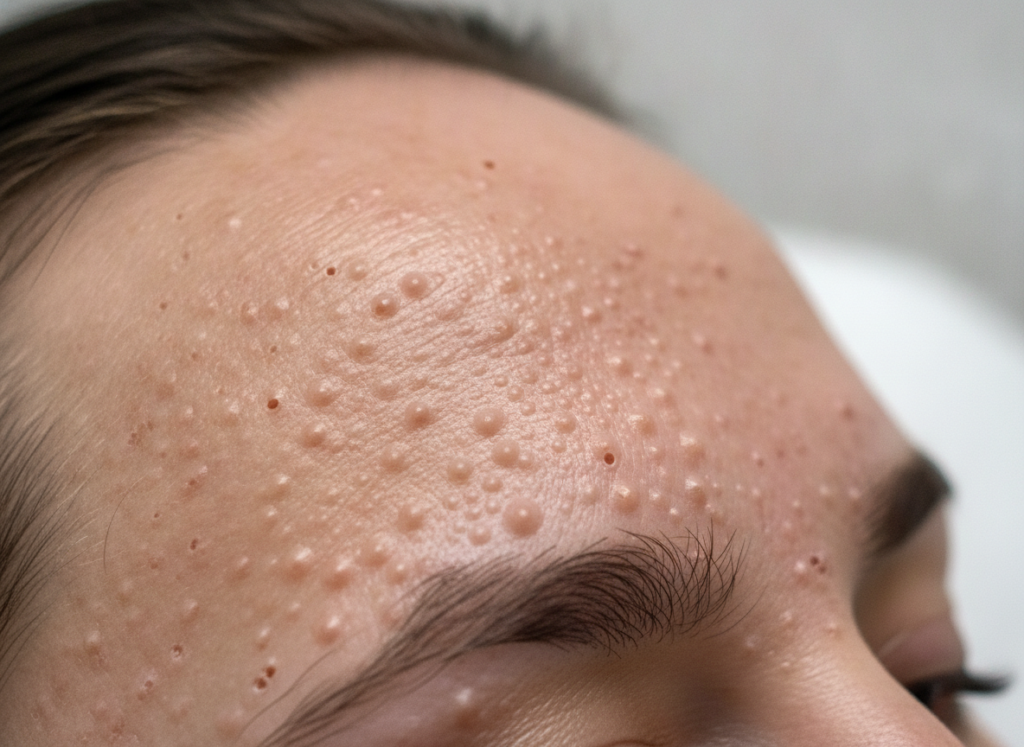
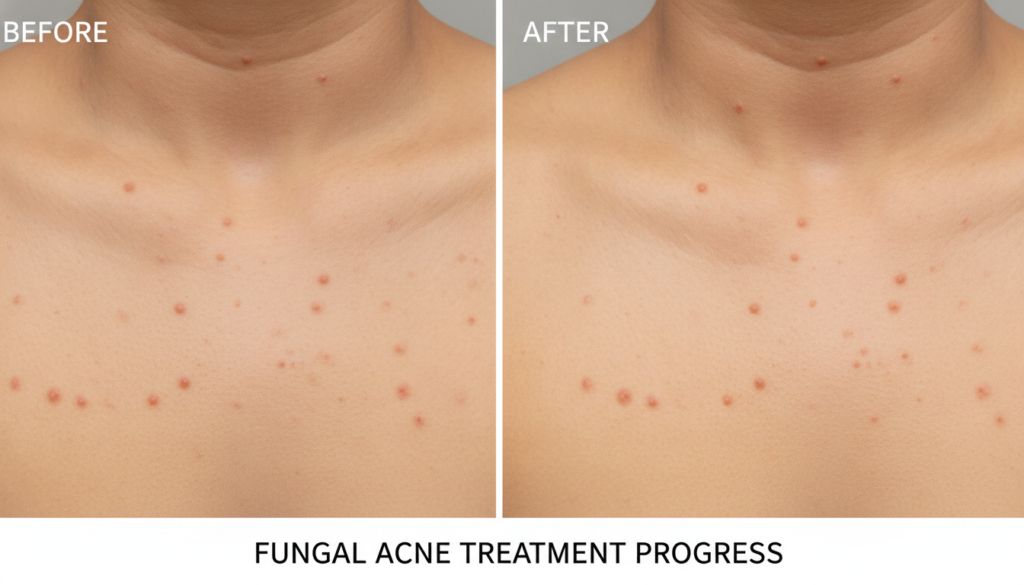
Fungal acne looks different from regular acne. The bumps are usually smaller and more uniform in size. They often appear as clusters of small, itchy bumps. Common areas include your forehead, chest, and back.
Regular acne treatments do not work on fungal acne. In fact, many acne products feed the yeast and make things worse. That is why you need a specialized fungal acne skincare routine.
Signs You Have Fungal Acne
Small, uniform bumps that itch
Breakouts that won’t respond to typical acne treatments
Clusters of bumps on forehead, chest, or back
Skin issues that worsen in hot, humid weather
Bumps that appear after sweating or working out
Not Fungal Acne If You Have
Large, painful cystic bumps
Blackheads and whiteheads
Varied bump sizes across affected areas
No itching sensation
Breakouts that respond to salicylic acid or benzoyl peroxide
What Triggers Fungal Acne
Several factors cause yeast overgrowth on skin. Understanding these triggers helps you avoid future breakouts. Moisture and heat create the perfect environment for yeast to thrive.
Trapped sweat promotes yeast growth. Tight clothing that does not breathe causes problems. Heavy, occlusive skincare products feed the yeast. Antibiotics can disrupt your skin’s natural bacteria balance.
Excessive sweating without proper cleansing
Humid climate conditions
Wearing non-breathable fabrics
Using oils and heavy products on skin
Taking oral antibiotics for extended periods
Compromised immune system function
High-sugar diet that promotes yeast
Ingredients That Feed Fungal Acne
Your current skincare routine might be feeding the fungal acne problem. Many common skincare ingredients act as food for malassezia yeast. These ingredients must be eliminated from your routine.
Oils are the biggest culprits. Most plant oils and fatty acids feed yeast growth. Even products marketed as “non-comedogenic” can trigger fungal acne if they contain these ingredients.
Oils and Esters to Eliminate
The malassezia yeast feeds on specific fatty acids. These are found in most oils and many ester compounds. Your fungal acne skincare routine must exclude all these ingredients.
Critical Rule: If a product contains oils, esters, or fatty acids, skip it. Even a small amount can trigger breakouts. Reading ingredient labels becomes essential for managing fungal acne.
Oils That Cause Problems
Coconut oil and derivatives
Olive oil and squalene
Jojoba oil
Argan oil
Sunflower oil
Palm oil
Shea butter
Cocoa butter
Problematic Ester Ingredients
Isopropyl myristate
Isopropyl palmitate
Ethylhexyl palmitate
Glyceryl stearate
Cetearyl alcohol
Stearic acid
Lauric acid
Myristic acid
Other Ingredients to Watch
Beyond oils and esters, several other ingredients can worsen fungal acne. Fermented ingredients sometimes trigger flares. Some amino acids and polysorbates also feed yeast.
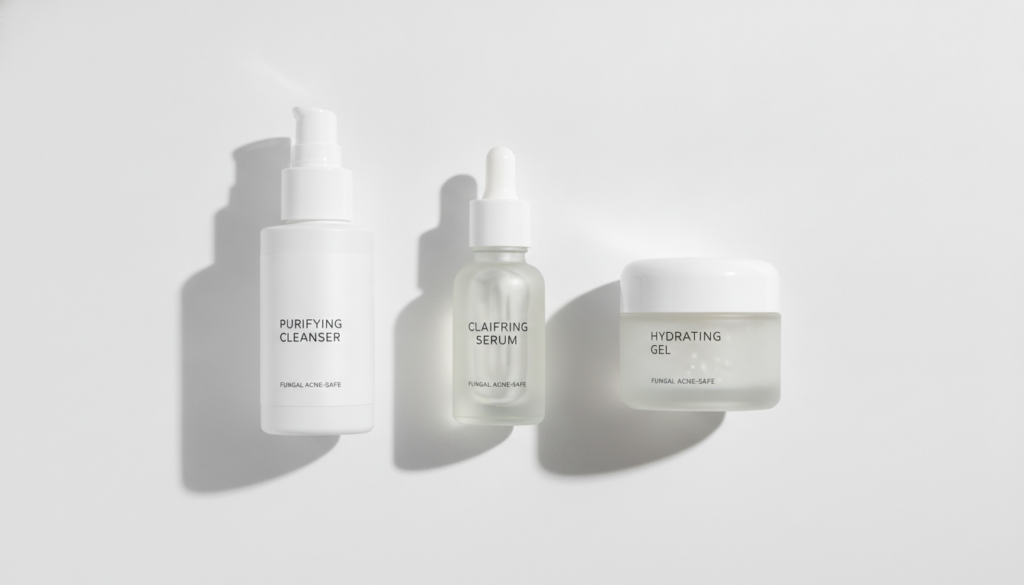
The safest approach is using products specifically formulated to be fungal acne safe. These products exclude all yeast-feeding ingredients. Building your routine around these products prevents future breakouts.
Step 1: Cleansing for Fungal Acne
The first step in your fungal acne skin care routine is proper cleansing. You need to remove excess oil, dead skin cells, and yeast from your skin surface. The right cleanser makes a significant difference.
Look for gentle, fungal acne safe cleansers without oils. The cleanser should remove impurities without stripping your skin barrier. Harsh cleansers damage your moisture barrier and make problems worse.
Best Cleanser Types for Fungal Acne
Sulfur-based cleansers work exceptionally well for fungal acne. Sulfur has natural antifungal properties that target yeast. It also helps remove dead skin cells that can trap yeast in hair follicles.
Zinc pyrithione is another powerful ingredient for cleansing fungal acne-prone skin. This ingredient directly combats malassezia yeast. Many dandruff shampoos contain zinc pyrithione and can be used as face and body wash.
Sulfur Cleansers
Sulfur naturally fights yeast and bacteria. These cleansers reduce inflammation while keeping pores clear. Use them once or twice daily.
Natural antifungal properties
Reduces excess sebum production
Exfoliates dead skin cells
Calms inflamed bumps
Zinc Pyrithione Wash
Zinc pyrithione targets malassezia yeast directly. This ingredient is found in antifungal shampoos. Apply to affected areas and leave for a few minutes.
Clinically proven antifungal
Safe for face and body
Prevents yeast overgrowth
Gentle on skin barrier
Simple Gel Cleansers
Basic gel cleansers without oils work well for maintenance. Choose products with minimal ingredients. Avoid anything with oils or fatty acids.
Oil-free formulation
Won’t feed yeast growth
Maintains skin pH balance
Ideal for daily use
Proper Cleansing Technique
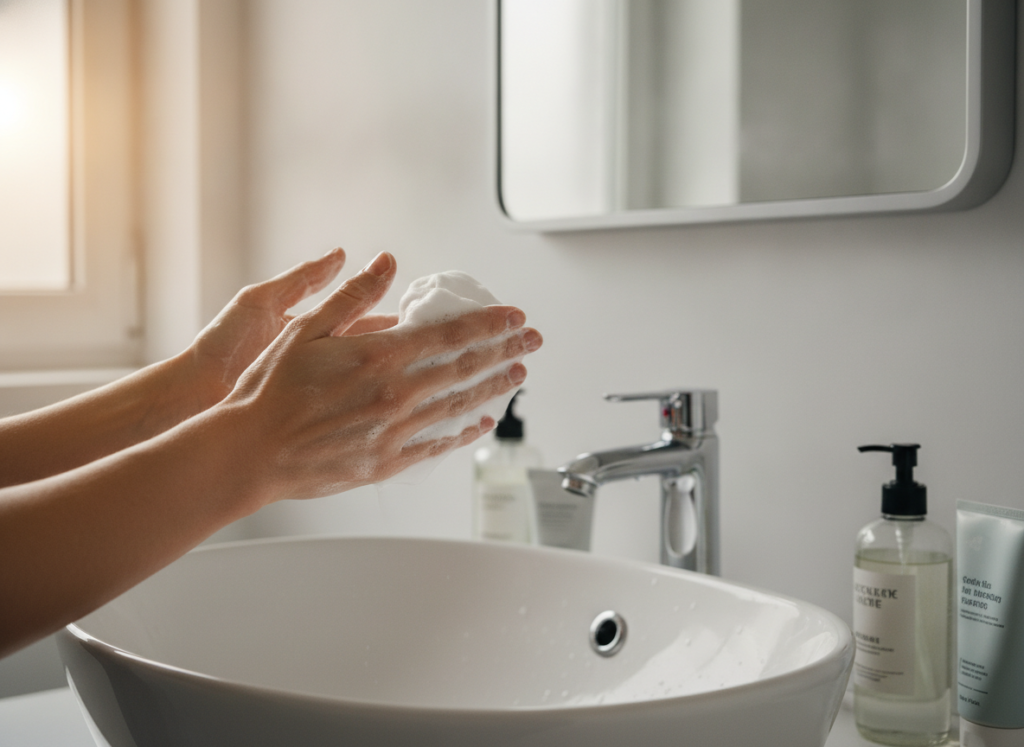
How you cleanse matters as much as what you use. Wash your face twice daily with lukewarm water. Hot water strips your skin and triggers oil production. Cold water does not effectively remove debris.
Apply cleanser to damp skin using gentle circular motions. Focus on areas prone to fungal acne breakouts. Leave antifungal cleansers on skin for 2-3 minutes before rinsing. This contact time allows active ingredients to work.
Transform Your Cleansing Routine
Discover fungal acne-safe cleansers that actually work. Get the right products for your skin today.
After cleansing, you need targeted treatment products. Active ingredients that fight yeast should be applied directly to affected areas. These treatments reduce existing bumps and prevent new breakouts.
The most effective treatments contain antifungal ingredients. These work differently from regular acne treatments. They specifically target malassezia yeast rather than bacteria or clogged pores.
Antifungal Treatment Options
Ketoconazole is one of the most powerful antifungal ingredients. This prescription-strength ingredient kills yeast quickly. You can find it in creams and shampoos. Apply it to affected areas for fast results.
Azelaic acid offers another excellent treatment option. This ingredient fights both yeast and bacteria. It also helps fade post-inflammatory hyperpigmentation from old bumps. Azelaic acid is gentler than many other treatments.
Treatment Timeline: Most people see improvement within 2-4 weeks of consistent treatment. Complete clearing may take 6-8 weeks. Patience is essential when treating fungal acne.
Over-the-Counter Solutions
Salicylic acid helps when used correctly in a fungal acne skincare routine. This beta hydroxy acid exfoliates inside pores. It removes dead skin cells that trap yeast. Use salicylic acid products that are oil-free.
Tea tree oil is controversial for fungal acne. While it has antifungal properties, pure tea tree oil can feed malassezia. Diluted tea tree products may help some people. Test carefully before using on large areas.
Start with one active ingredient at a time
Apply treatment to clean, dry skin
Wait 10-15 minutes before applying other products
Use treatment consistently every day
Avoid mixing multiple strong actives initially
Monitor your skin for irritation or dryness
Increase frequency gradually as skin tolerates
Body Treatment for Fungal Acne
Fungal acne commonly appears on the chest and back. These areas need treatment too. Body wash with antifungal ingredients works well for large areas. Apply and leave on skin for several minutes.
For stubborn body fungal acne, use antifungal creams after showering. Target specific patches of bumps. Some people find using dandruff shampoo as body wash helps clear back and chest breakouts.
Get Powerful Antifungal Treatments
Access proven treatments that target yeast overgrowth at its source. Clear your fungal acne effectively.
Many people with fungal acne skip moisturizer. They fear adding moisture will worsen breakouts. This is a mistake. Proper hydration supports your skin barrier and helps treatments work better.
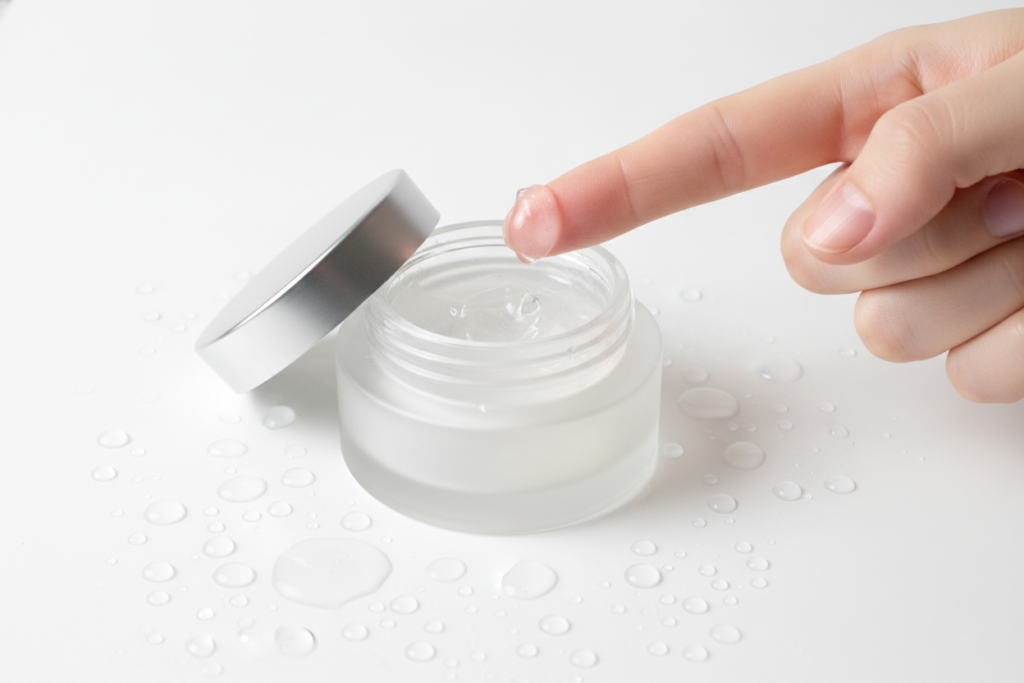
The key is choosing the right type of moisturizer. You need lightweight, fungal acne safe products without oils. Gel-based moisturizers work exceptionally well. Look for humectants that draw moisture into skin cells.
Safe Moisturizer Ingredients
Hyaluronic acid is perfect for fungal acne-prone skin. This ingredient holds up to 1000 times its weight in water. It provides deep hydration without any oils. Your skin stays plump and healthy.
Glycerin is another excellent humectant for your routine. This simple ingredient attracts moisture from the air. It strengthens your skin barrier over time. Glycerin is fungal acne safe and well-tolerated.
Fungal Acne Safe Ingredients
Hyaluronic acid
Glycerin
Aloe vera gel
Niacinamide
Squalane (note: not squalene)
Urea
Panthenol
Beta-glucan
Moisturizer Textures That Work
Water-based gel formulas
Lightweight lotions without oils
Serum-moisturizer hybrids
Gel-creams with minimal ingredients
Hydrating toners as moisturizer alternative
Mineral-based formulas
Application Tips for Moisture
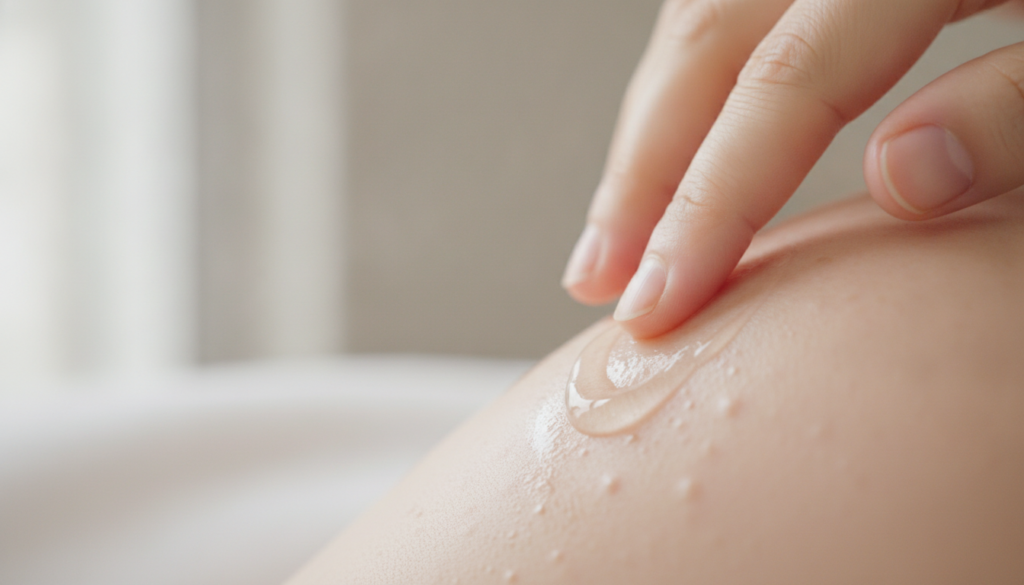
Apply moisturizer to damp skin for better absorption. This locks in water from cleansing. Use gentle patting motions rather than rubbing. Let each layer absorb before adding more products.
You may need different moisturizers for day and night. Daytime moisturizers should be lighter for makeup application. Nighttime products can be slightly more occlusive while still avoiding oils.
Warning: Avoid thick creams and ointments even if labeled “non-comedogenic.” These often contain fatty acids that feed yeast. Stick to gel or light lotion textures for best results.
Find Your Perfect Moisturizer
Hydrate your skin safely with fungal acne-approved moisturizers. Support your skin barrier without triggering breakouts.
Building Your Complete Fungal Acne Skin Care Routine
Now you understand individual steps. Let’s put everything together into a complete routine. Consistency is critical for managing fungal acne. Follow this routine daily for best results.
Morning Routine for Fungal Acne
Start your day with a gentle fungal acne safe cleanser. Apply your treatment products to active breakout areas. Follow with a lightweight moisturizer. Finish with mineral-based sunscreen.
Cleanse with lukewarm water and oil-free cleanser
Pat skin dry with clean towel
Apply azelaic acid or other treatment to affected areas
Wait 10 minutes for absorption
Apply gel moisturizer to entire face
Use mineral sunscreen for sun protection
Evening Routine Steps
Your nighttime routine allows for more intensive treatment. This is when your skin repairs itself. Use stronger active ingredients in the evening if your skin tolerates them.
Remove any makeup with oil-free micellar water
Cleanse with antifungal wash (zinc pyrithione or sulfur)
Leave cleanser on skin for 3-5 minutes
Rinse thoroughly and pat dry
Apply prescription antifungal cream if using
Add treatment serums to problem areas
Finish with hydrating gel moisturizer
Weekly Treatment Boosters
Some treatments work best when used once or twice per week. These give your fungal acne skincare routine an extra boost. Incorporate them gradually to avoid irritation.
Clay Masks
Use kaolin or bentonite clay masks weekly. These absorb excess oil and draw out impurities from pores. Mix with water only, never oils.
Chemical Exfoliation
Salicylic acid peels help remove dead skin cells. This prevents yeast from getting trapped in hair follicles. Use 1-2 times per week.
Antifungal Masks
Apply zinc pyrithione or sulfur masks as intensive treatment. Leave on for 10-15 minutes. Rinse thoroughly and follow with moisturizer.
Lifestyle Changes That Support Clear Skin
Your skincare routine is only part of the solution. Daily habits significantly impact fungal acne. Making simple lifestyle changes helps keep yeast under control.
Sweat Management
Yeast thrives in warm, moist environments. Trapped sweat creates the perfect breeding ground. Change out of sweaty clothes immediately after exercise. Shower as soon as possible after working out.
Use antifungal body wash after sweating. This removes yeast before it can multiply. Keep your gym clothes clean and rotate them regularly. Never re-wear workout clothes without washing.
Fabric and Clothing Choices
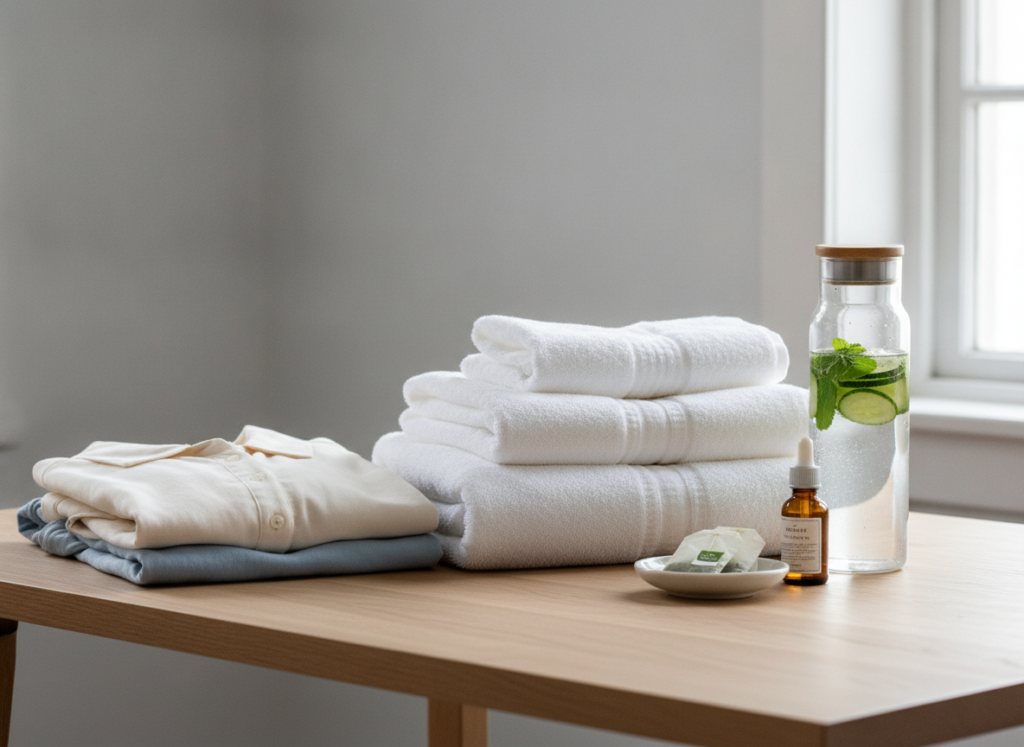
Tight, synthetic fabrics trap heat and moisture against your skin. Choose breathable, natural fabrics instead. Cotton and bamboo allow air circulation. This keeps your skin drier and less hospitable to yeast.
Wash your bedding weekly in hot water. Pillowcases harbor yeast and bacteria. Use fragrance-free, gentle detergent. Avoid fabric softeners that leave residue on sheets.
Do These Daily
Shower after any sweating or exercise
Change pillowcases every 2-3 days
Wear loose, breathable clothing
Keep hair off your face and back
Use clean towels for each shower
Stay in air-conditioned spaces when possible
Avoid These Habits
Letting sweat dry on your skin
Re-wearing workout clothes
Touching your face frequently
Using heavy hair products
Sleeping in makeup
Sharing towels or skincare products
Diet Considerations
Diet plays a role in yeast overgrowth. High-sugar diets can promote yeast growth throughout your body. Reducing refined carbohydrates and sugar may help some people with fungal acne.
Probiotic-rich foods support healthy bacteria balance. This can help control yeast naturally. Include yogurt, kefir, and fermented vegetables in your diet. Some people find this reduces fungal acne over time.
Complete Your Fungal Acne Solution
Get everything you need for clear skin. Discover products and resources that work together.
Building an effective fungal acne skin care routine requires the right products. Not all products marketed for acne work for fungal acne. You need specifically formulated, fungal acne safe options.
Essential Product Categories
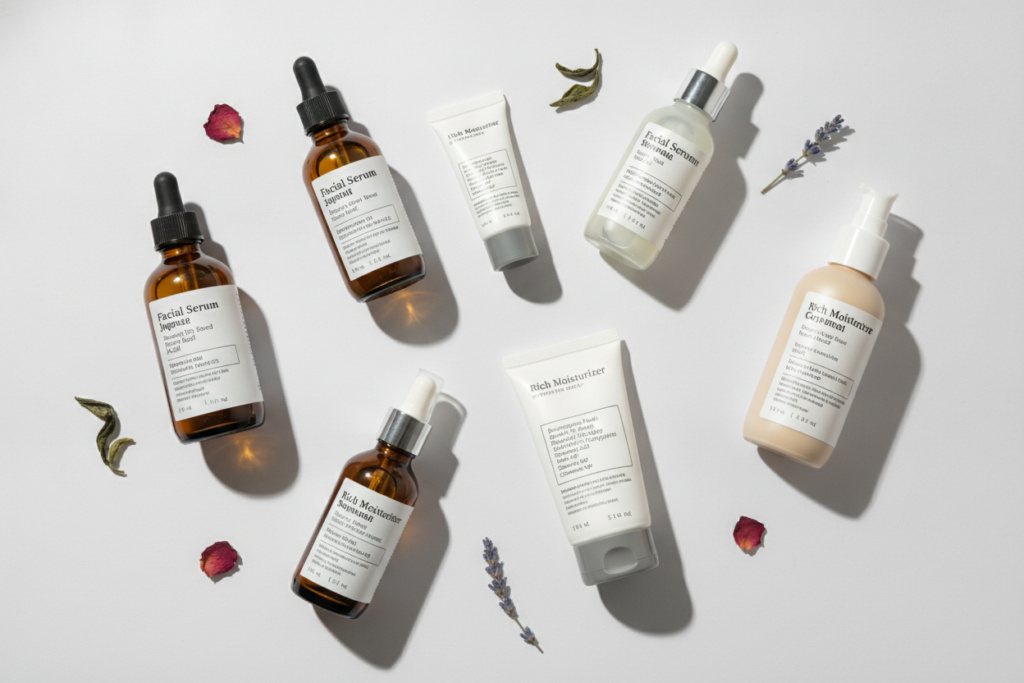
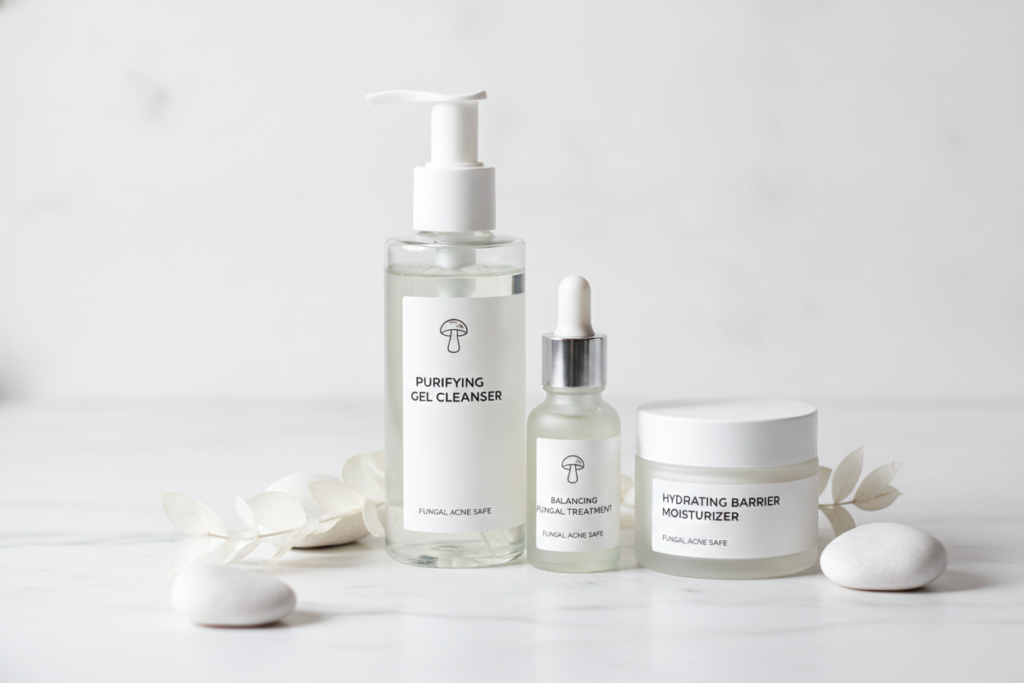
Every fungal acne skincare routine needs four essential categories. A proper cleanser removes excess oil and dead skin cells. Treatment products target active yeast. Moisturizers maintain your skin barrier. Sunscreen protects without feeding yeast.
Cleansers
Choose sulfur-based or zinc pyrithione cleansers for daily use. These ingredients fight yeast while cleansing skin. Look for gel formulations without oils.
Treatments
Azelaic acid serums and antifungal creams work best. Apply these after cleansing. Target specific areas with active breakouts for faster results.
Moisturizers
Gel moisturizers with hyaluronic acid provide hydration. Avoid any products containing oils or fatty acids. Lightweight formulas work best.
Sunscreens
Mineral sunscreens with zinc oxide are fungal acne safe. These protect skin without clogging pores. Choose oil-free, gel-based formulas.
How to Test New Products
Always patch test new products before using them on your entire face. Apply a small amount to your jawline. Wait 48 hours to check for reactions. This prevents widespread breakouts from problematic products.
Introduce one new product at a time into your routine. Wait two weeks before adding another. This helps you identify which products help and which cause problems.
Product Selection Tip: Check ingredient lists carefully. Even products labeled “for acne” may contain oils. Use online fungal acne safe product checkers when uncertain about ingredients.
Building Your Product Arsenal
Start with basic products first. You need a cleanser, one treatment product, and a moisturizer. Add additional products only after your skin adjusts. More products do not necessarily mean better results.
Quality matters more than quantity in a fungal acne routine. Three excellent fungal acne safe products work better than ten random acne products. Focus on ingredients that target yeast specifically.
Troubleshooting Your Fungal Acne Routine
Sometimes your routine needs adjustments. You might not see results immediately. Understanding common problems helps you troubleshoot effectively. Let’s address frequent issues people encounter.
Not Seeing Results
Fungal acne takes time to clear. You need at least 4-6 weeks of consistent treatment. Some people need 8-12 weeks for complete clearing. Patience is essential during this process.
Review your entire routine for hidden problematic ingredients. Check your shampoo, conditioner, and body products. These can transfer yeast-feeding ingredients to your face. Switch to fungal acne safe hair products too.
Skin Feels Too Dry
Antifungal treatments can be drying. Your skin barrier needs support during treatment. Add more hydrating layers to your routine. Use multiple thin layers of gel moisturizer instead of one thick layer.
Consider using a humidifier in your bedroom. This adds moisture to the air. Your skin absorbs this environmental moisture overnight. Reduce treatment frequency if dryness becomes severe.
What if fungal acne gets worse initially?
Some people experience purging when starting new treatments. This happens as treatments bring underlying congestion to the surface. True purging should improve after 2-3 weeks. If worsening continues beyond this, you may be reacting to an ingredient. Stop the newest product you added and reassess.
Can I wear makeup with fungal acne?
Yes, but choose makeup carefully. Many foundations contain oils that feed yeast. Look for oil-free, powder, or mineral makeup formulas. Check all makeup ingredients just like you check skincare. Remove makeup completely every night with fungal acne safe cleansers.
How do I know if it’s really fungal acne?
A dermatologist can confirm fungal acne through examination or testing. They may take a skin scraping to check for yeast. If your bumps itch, appear uniform, and don’t respond to regular acne treatment, fungal acne is likely. Professional diagnosis ensures proper treatment.
Do I need prescription treatments?
Many people clear fungal acne with over-the-counter products. Severe cases may benefit from prescription antifungals. Oral antifungal medications work faster for widespread fungal acne. Consult a dermatologist if OTC products don’t work after 8 weeks.
Preventing Future Breakouts
Once your fungal acne clears, maintenance is important. Continue using fungal acne safe products. Maintain good hygiene habits around sweating. Keep your environment less humid when possible.
You may be able to reduce treatment frequency once clear. Some people maintain results with antifungal cleansers a few times weekly. Others need daily maintenance. Pay attention to what your skin needs.
Get Your Clear Skin Journey Started
Access proven products and expert guidance for treating fungal acne. Everything you need in one place.
Managing fungal acne requires a different approach than regular acne. Your fungal acne skin care routine must target yeast specifically. Avoid oils and focus on antifungal ingredients.
Consistency brings results with fungal acne treatment. Follow your routine daily. Give products time to work. Most people see significant improvement within 6-8 weeks.
Remember that lifestyle factors matter too. Manage sweat properly. Choose breathable fabrics. Keep your environment clean. These habits support your skincare routine.
Your clear skin journey starts with understanding what fungal acne needs. Armed with this knowledge, you can build an effective routine. Follow the steps outlined in this guide. Your skin will thank you.
Take action today to transform your skin. The right products and consistent routine make all the difference. Clear skin is possible when you address fungal acne correctly.