Acne scars can affect your confidence long after breakouts disappear. These persistent marks remind you of past skin struggles every time you look in the mirror.
The good news? The right acne scar skin care routine can dramatically improve your skin’s appearance.
This comprehensive guide walks you through proven treatments, effective ingredients, and practical steps to minimize acne scars. You’ll discover exactly what works and how to build a routine that delivers visible results.
Understanding Acne Scars and Why They Form
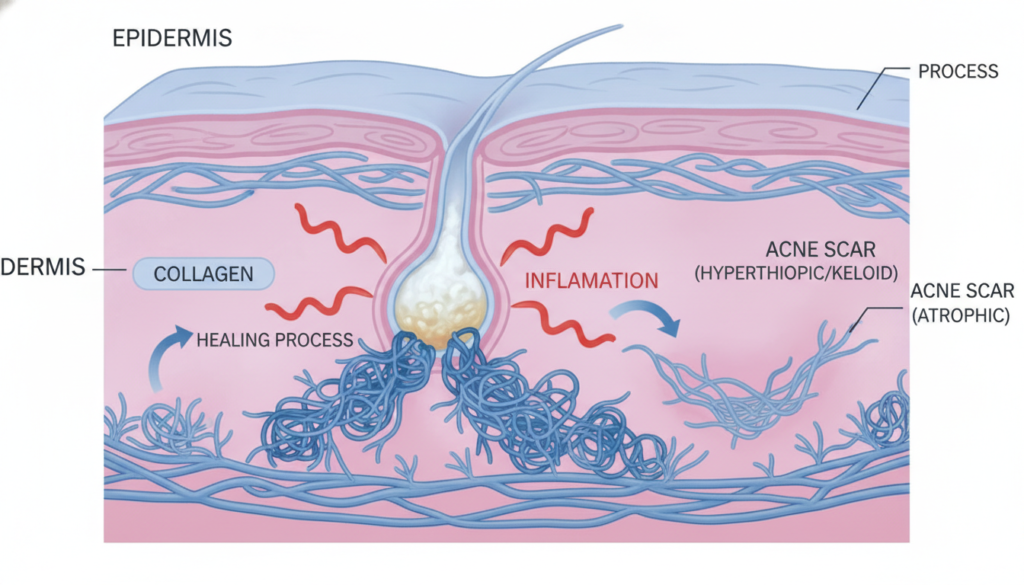
Acne scars develop when inflammation damages skin tissue during the healing process. Your skin tries to repair itself, but sometimes produces too much or too little collagen.
This imbalance creates different types of visible marks on your skin surface.
Different Types of Acne Scars
Not all acne scars look the same. Understanding your scar type helps you choose the most effective treatments for your specific needs.
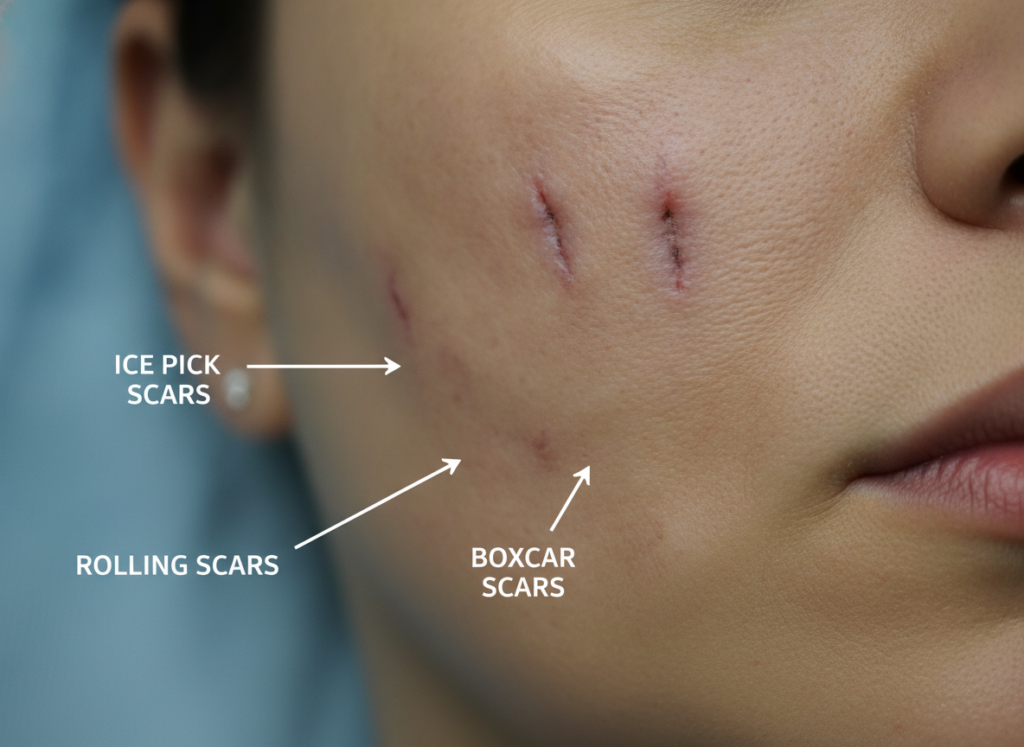
Atrophic Scars
Atrophic scars appear as depressions in your skin. They form when your skin doesn’t produce enough collagen during healing.
Ice pick scars – deep, narrow pits
Boxcar scars – wide depressions with defined edges
Rolling scars – wave-like indentations
Hypertrophic Scars
Hypertrophic scars rise above your skin surface. Your body produces excess collagen during the healing process, creating raised tissue.
Thick, raised appearance
Stay within original injury boundaries
More common on chest and back
Post-Inflammatory Hyperpigmentation vs. True Scarring
Many people confuse post-inflammatory hyperpigmentation with permanent scars. These dark spots differ significantly from actual scar tissue.
Post-inflammatory hyperpigmentation appears as flat, discolored areas. These acne marks fade naturally over time, while true scars involve texture changes that require targeted treatments.
People with darker skin tones experience post-inflammatory hyperpigmentation more frequently. The increased melanin production in response to injury creates more noticeable dark spots.
Important Note: Understanding the difference between acne marks and acne scars helps you set realistic expectations. Hyperpigmentation responds faster to treatment than structural scars.
Ready to Transform Your Skin?
Discover professional-grade treatments that target all scar types and help restore your skin’s natural smoothness.
Acne scars result from your body’s inflammatory response to clogged pores. When bacteria, oil, and dead skin cells become trapped, inflammation triggers the healing process.
Deep inflammation destroys skin tissue and collagen. Your body attempts repair, but the new tissue often differs from surrounding skin.
Why Some People Scar More Than Others
Several factors determine your risk of developing acne scars. Genetics play a significant role in how your skin responds to injury.
Severity of acne breakouts
How quickly you treat inflammation
Picking or squeezing blemishes
Natural healing capabilities
Skin tone and type
The healing process takes time. Your skin needs several weeks to months to complete tissue repair, depending on the injury depth.
During this time, protecting your skin from sun exposure prevents additional damage. UV rays can darken scars and slow the healing process significantly.
Pro Tip: Starting treatment early in the healing process gives you the best chance of minimizing scar appearance. Don’t wait until scars fully form.
Proven Ingredients That Fade Acne Scars
Effective acne scar treatments contain specific active ingredients backed by scientific research. Understanding these components helps you choose products that deliver real results.
The most powerful ingredients work by promoting cell turnover, boosting collagen production, or reducing pigmentation.
Retinoids: The Gold Standard
Retinoids represent the most researched and effective treatment for acne scars. These vitamin A derivatives accelerate skin cell turnover and stimulate collagen production.
Your skin gradually builds new tissue that smooths out irregular texture. Retinoids also help prevent new breakouts while treating existing scars.
Tretinoin (prescription strength)
Adapalene (available over-counter)
Retinol (gentler, non-prescription option)
Start with lower concentrations to minimize irritation. Your skin needs time to adjust before increasing strength.
Alpha Hydroxy Acids and Beta Hydroxy Acids
Chemical exfoliants like AHAs and BHAs remove dead skin cells and improve skin texture. Salicylic acid penetrates pores to prevent new breakouts while fading post-acne marks.
Glycolic acid and lactic acid work on the skin surface to brighten discoloration and smooth rough texture.
Vitamin C serums brighten post-inflammatory hyperpigmentation and protect against free radical damage. This powerful antioxidant also supports collagen synthesis.
Look for L-ascorbic acid in concentrations between 10-20%. Stable formulations in opaque bottles preserve potency.
Niacinamide for Multiple Benefits
Niacinamide reduces inflammation, regulates oil production, and fades dark spots. This versatile ingredient works well with other treatments without causing irritation.
Studies show niacinamide improves skin tone and reduces the appearance post-acne marks within weeks of consistent use.
Unlock Professional Treatment Power
Access clinical-strength formulations with proven active ingredients that dermatologists recommend for stubborn acne scars.
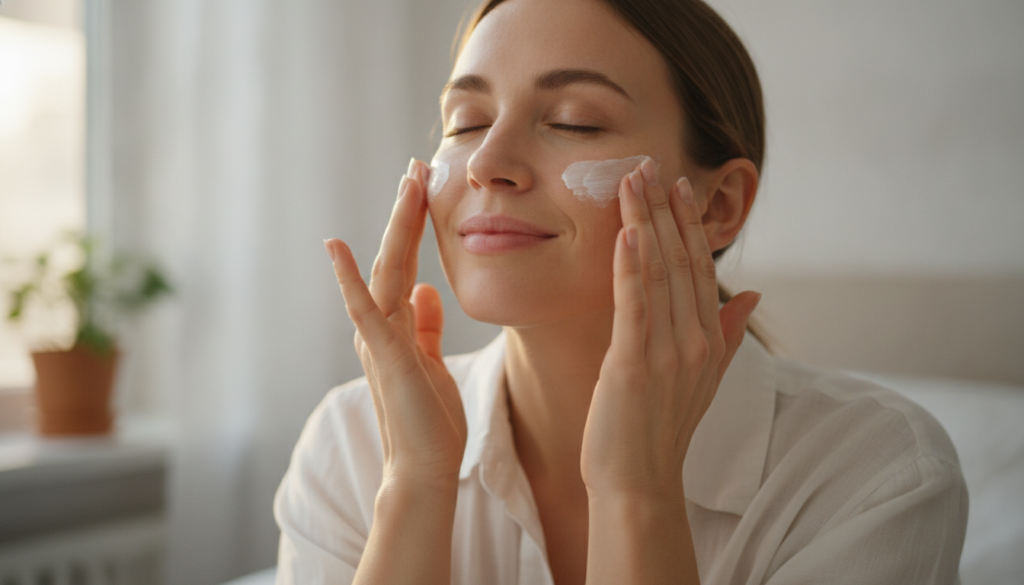
Your morning routine protects your skin while supporting the healing process. These steps prepare your skin for the day ahead and prevent further damage.
Consistency matters more than using dozens of products. A simple, targeted routine delivers better results than complicated multi-step regimens.
Step 1: Gentle Cleansing
Start with a gentle, pH-balanced cleanser that removes overnight oil and debris without stripping your skin. Harsh cleansers disrupt your skin barrier and increase irritation risk.
Look for sulfate-free formulas with soothing ingredients. Cream or gel cleansers work well for most skin types dealing with acne scars.
Use lukewarm water, never hot
Massage gently for 30-60 seconds
Pat dry with a clean towel
Avoid scrubbing or harsh rubbing
Step 2: Treatment Serum
Apply your active treatment serum to clean, dry skin. Morning serums should focus on brightening and antioxidant protection.
Vitamin C serums work excellently in the morning. They protect against environmental damage while fading post-inflammatory hyperpigmentation.
Niacinamide serums offer another great morning option. This ingredient calms inflammation and supports your skin barrier throughout the day.
Morning Treatment Benefits
Brightens dark acne marks
Protects against oxidative stress
Supports collagen production
Prepares skin for sunscreen
Step 3: Moisturizer
Hydration supports skin healing and maintains a healthy barrier. Choose a lightweight moisturizer that won’t clog pores or feel heavy under sunscreen.
Look for ingredients like hyaluronic acid, ceramides, and peptides. These components hydrate while supporting skin repair processes.
Wait a few minutes for your moisturizer to absorb before applying sunscreen. This prevents pilling and ensures even coverage.
Step 4: Sunscreen Every Day
Sunscreen every day represents the most crucial step in any acne scar treatment routine. UV exposure darkens scars and undoes months of progress.
Apply broad-spectrum SPF 30 or higher as your final morning step. Choose mineral or chemical formulas based on your preferences and skin type.
Apply 15 minutes before sun exposure
Use enough to cover entire face and neck
Reapply every 2 hours when outdoors
Don’t skip cloudy days
Mineral sunscreens with zinc oxide or titanium dioxide suit sensitive skin types. Chemical sunscreens feel lighter and blend more easily into darker skin tones.
Remember: Sunscreen every day protects your investment in scar treatments. UV damage can reverse months of progress in just days of unprotected exposure.
Boost Your Morning Routine Results
Add powerful morning treatments that work synergistically with sunscreen to accelerate scar fading and protect your healing skin.
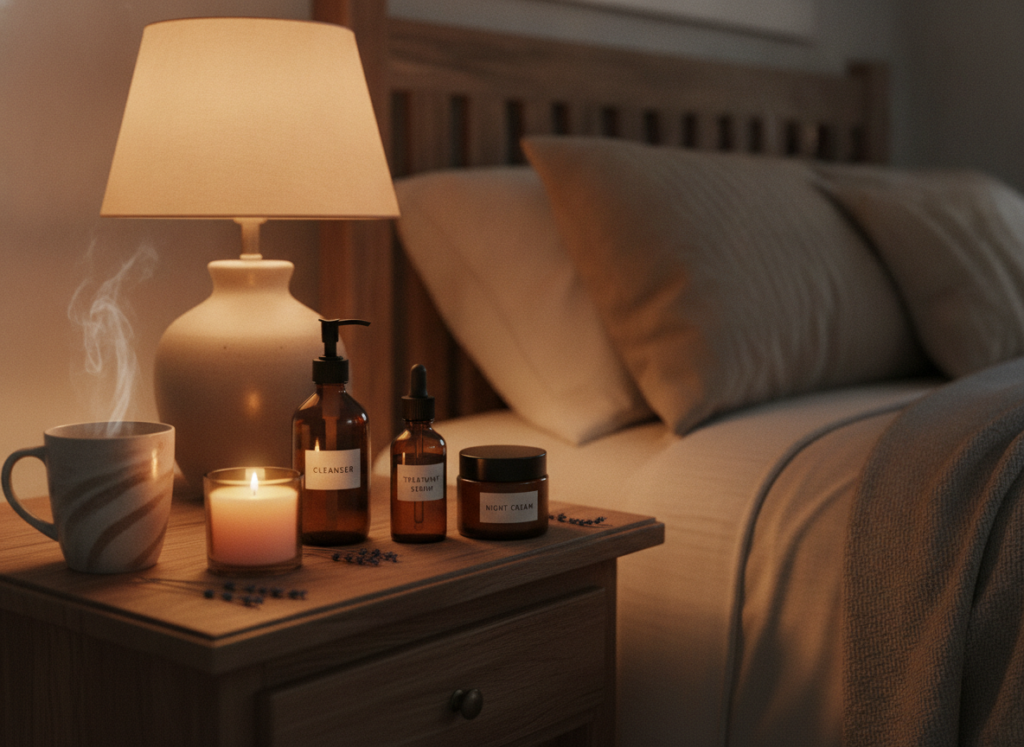
Your evening routine does the heavy lifting for scar treatment. Nighttime represents the optimal time for active ingredients that might increase sun sensitivity.
Your skin repairs itself during sleep. Supporting this natural process with targeted treatments maximizes results.
Step 1: Double Cleanse
Evening cleansing removes sunscreen, makeup, and daily buildup. A double cleanse ensures your skin is truly clean before applying treatments.
Start with an oil-based cleanser or micellar water. This first step dissolves makeup and sunscreen without harsh rubbing.
Follow with your regular gentle cleanser. This second wash removes remaining residue and prepares skin for treatment absorption.
Step 2: Exfoliating Treatment
Chemical exfoliants work overnight to resurface skin and fade acne marks. Alternate between different treatments based on your skin’s tolerance.
Use AHA or BHA treatments 2-3 times weekly initially. Increase frequency gradually as your skin builds tolerance.
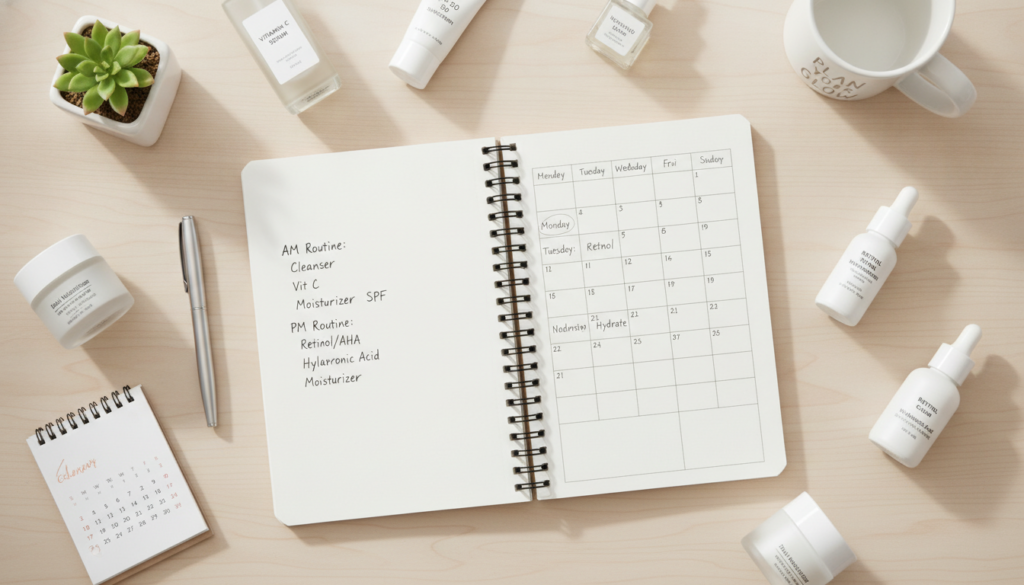
Monday/Thursday: AHA toner or serum
Tuesday/Friday: Retinoid treatment
Other nights: Gentle hydrating serums
Never combine retinoids with chemical exfoliants. This increases irritation risk without improving results.
Step 3: Targeted Treatment Serum
Apply your most potent treatment serums after exfoliating products fully absorb. Retinoids work exceptionally well in evening routines.
Start with retinol or adapalene 2-3 nights weekly. Your skin needs time to adjust before increasing frequency or strength.
Alternative treatments for non-retinoid nights include niacinamide serums, peptide formulas, or additional vitamin C applications.
Patience Pays Off: Retinoids may cause initial purging or dryness. This temporary adjustment period leads to significant long-term improvements in acne scars.
Step 4: Rich Moisturizer or Sleeping Mask
Seal in treatments with a nourishing moisturizer. Evening moisturizers can be richer than morning formulas since you won’t apply makeup over them.
Look for ingredients that support overnight repair. Ceramides strengthen your skin barrier while peptides boost collagen production during sleep.
Once or twice weekly, replace your regular moisturizer with an intensive sleeping mask. These treatments provide extra hydration and active ingredients.
Nighttime Repair Power
Your evening routine leverages your skin’s natural repair cycle for maximum scar improvement.
Retinoids resurface and rebuild
Peptides stimulate collagen
Deep hydration supports healing
No sun sensitivity concerns
Weekly Treatment Boosters
Incorporate intensive treatments once or twice weekly for enhanced results. These boosters complement your daily routine without overwhelming your skin.
Chemical peel pads or masks with higher concentrations of AHAs provide deeper exfoliation. Use these on nights when you skip other active treatments.
Weekly enzyme masks for gentle exfoliation
Bi-weekly stronger chemical peels
Sheet masks for intensive hydration
LED light therapy devices for collagen stimulation
Space intensive treatments several days apart. Your skin needs recovery time between stronger interventions.
Professional Treatment Options for Stubborn Scars
Some acne scars require professional interventions beyond at-home care. Dermatologists offer several effective treatments for stubborn scarring.
Combining professional procedures with consistent home care delivers the most dramatic improvements.
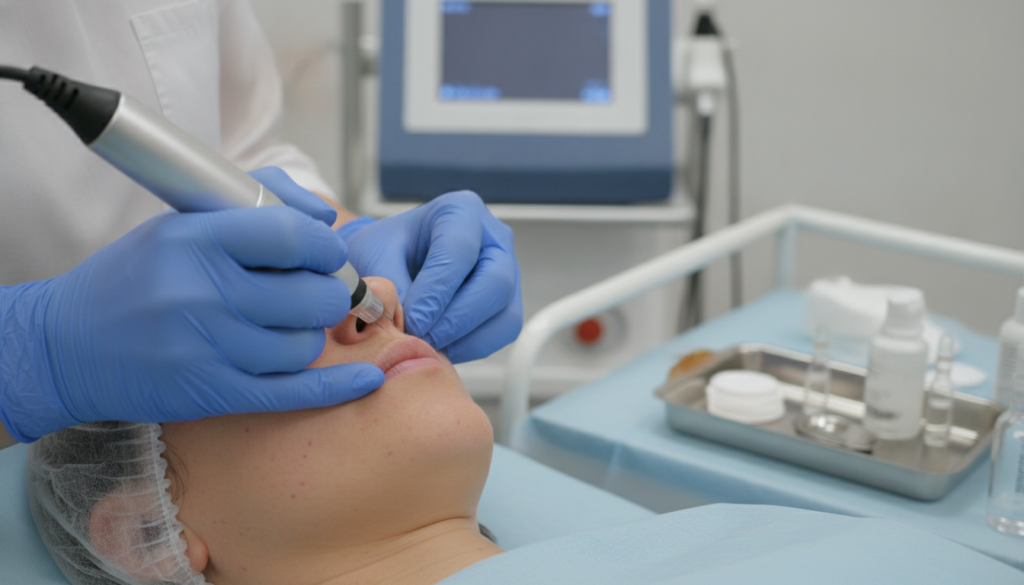
Microneedling
Microneedling creates controlled micro-injuries that trigger collagen production. Your skin responds by building new tissue that fills in atrophic scars.
Professional microneedling penetrates deeper than at-home devices. Dermatologists can customize needle depth based on your specific scar type.
Chemical Peels
Professional-strength chemical peels remove damaged surface layers. Different types target various scar depths and skin concerns.
Superficial peels – improve skin texture and tone
Medium peels – address moderate scarring
Deep peels – treat severe scarring (longer recovery)
Multiple sessions spaced several weeks apart produce optimal results. Your dermatologist develops a treatment plan based on your scarring severity.
Laser Treatments
Laser treatments precisely target scar tissue without affecting surrounding skin. Different laser types address specific scar characteristics.
Fractional lasers create microscopic treatment zones that stimulate collagen remodeling. These treatments improve both atrophic scars and hyperpigmentation.
People with darker skin tones require specialized lasers to avoid pigmentation changes. Always consult a dermatologist experienced with your skin tone.
Important: Professional treatments require downtime and sun protection. Plan procedures when you can avoid sun exposure during the healing process.
Injectable Treatments
Dermal fillers temporarily plump depressed scars. These injections provide immediate improvement for rolling or boxcar scars.
Results last several months before requiring touch-ups. Fillers work well for special events when you need quick improvement.
Subcision releases tethered scar tissue that pulls down on the skin surface. This surgical technique improves deep, rolling scars that don’t respond to other treatments.
Lifestyle Factors That Impact Scar Healing
Your daily habits significantly influence how quickly acne scars improve. Supporting your skin from the inside accelerates visible results.
These lifestyle modifications work synergistically with topical treatments to optimize the healing process.
Nutrition for Skin Health
Your diet provides building blocks for skin repair. Certain nutrients directly support collagen production and reduce inflammation.
Vitamin C from citrus, berries, and leafy greens
Zinc from nuts, seeds, and legumes
Omega-3 fatty acids from fish and flaxseeds
Antioxidants from colorful vegetables
Adequate protein for tissue repair
Stay hydrated by drinking water throughout the day. Proper hydration supports your skin’s natural healing mechanisms.
Sleep Quality Matters
Your body performs most skin repair during deep sleep. Inadequate sleep disrupts the healing process and increases inflammation.
Aim for 7-9 hours of quality sleep nightly. Consistent sleep schedules optimize your body’s repair cycles.
Sleep on your back when possible. This position prevents pillow friction that can irritate healing scars.
Stress Management
Chronic stress increases cortisol levels that impair healing. High cortisol also triggers inflammation and potential breakouts.
Incorporate stress-reduction techniques into your routine. Meditation, yoga, or regular exercise help manage stress hormones.
Hands Off Your Face
Touching your face transfers bacteria and oils that cause breakouts. Picking at acne worsens inflammation and increases scarring risk.
Keep your hands away from your face throughout the day. This simple habit prevents new breakouts and allows existing scars to heal undisturbed.
Habits to Adopt
Regular exercise for circulation
Consistent sleep schedule
Balanced, nutritious diet
Daily stress management
Clean pillowcases weekly
Habits to Avoid
Smoking (impairs healing)
Excessive alcohol consumption
Touching or picking at skin
Skipping sunscreen
Using dirty makeup tools
Exercise and Circulation
Regular physical activity increases blood flow that delivers nutrients to your skin. Better circulation supports faster healing and healthier skin overall.
Cleanse your face immediately after exercising. Sweat mixed with bacteria can clog pores and trigger breakouts.
Complete Your Transformation Journey
Combine these lifestyle strategies with advanced treatment formulas designed to work with your body’s natural healing processes.
What to Expect: Timeline for Acne Scar Improvement
Realistic expectations help you stay motivated during treatment. Acne scar improvement requires patience and consistency.
Different scar types respond at varying rates. Post-inflammatory hyperpigmentation fades faster than textural scarring.
Short-Term Results (Weeks 1-4)
The first month focuses on skin adjustment. You may experience initial purging as treatments accelerate cell turnover.
Skin texture begins smoothing
Minor reduction in redness
Improved skin tone evenness
Potential temporary irritation
Don’t evaluate results too early. Your skin needs time to respond to new treatments.
Medium-Term Progress (Months 2-3)
Months two and three bring more noticeable improvements. Post-inflammatory hyperpigmentation starts fading visibly.
Your skin adapts to active ingredients, allowing you to increase treatment frequency or strength. Cell turnover accelerates, revealing fresher skin.
Shallow atrophic scars begin filling in as collagen production increases. These changes happen gradually, becoming more apparent over time.
Long-Term Transformation (Months 4-6+)
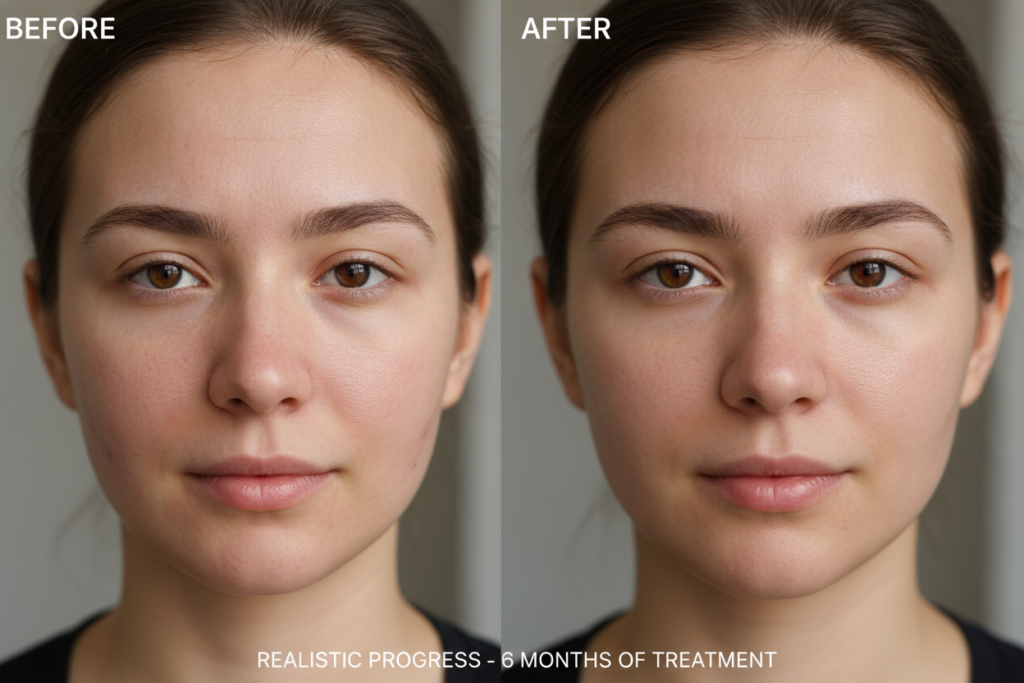
Significant improvements become evident after four to six months of consistent treatment. Deeper scars require longer timelines.
Some hypertrophic scars may take a full year to flatten noticeably. Deep atrophic scars might need professional treatments combined with home care.
Tracking Progress: Take monthly photos in consistent lighting. Progress happens so gradually that daily observation doesn’t reveal changes you can see in photo comparisons.
Factors That Influence Timeline
Several variables affect how quickly you see results. Understanding these factors helps set appropriate expectations.
Factor
Impact on Healing
What You Can Control
Scar Type
Atrophic scars take longer than hyperpigmentation
Choose treatments targeting your specific type
Scar Age
Newer scars respond faster
Start treatment as early as possible
Product Potency
Higher concentrations work faster
Gradually increase strength as tolerated
Consistency
Regular use essential for results
Follow routine daily without skipping
Sun Protection
UV exposure reverses progress
Wear sunscreen every day religiously
Common Mistakes That Slow Acne Scar Healing
Avoiding these frequent errors accelerates your progress. Many people unknowingly sabotage their results with these mistakes.
Learning from others’ experiences saves you time and frustration on your scar-healing journey.
Using Too Many Active Ingredients at Once
Product layering seems logical but often backfires. Combining multiple strong actives causes irritation that delays healing.
Your skin can only absorb so much at once. Over-treating creates inflammation that worsens the appearance of acne marks and scars.
Start with one active ingredient. Add new treatments only after your skin adjusts to current products.
Skipping Moisturizer to Avoid Breakouts
Some people skip moisturizer, fearing clogged pores. This mistake compromises your skin barrier and increases sensitivity.
Dehydrated skin produces more oil to compensate. Proper hydration actually helps prevent breakouts while supporting scar healing.
Choose non-comedogenic formulas appropriate for your skin type. Lightweight gel moisturizers work well for oily skin prone to acne.
Inconsistent Product Use
Sporadic treatment application prevents cumulative benefits. Active ingredients need consistent use to produce visible changes.
Skipping even a few days disrupts progress. Make your routine non-negotiable, like brushing your teeth.
Expecting Overnight Results
Impatience leads people to abandon effective treatments prematurely. Skin cell turnover takes weeks, not days.
Collagen remodeling requires months of consistent stimulation. Trust the process and commit to your routine long-term.
Effective Approaches
Start one product at a time
Use treatments consistently
Protect with sunscreen daily
Track progress with photos
Give products adequate trial time
Approaches to Avoid
Layering too many actives
Skipping steps to save time
Forgetting sun protection
Switching products too quickly
Picking at healing scars
Not Addressing Underlying Acne
Treating scars while still experiencing active breakouts creates an endless cycle. New inflammation produces additional scarring.
Control active acne before focusing intensively on scar treatment. Many scar treatments also prevent breakouts, creating dual benefits.
Ignoring Professional Help When Needed
Some scars require professional intervention. Waiting too long with ineffective home treatments wastes valuable time.
Consult a dermatologist if home treatments produce no improvement after six months. Professional procedures can jumpstart progress when combined with proper home care.
Building Your Personalized Acne Scar Skin Care Routine
Creating an effective routine requires understanding your unique skin needs. Cookie-cutter approaches rarely deliver optimal results.
Consider your scar type, skin sensitivity, and lifestyle when selecting products. The best routine is one you’ll actually follow consistently.
Assess Your Scar Type and Severity
Different types of acne scars require tailored approaches. Identify whether you primarily deal with textural scarring or pigmentation issues.
Atrophic scars benefit most from collagen-stimulating ingredients like retinoids. Post-inflammatory hyperpigmentation responds well to brightening agents and chemical exfoliants.
Hypertrophic scars may need professional treatments combined with silicone-based topicals. Your dermatologist can help identify your predominant scar type.
Consider Your Skin Type
Your skin’s characteristics influence product selection. Oily skin tolerates stronger actives better than sensitive skin.
Oily skin – can handle more frequent exfoliation
Dry skin – needs extra hydration between actives
Sensitive skin – requires gentler formulations
Combination skin – may need targeted treatments
Start Slowly and Build Up
Introduce new products one at a time, spacing introductions two weeks apart. This approach identifies potential irritants and allows proper skin adjustment.
Begin with lower concentrations and frequencies. Gradually increase as your skin builds tolerance.
Beginner Routine
Gentle cleanser twice daily
Vitamin C serum mornings
Basic moisturizer
SPF 30+ every morning
Retinol 2x weekly at night
Intermediate Routine
Double cleanse evenings
Vitamin C + niacinamide AM
Targeted serums
SPF 50 with reapplication
Retinol 4-5x weekly
Weekly AHA treatment
Advanced Routine
Double cleanse + exfoliating toner
Multiple targeted serums
Prescription retinoids nightly
SPF 50+ with antioxidants
Weekly chemical peels
Professional treatments quarterly
Track Your Progress
Document your journey with consistent photos. Take pictures monthly in the same lighting, angle, and location.
Keep a skincare journal noting products used, any reactions, and observations. This record helps identify what works best for your skin.
Measure success by overall improvement rather than perfection. Even stubborn scars can show significant fading with proper care over time.
Accelerate Your Scar-Healing Results Today
Stop guessing which products work. Access proven formulations and step-by-step guidance designed specifically for acne scar treatment success.
Frequently Asked Questions About Acne Scar Treatment
How long does it take to see results from an acne scar skin care routine?
Most people notice initial improvements within 4-6 weeks of consistent treatment. However, significant changes to textural scarring require 3-6 months or longer.
Post-inflammatory hyperpigmentation typically fades faster than atrophic scars. Deep scars may need 6-12 months of treatment combined with professional procedures for optimal results.
Can acne scars completely disappear with skincare products alone?
Skincare products significantly improve the appearance of acne scars but rarely eliminate deep scars completely. Post-inflammatory hyperpigmentation can fade entirely with consistent treatment.
Shallow atrophic scars respond well to retinoids and may become nearly invisible. Deep scars typically require professional treatments like microneedling or laser therapy for substantial improvement.
Should I use different products for different types of acne scars?
Yes, different scar types benefit from specific treatments. Atrophic scars need collagen-stimulating ingredients like retinoids and peptides.
Post-inflammatory hyperpigmentation responds to brightening agents like vitamin C, niacinamide, and alpha hydroxy acids. Hypertrophic scars may require silicone gels or professional treatments. Many people have multiple scar types and benefit from combination approaches.
What’s the most important step in an acne scar treatment routine?
Sunscreen every day represents the single most crucial step. UV exposure darkens scars and prevents healing, undoing months of treatment progress.
Without daily sun protection, even the most effective treatments won’t deliver optimal results. Apply broad-spectrum SPF 30 or higher every morning, regardless of weather or indoor activities.
Can I use multiple active ingredients together for faster results?
Using multiple actives can be effective when done strategically. However, combining too many strong ingredients causes irritation that delays healing.
Start with one active ingredient and introduce others gradually. Alternate different actives on different nights rather than layering everything together. Some combinations, like retinoids with AHAs, should not be used simultaneously.
Do I still need acne scar treatment if my breakouts have stopped?
Yes, acne scars persist even after breakouts resolve. The scarring represents permanent changes to skin structure that require targeted treatment.
In fact, treating scars becomes easier once active acne subsides. You can focus entirely on scar improvement without new inflammation creating additional damage. Continue preventive measures to avoid future breakouts and scarring.
Your Journey to Smoother Skin Starts Now
Acne scars don’t have to define your appearance forever. The right combination of active ingredients, consistent routine, and patience produces remarkable improvements.
Remember that healing takes time. Your skin didn’t develop scars overnight, and it won’t heal overnight either.
Start with the basics: gentle cleansing, targeted treatments, proper moisturizing, and religious sun protection. Build from there as your skin adjusts and your knowledge grows.
Track your progress with monthly photos. The gradual improvements that seem invisible day-to-day become dramatically apparent when comparing photos months apart.
Don’t hesitate to seek professional help for stubborn scars. Dermatologists offer treatments that work synergistically with home care to accelerate results.
Most importantly, stay consistent. The best acne scar skin care routine is one you follow daily without fail. Your dedication to the process determines your success.
Clear, smooth skin is achievable with the right approach. Every day you follow your routine brings you closer to the complexion you desire.
Your Next Step: Choose one improvement to make today. Whether it’s adding sunscreen, introducing a retinoid, or simply committing to consistency, take action now. Your future skin will thank you.