Starting your sewing journey with baby projects opens up a world of creativity and joy. Making handmade items for little ones feels rewarding, especially when you complete your first project.
Baby items make perfect beginner sewing projects. They require small amounts of fabric and basic stitches. You’ll finish projects quickly, which keeps you motivated.
This guide shares simple sewing projects perfect for beginners. Each project builds your skills while creating something useful and adorable for baby.
Why Baby Sewing Projects Work Great for Beginners
Baby projects offer unique advantages for people learning to sew. The small size means less fabric to manage and shorter sewing time.
Most baby items use basic shapes and straight seams. You won’t need advanced techniques to create beautiful results. Simple patterns help you master fundamentals.
Benefits of Baby Sewing
Quick completion time builds confidence
Less expensive fabric requirements
Simple patterns with clear instructions
Creates meaningful handmade gifts
Practice essential sewing skills
Common Challenges
Small pieces require careful handling
Precision matters for baby safety
Choosing appropriate fabrics
Following sizing guidelines
Free sewing patterns make starting even easier. Many designers share free baby patterns to help beginners get started without extra cost.
Ready to Start Your Baby Sewing Journey?
Get instant access to comprehensive sewing guides designed specifically for beginners. Learn the techniques that make baby projects easy and enjoyable.
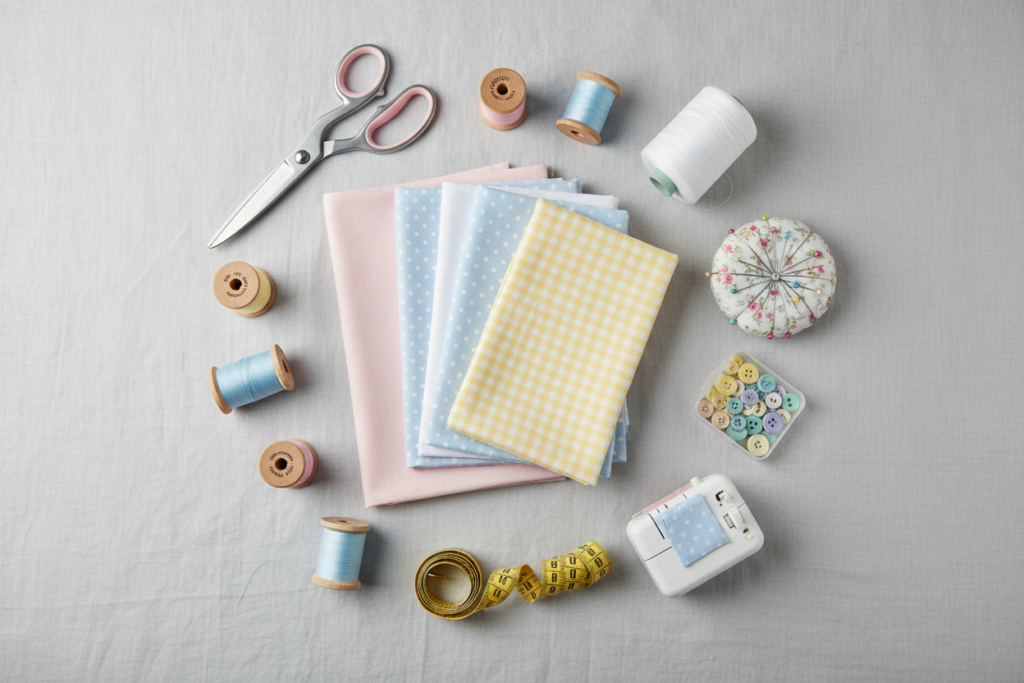
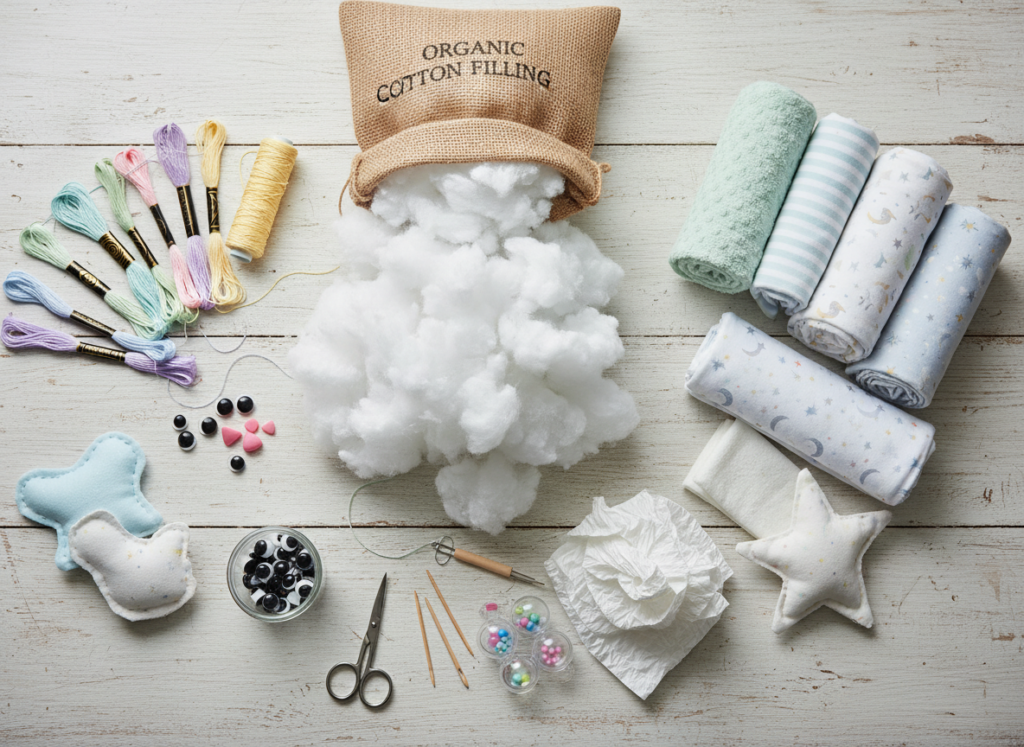
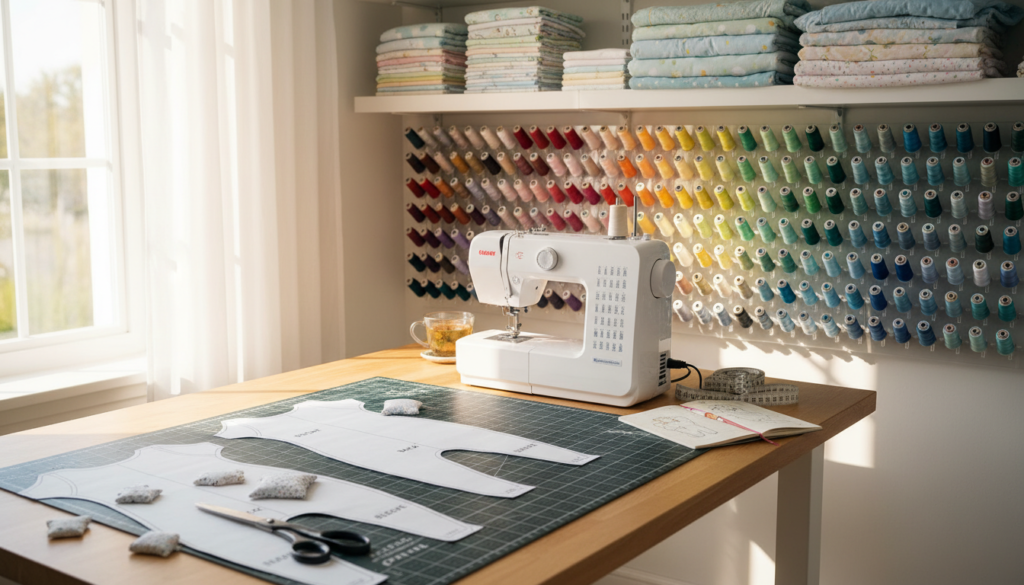
Starting with the right supplies makes sewing projects smoother. You don’t need expensive equipment to create beautiful baby items.
Basic Sewing Tools
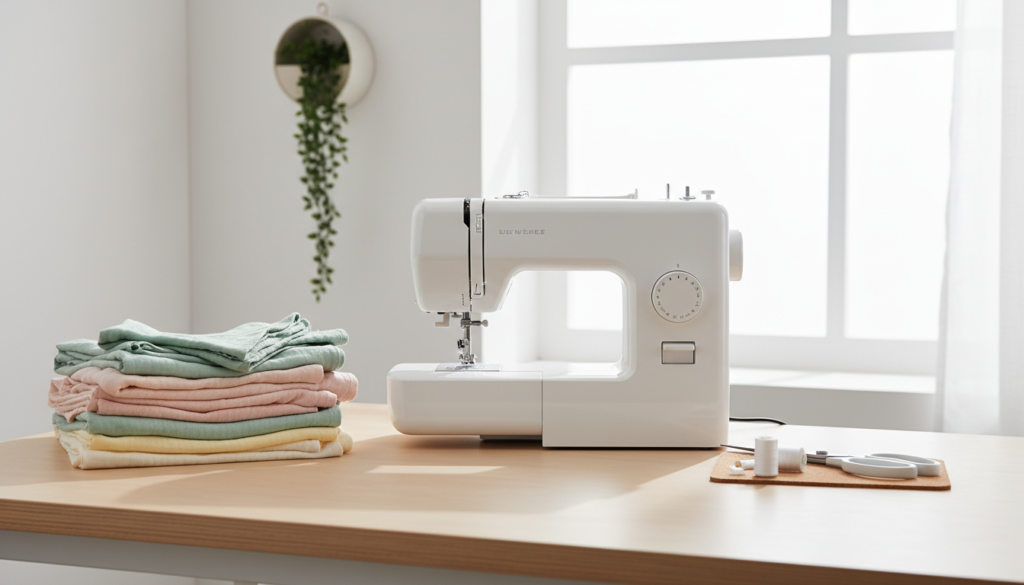
A reliable sewing machine handles most baby projects. Even basic models work perfectly for beginner sewing. Look for machines with straight stitch and zigzag capabilities.
Sharp fabric scissors cut cleanly through multiple fabric layers. Keep separate scissors for fabric only. Paper dulls blades quickly.
Choosing Baby-Safe Fabrics
Cotton fabric works best for baby sewing projects. It’s soft, breathable, and easy to wash. Knit fabrics add stretch for comfortable baby clothes.
Pre-wash all fabrics before cutting. This prevents shrinking after you complete your project. Use gentle detergent without harsh chemicals.
Safety Tip: Always choose fabrics labeled as baby-safe. Avoid materials with loose fibers or embellishments that could pose choking hazards.
Useful Notions and Extras
Pins or clips to hold fabric layers together
Measuring tape for accurate dimensions
Seam ripper for fixing mistakes
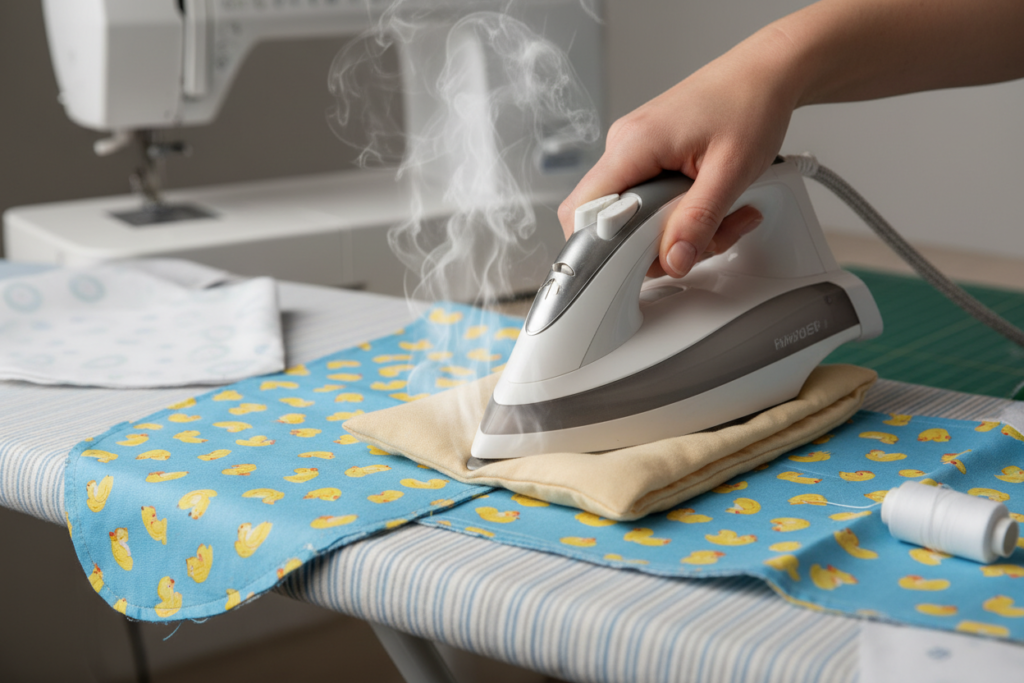
Iron and ironing board for pressing seams
Thread in basic colors matching your fabrics
Pattern paper or tracing material
Many free sewing patterns include supply lists. Review these before shopping to buy exactly what you need.
Simple Burp Cloths: Your First Baby Sewing Project
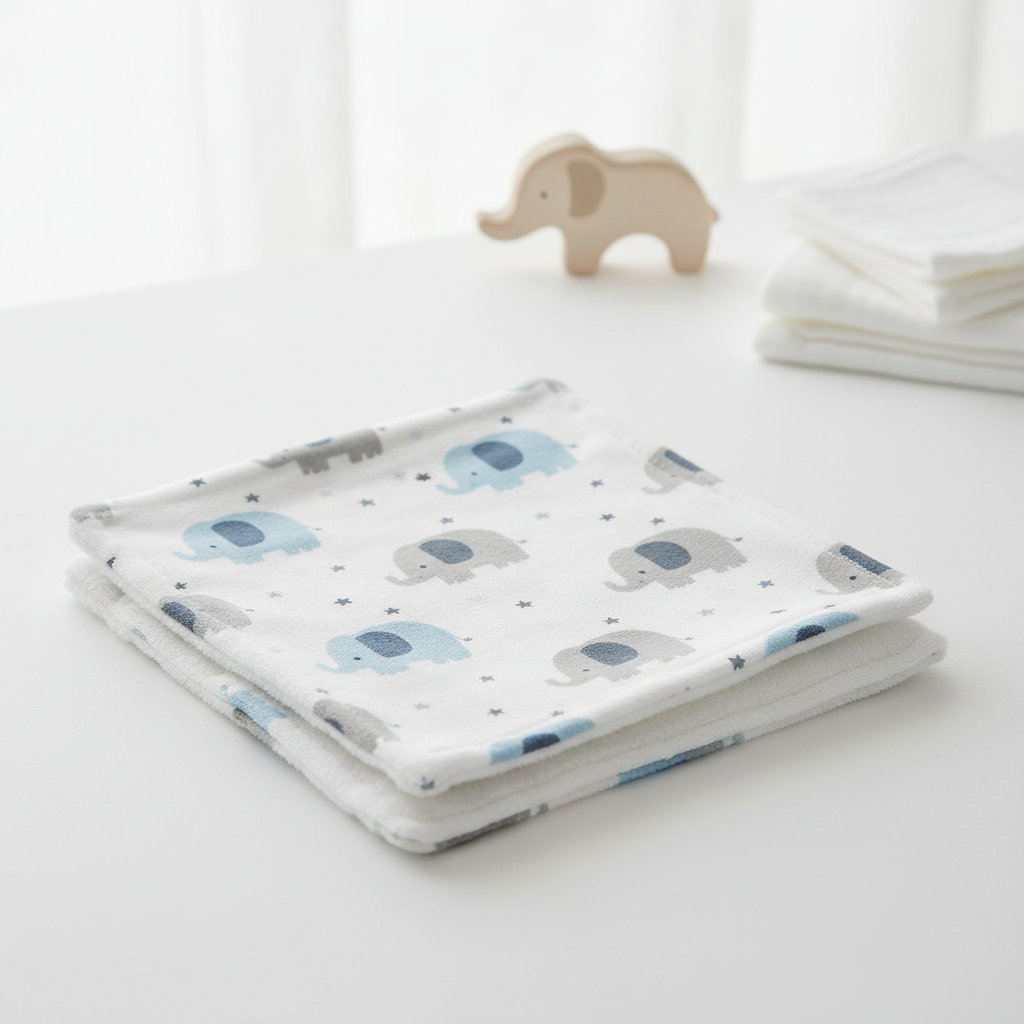
Burp cloths make the perfect first sewing project. They require minimal fabric and use only straight seams. You’ll complete one in under an hour.
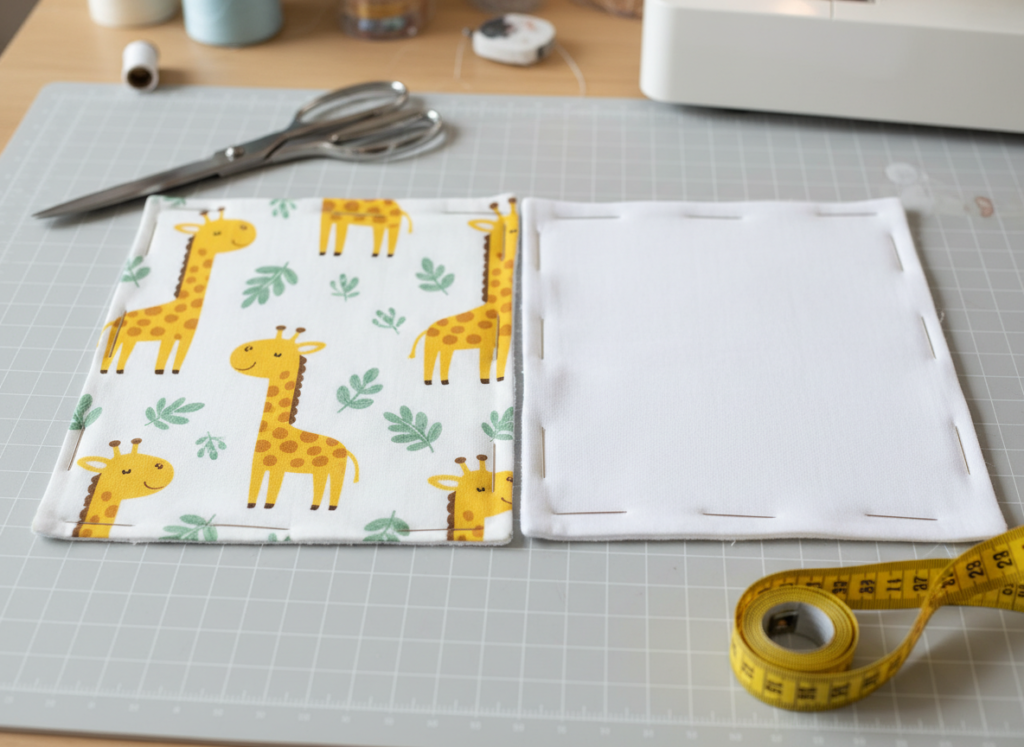
Most baby burp cloth patterns need two fabric pieces sewn together. The simple construction builds confidence while creating something useful.
What You Need
Two fabric pieces, approximately 10 inches by 20 inches each
Matching thread
Basic sewing machine
Pins or clips
Basic Steps
Cut two matching rectangles from your chosen fabrics
Place fabric pieces together with right sides facing
Pin around all edges, leaving a small opening
Sew around the perimeter with quarter-inch seam allowance
Clip corners and turn right side out through opening
Press flat and topstitch around all edges
The baby burp cloth project teaches fundamental sewing skills. You practice straight seams, turning corners, and finishing edges.
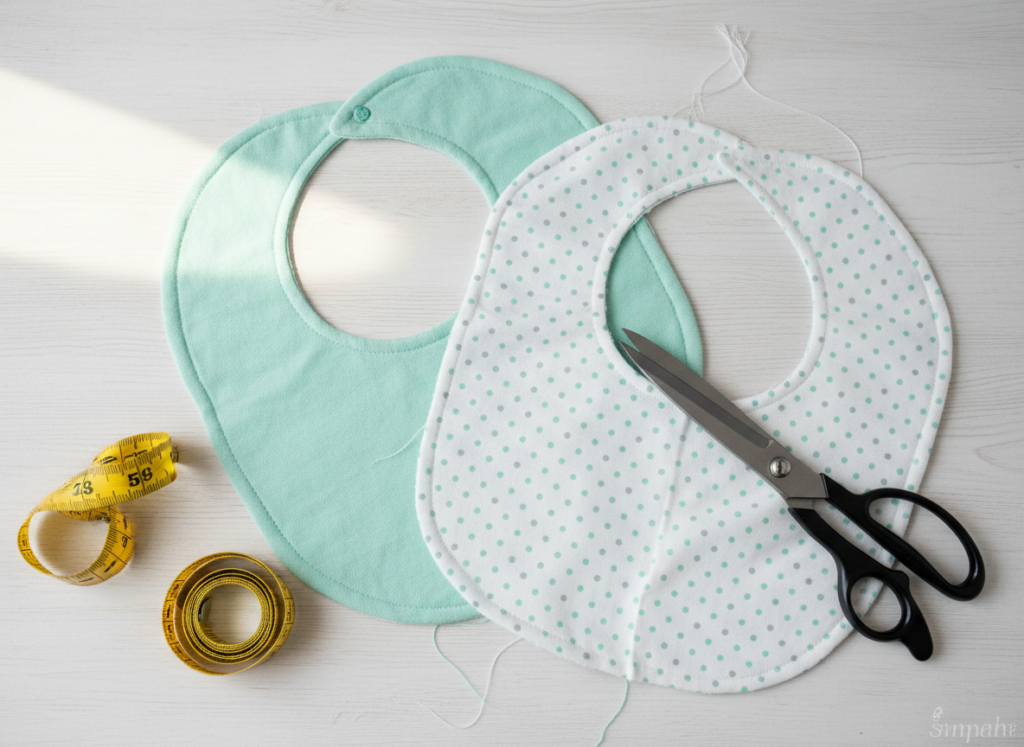
Baby bib projects introduce you to curved seams and closures. Many free pattern options exist online, making it easy to get started.
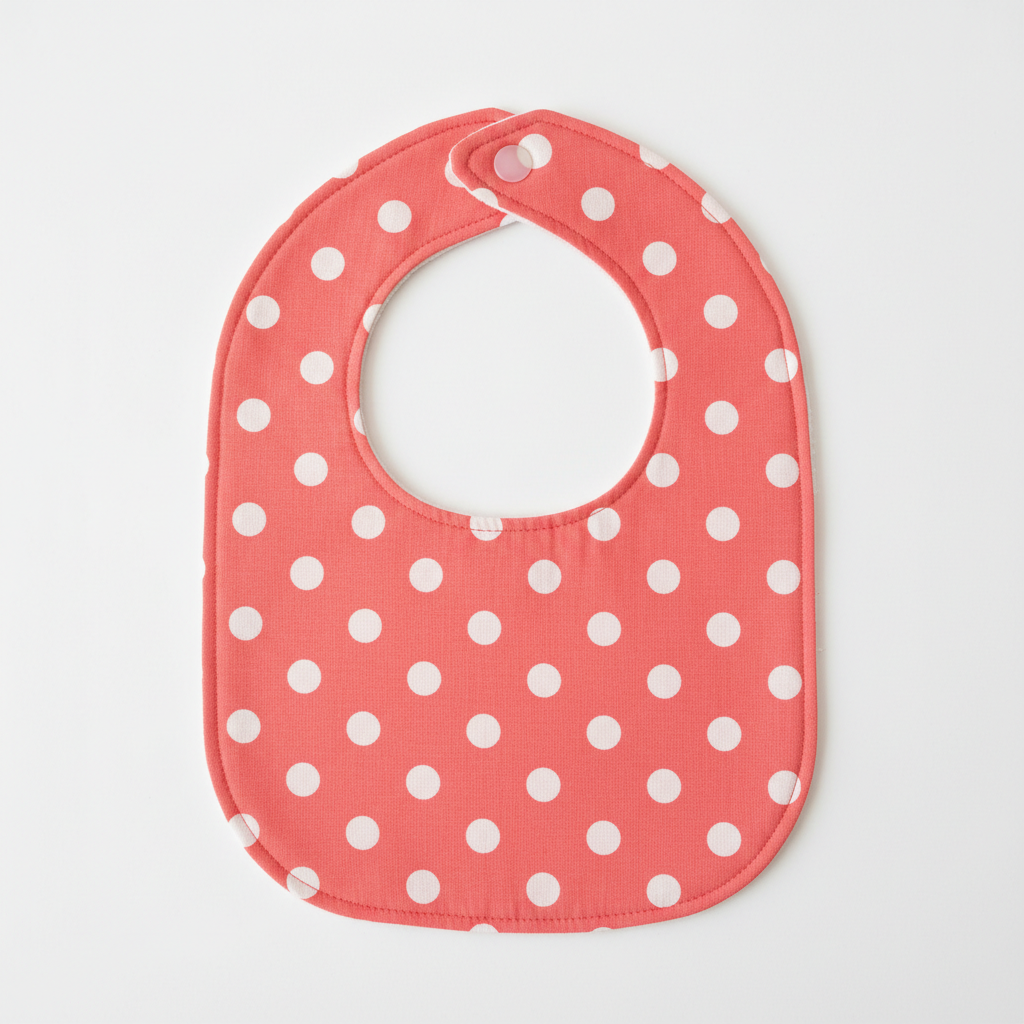
A basic baby bib requires minimal fabric scraps. This makes bibs perfect for using leftover material from other projects.
Bib Style Options
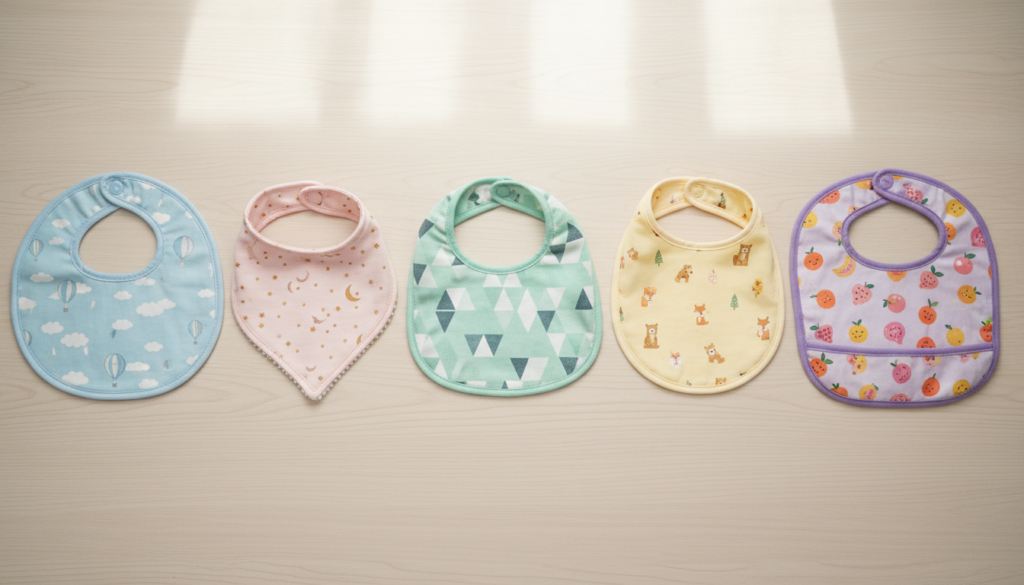
Traditional bibs work well for everyday feeding. The rounded shape fits comfortably around baby’s neck. Bandana bibs add style while catching drool.
Pullover bibs slip over baby’s head without closures. This design works great for active babies who grab at everything.
Adding Closures
Snap closures provide the easiest fastening method. Plastic snaps require a simple tool to install. They’re durable and safe for baby.
Velcro offers adjustable sizing as baby grows. Sew soft Velcro on the bib side and hook Velcro on the strap. This prevents scratching baby’s skin.
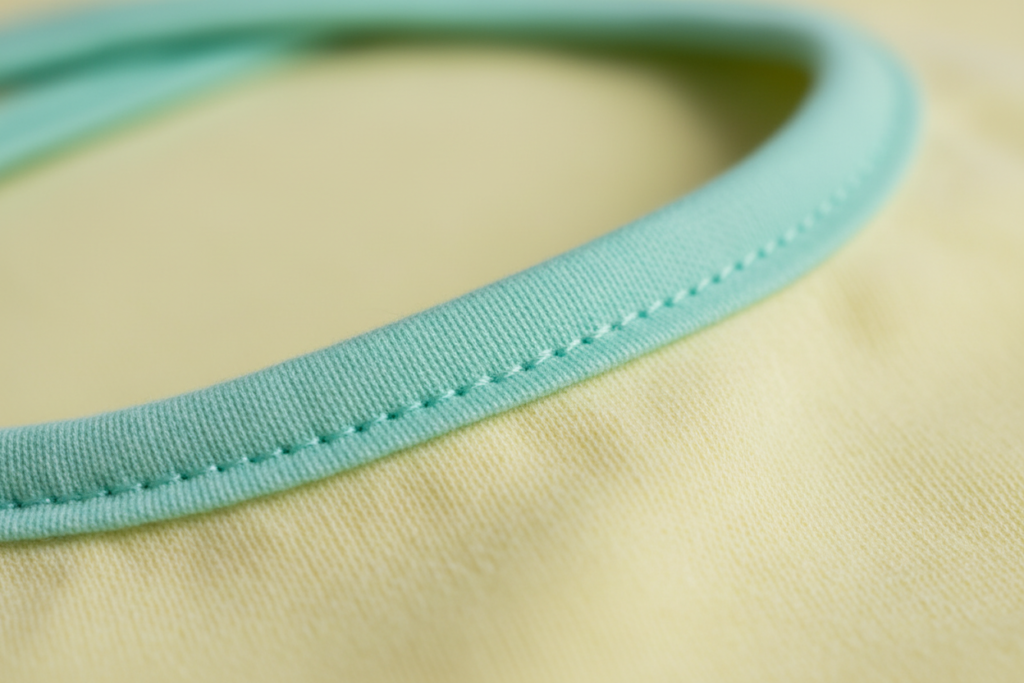
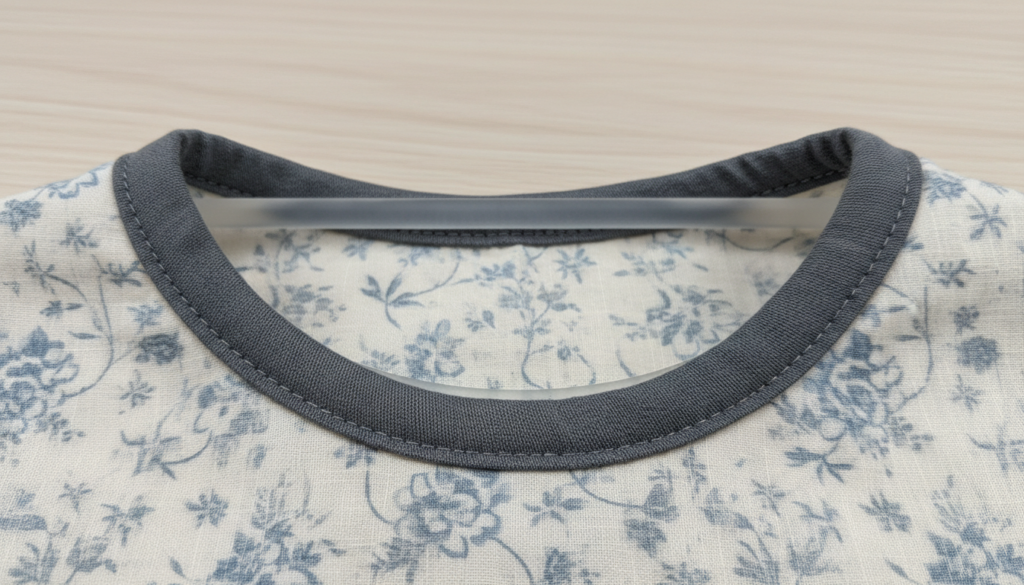
Beginner Tip: Start with a bib free pattern that uses bias tape for finishing edges. This technique creates professional-looking results without advanced skills.
Most baby bib patterns include multiple sizes. This way you make bibs that fit from newborn through toddler stages.
Master Bib-Making Like a Pro
Discover detailed video tutorials showing every step of bib construction, from choosing fabrics to installing closures perfectly.
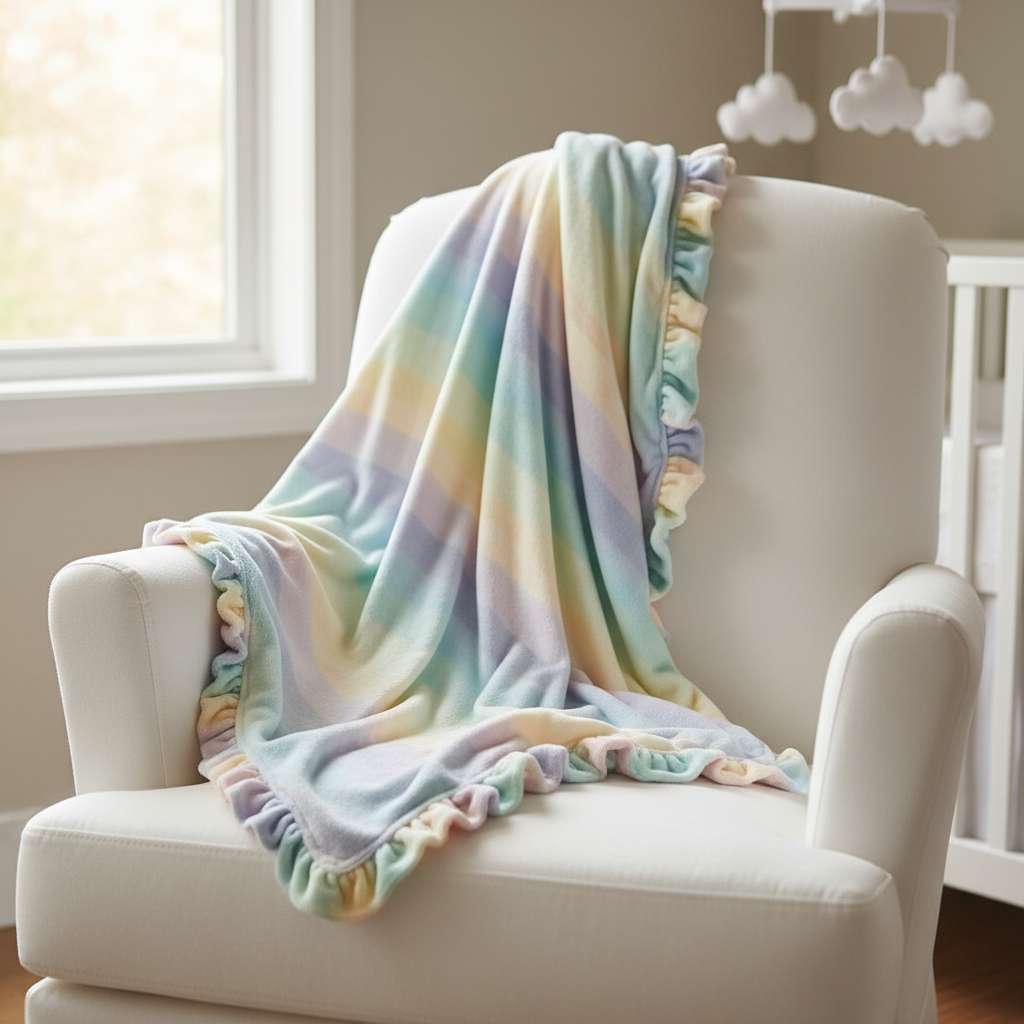
A baby blanket makes a wonderful first large sewing project. The construction remains simple despite the bigger size.
Receiving blankets use two fabric layers sewn together. Most patterns create squares between 30 and 40 inches. This size works perfectly for swaddling and cuddling.
Fabric Selection for Blankets
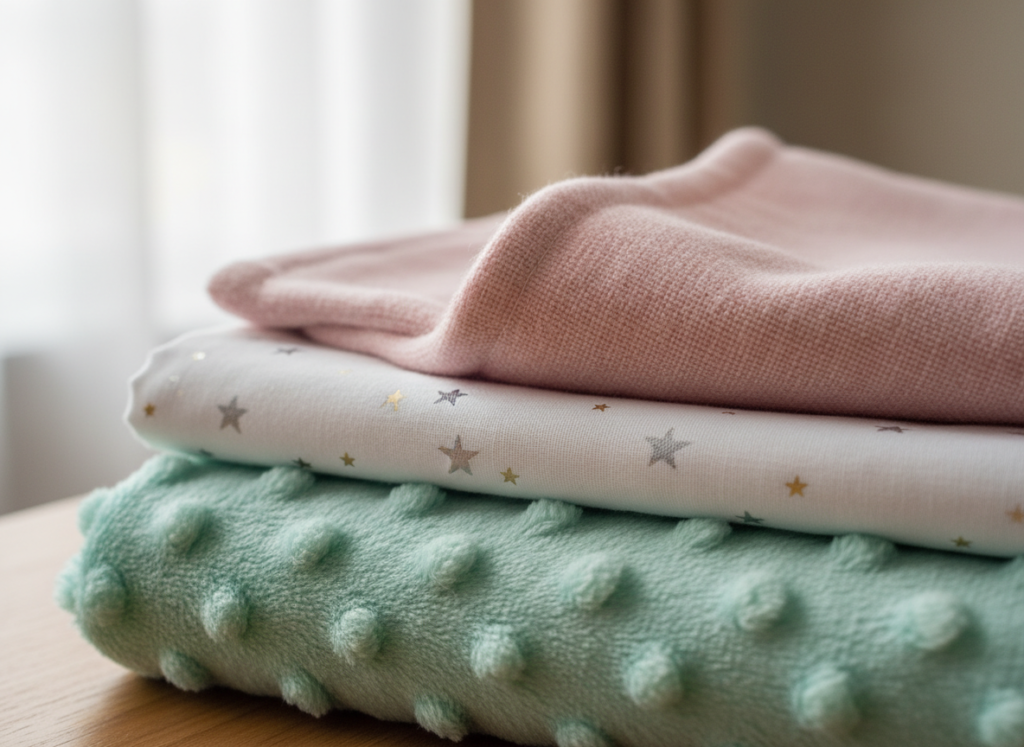
Flannel fabric creates warm, soft blankets perfect for cooler weather. The brushed surface feels gentle against baby’s skin. Double-sided flannel eliminates the need for different fabrics.
Cotton muslin makes lightweight summer blankets. The breathable fabric keeps baby comfortable in warm weather. Muslin gets softer with each wash.
Minky fabric adds luxury to baby blanket projects. Pair it with cotton for the backing. The combination creates a cozy yet practical blanket.
Creating Finished Edges
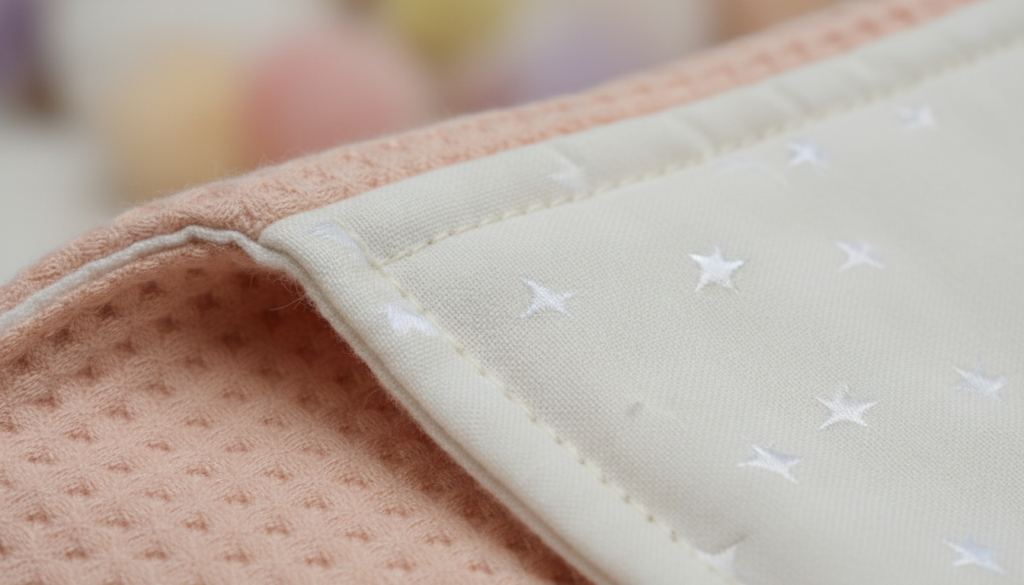
The self-binding method creates clean edges without separate binding. You use one fabric layer to wrap around and enclose the raw edges.
Cut backing fabric two inches larger than front fabric
Layer fabrics with right sides facing up
Fold backing edges over front fabric
Pin and stitch close to the folded edge
Satin blanket binding adds decorative flair. The silky texture provides sensory interest for babies. Attach binding around all four edges for a polished look.
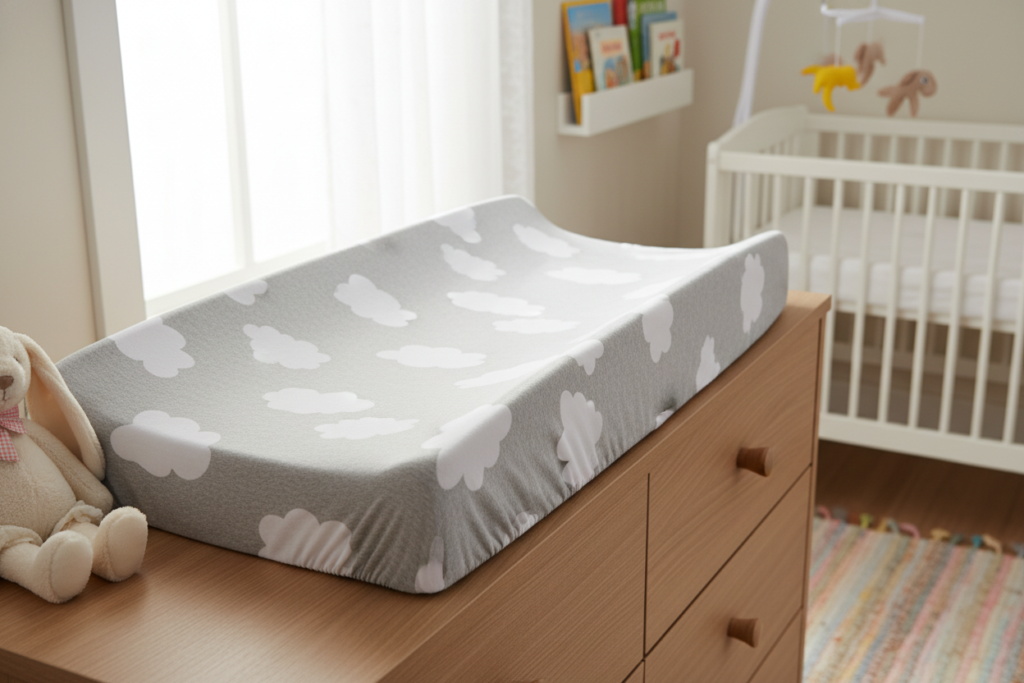
Changing pad covers rank among the most practical baby sewing projects. Babies need frequent changes, so having multiple covers helps.
This sewing project introduces elastic casing techniques. The elastic creates a snug fit around standard changing pads.
Measuring for Perfect Fit
Measure your changing pad’s length, width, and height. Add these measurements together to calculate fabric needs. Include extra for seam allowances.
Most standard changing pads measure 32 inches by 16 inches. Confirm your pad dimensions before cutting fabric.
Working with Elastic
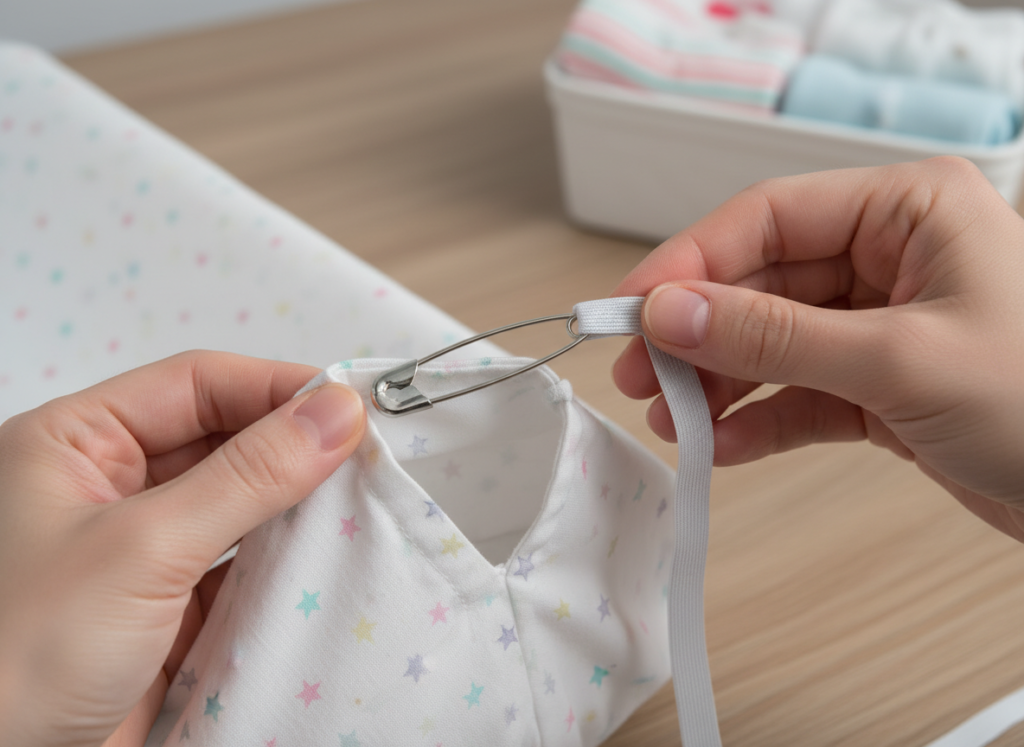
Quarter-inch elastic works well for changing pad covers. Thread elastic through a sewn casing around the cover’s perimeter.
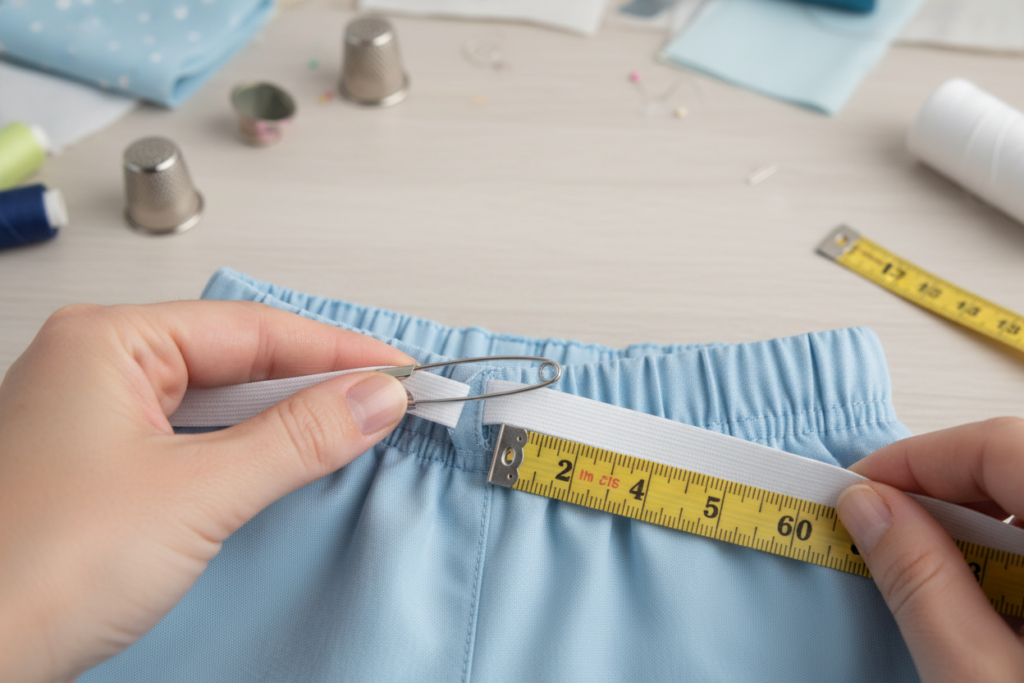
Use a safety pin attached to the elastic end. This makes threading through the casing channel much easier. Pin both elastic ends together before stitching closed.
Important: Test the cover fit before finishing. The elastic should hold firmly without being too tight. Adjust tension as needed.
Choose fabrics that wash easily. Changing pad covers need frequent laundering. Cotton and cotton blends work best for durability.
DIY Baby Diaper Bag Organization
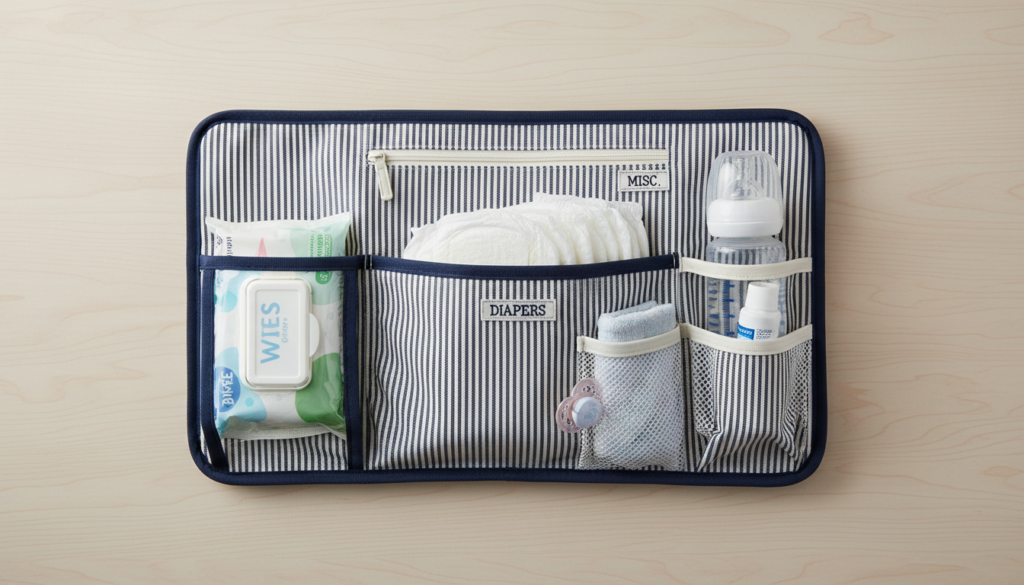
A diaper bag organizer keeps baby essentials tidy and accessible. This sewing project builds skills in creating pockets and compartments.
The bag insert fits inside existing diaper bags. Multiple pockets hold diapers, wipes, bottles, and small items separately.
Planning Your Layout
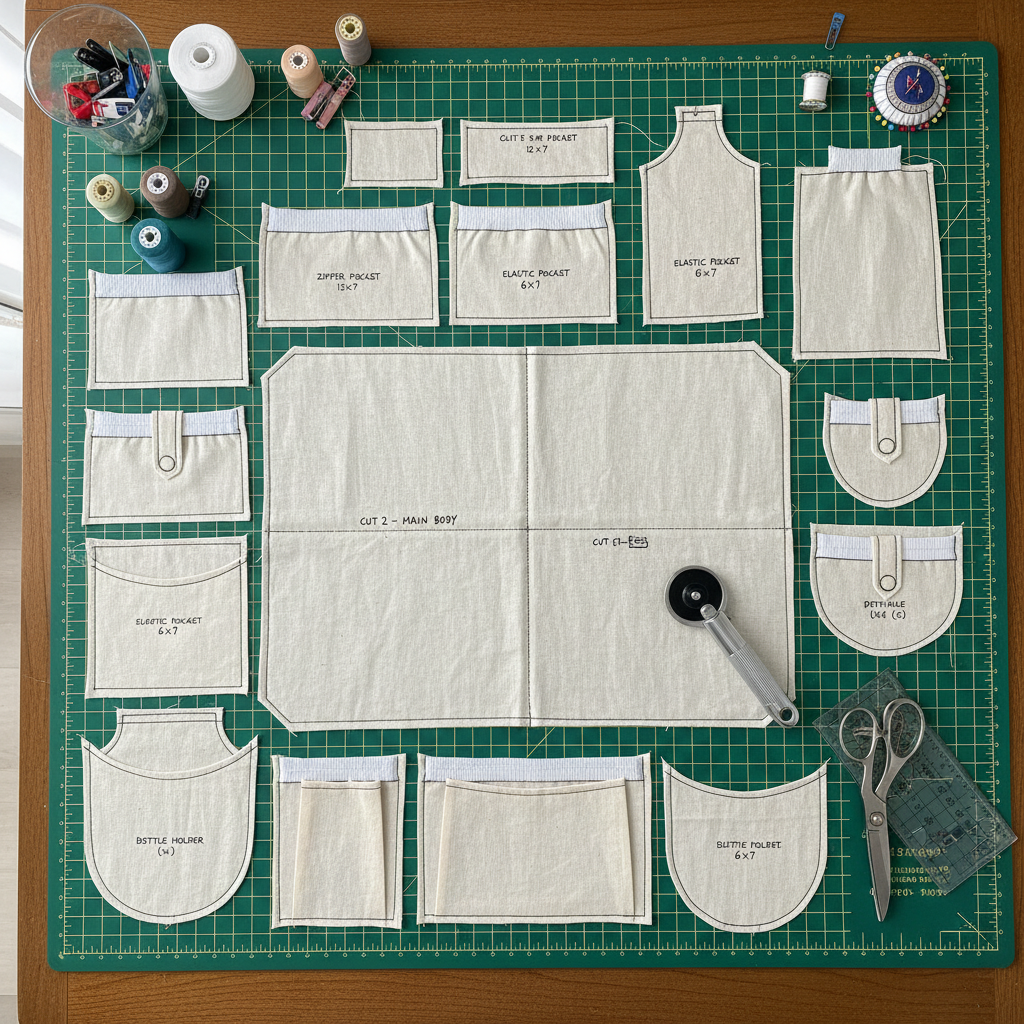
Sketch your organizer design before cutting fabric. Decide how many pockets you need and their sizes. Common sections include diaper storage, wipe pocket, and bottle holders.
Add interfacing to give the organizer structure. This helps pockets maintain their shape even when empty. Fusible interfacing works easiest for beginners.
Constructing Secure Pockets
Reinforce pocket tops with double stitching. This prevents tearing when you pull items in and out repeatedly. Backstitch at the beginning and end of each seam.
Box corners at the bottom create depth in bottle pockets. This simple technique lets pockets hold rounded items securely.
Build Professional Organization Skills
Learn advanced pocket construction and bag-making techniques that you can use for countless projects beyond baby items.
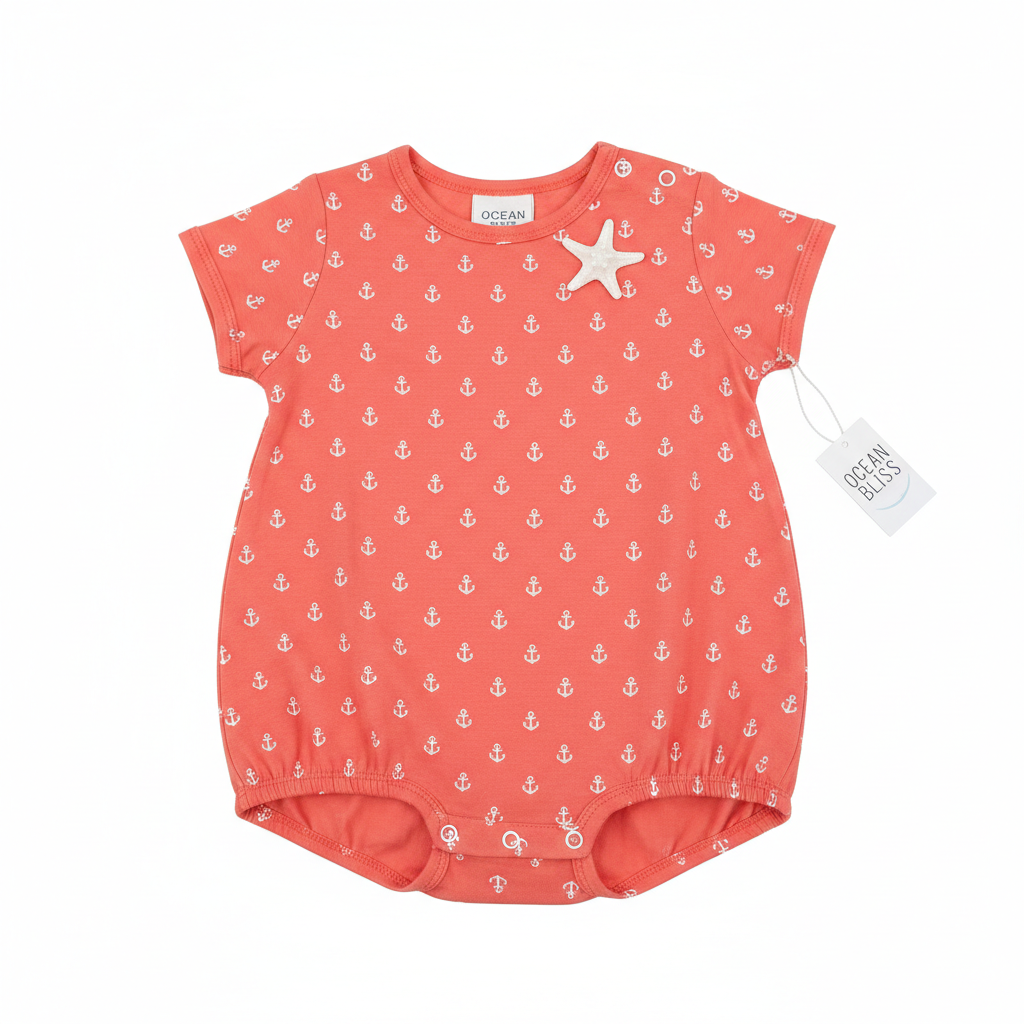
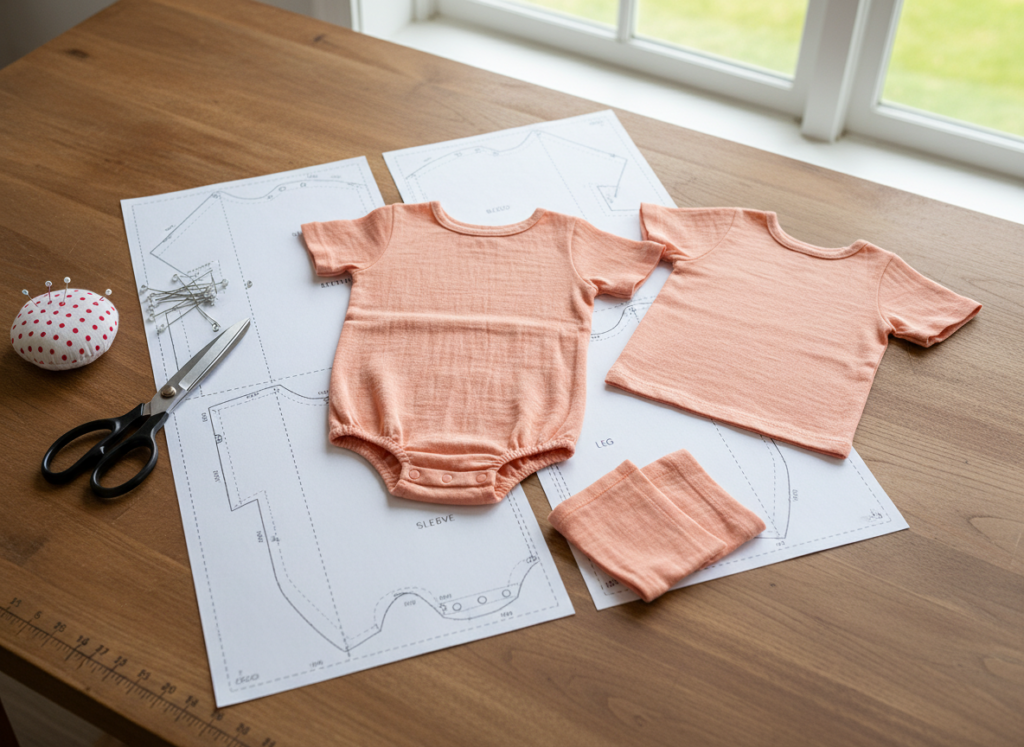
A baby romper introduces basic garment construction. This one-piece outfit looks impressive while using beginner-friendly techniques.
Free baby romper patterns come in various styles. Simple designs work best when you’re just starting. Look for patterns with minimal pieces.
Understanding Pattern Sizing
Baby clothes patterns list ages and measurements. Always check the measurement chart rather than relying only on age. Babies grow at different rates.
Knit fabrics work well for baby romper projects. The stretch provides comfort and makes dressing easier. Use a ballpoint needle designed for knits.
Adding Snaps for Easy Changes
Leg snaps make diaper changes simple. Space snaps evenly along the inseam. Plastic snaps install quickly with an inexpensive tool.
Some patterns use fold-over elastic at leg openings. This creates a soft, stretchy edge that’s comfortable for baby.
Time-Saving Tip: Make multiple rompers at once. Cut several in different sizes or fabrics. This makes efficient use of your sewing time.
Summer rompers need lightweight, breathable fabrics. Cotton jersey and cotton lycra blends keep babies cool in warm weather.
Free Baby Shorts Patterns for Warm Weather
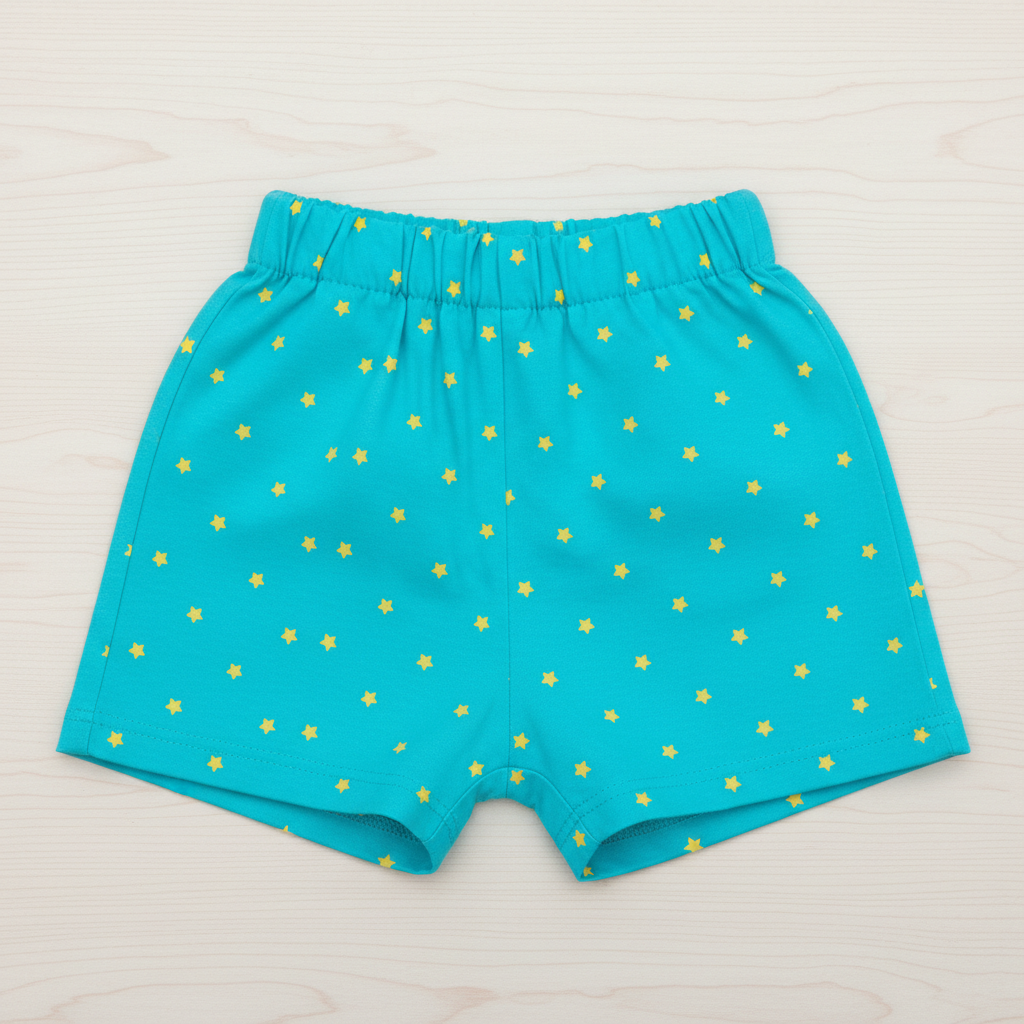
Baby shorts make quick, satisfying projects. These tiny garments require little fabric and come together in an afternoon.
Free baby shorts patterns typically include sizes from newborn through toddler. The elastic waist construction eliminates complicated closures.
Elastic Waistband Techniques
Creating a casing for elastic gives shorts a comfortable, adjustable fit. Fold the waist edge down and stitch, leaving a small opening. Thread elastic through using a safety pin.
Overlap elastic ends by one inch before stitching them together. This creates a secure join that won’t come apart in the wash.
Choosing Appropriate Fabrics
Lightweight cotton works perfectly for summer shorts. Chambray, seersucker, and cotton poplin stay cool and comfortable. Knit fabrics add stretch for active babies.
Consider fabric scraps from other projects. Baby shorts need minimal yardage, making them ideal for using up remnants.
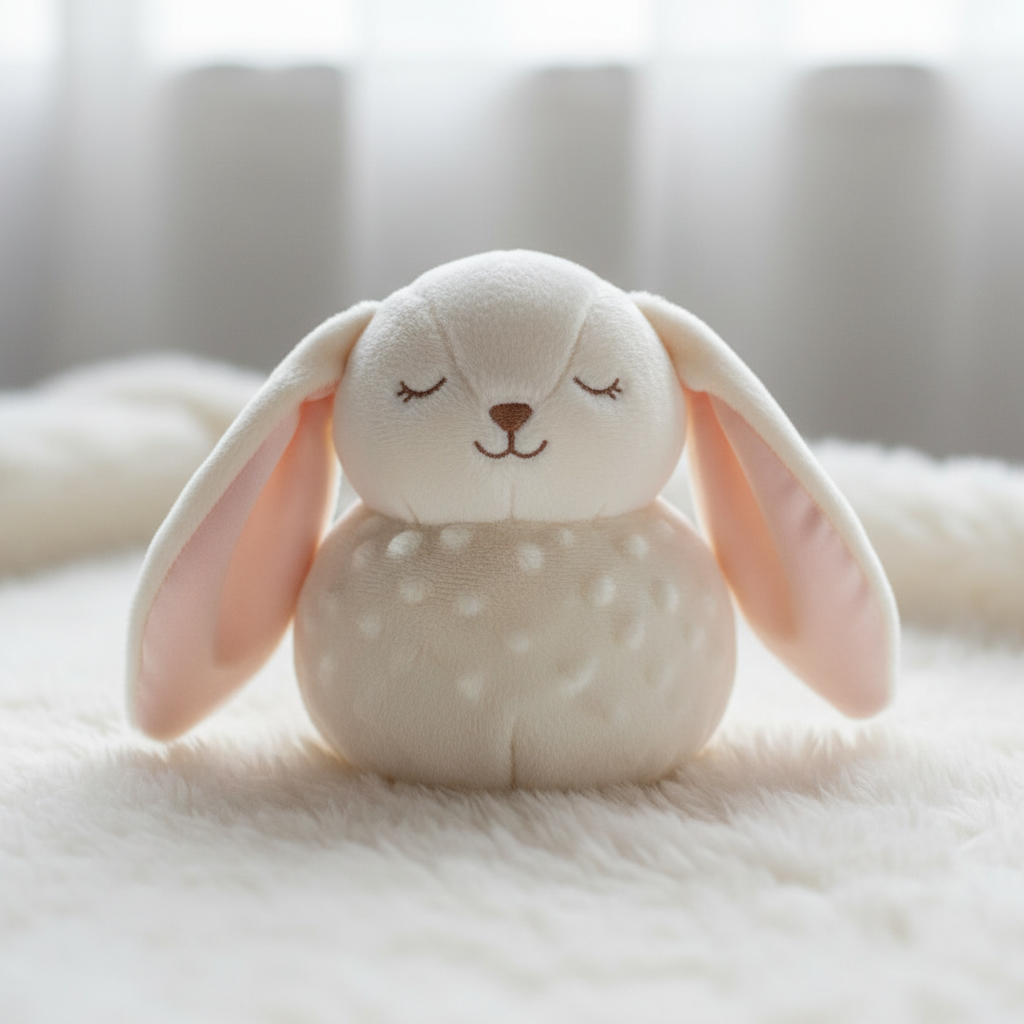
Fabric toys make wonderful gifts and introduce embellishment techniques. These diy baby projects let you practice working with small pieces and stuffing.
Sensory toys help baby development. Include different textures, crinkly materials, and gentle sounds. Always prioritize safety when creating baby toys.
Safety Considerations
Use securely attached eyes or embroider facial features
Avoid small buttons or beads that could detach
Choose non-toxic, baby-safe materials throughout
Reinforce all seams with double stitching
Test durability by pulling firmly on all parts
Simple Rattle Construction
Basic rattles combine fabric shapes with plastic rattle inserts. Cut two matching shapes, leaving space for the rattle. Sew around edges, insert the rattle, and close the opening.
Add ribbon tags around the edges. Babies love grabbing and pulling these. Securely stitch ribbons into the seam for safety.
Safety First: All handmade baby toys should be supervised during play. Regularly inspect toys for loose parts or wear.
Nursing Covers and Breastfeeding Accessories
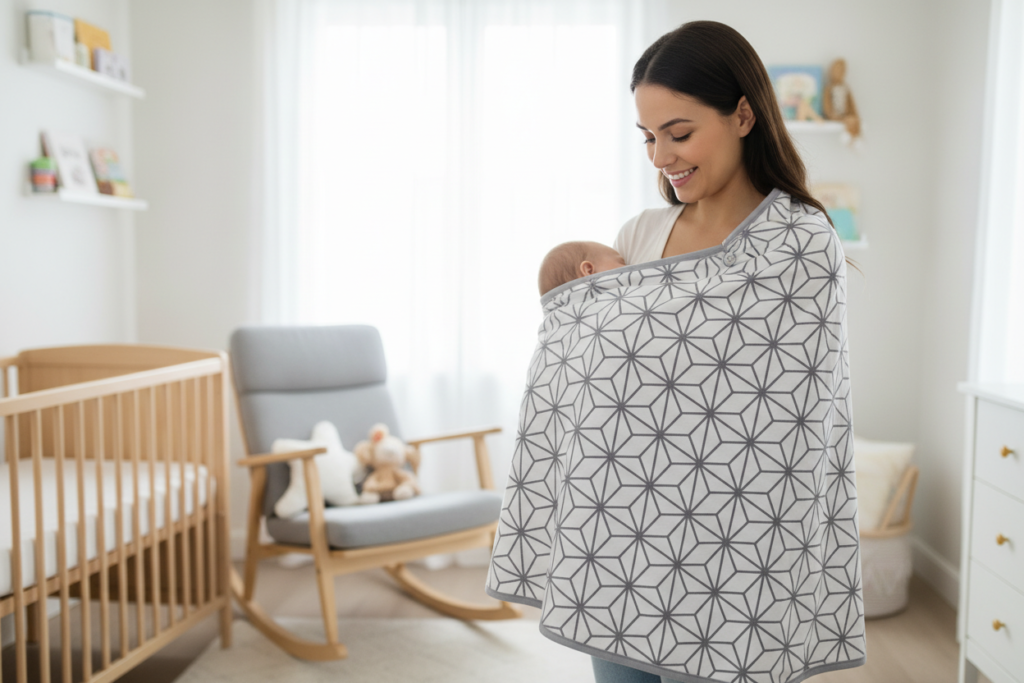
Nursing covers provide privacy and comfort for breastfeeding mothers. These projects use simple shapes with thoughtful design details.
The curved neckline lets mothers maintain eye contact with baby while nursing. Boning inserted at the neck creates a viewing window.
Design Features
Generous sizing ensures full coverage from all angles. Most patterns create rectangular shapes approximately 25 by 35 inches.
Adjustable neck straps accommodate different body types. Include a simple slider for easy adjustment. Some designs use D-rings for durability.
Fabric Recommendations
Breathable fabrics keep both mother and baby comfortable. Lightweight cotton, cotton voile, and double gauze work beautifully. Avoid heavy or non-breathable materials.
Choose patterns and colors that match personal style. This makes mothers more likely to use the cover regularly.
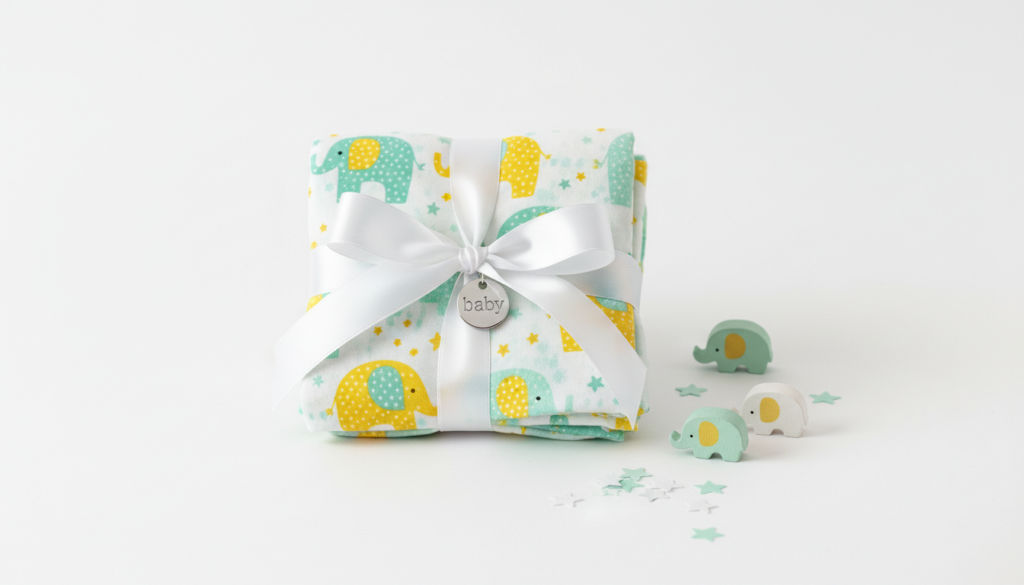
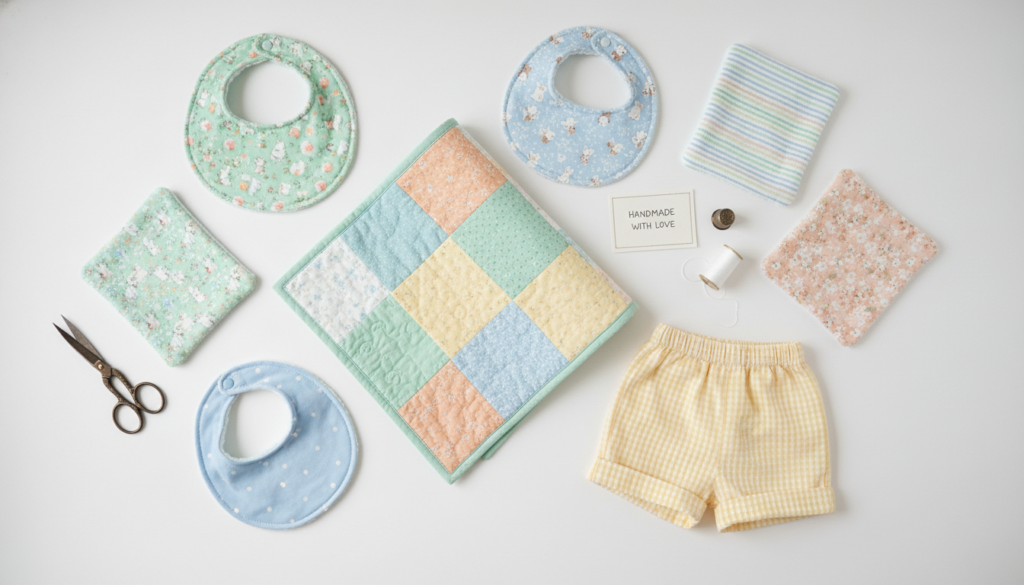
Combining multiple projects creates impressive gift sets. A coordinated set shows extra thoughtfulness and makes a great gift for baby showers.
Choose complementary fabrics that work together. Use the same prints in different scales or mix solids with patterns.
Popular Gift Set Combinations
New Baby Basics
Two burp cloths
Three bibs
Small receiving blanket
Bath Time Bundle
Hooded towel
Washcloths
Toy bag for tub
On-the-Go Set
Diaper bag organizer
Changing pad cover
Pacifier clips
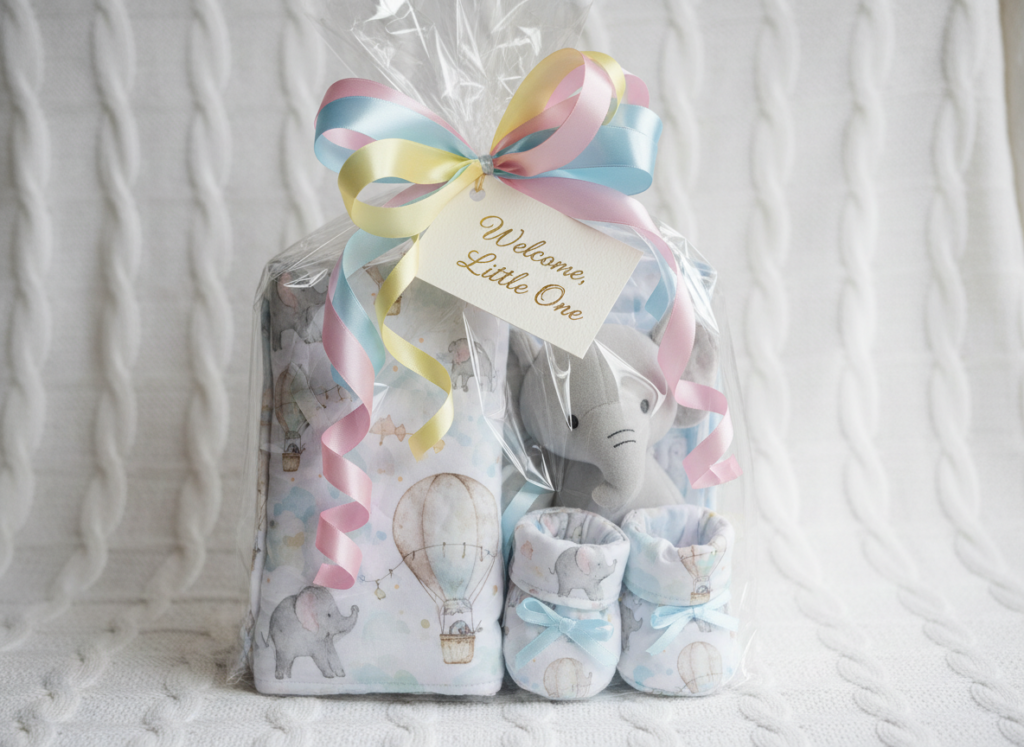
Package finished items beautifully for gifting. Clear cellophane bags tied with ribbon show off your work. Add a handmade tag for a personal touch.
Handmade baby gifts carry special meaning. Recipients appreciate the time and care invested in creating something unique.
Essential Tips for Beginner Sewing Success
Following helpful tips improves your sewing experience. These strategies help beginners avoid common frustrations and achieve better results.
Getting Started Right
Before You Sew
Read through entire pattern instructions first
Pre-wash and iron all fabrics
Test stitches on fabric scraps
Check machine needle condition
Organize supplies within easy reach
While Sewing
Take breaks to prevent fatigue and mistakes
Press seams as you sew for professional results
Use pins generously to prevent shifting
Sew slowly to maintain control
Don’t fear the seam ripper – mistakes happen
Troubleshooting Common Issues
Why does my thread keep breaking?
Check your needle first. Dull or bent needles cause thread breaks. Also verify proper threading and adjust tension settings if needed.
How do I prevent fabric from puckering?
Reduce thread tension and ensure you’re not pulling fabric through the machine. Let the feed dogs do the work. Use appropriate needle size for your fabric weight.
What if my seams aren’t straight?
Use the markings on your machine’s throat plate as guides. Sew slowly and focus on keeping fabric edges aligned with these guides rather than watching the needle.
Practice builds confidence and skill. Each project teaches valuable lessons. Don’t expect perfection immediately.
Transform Your Sewing Skills Fast
Get instant access to expert guidance that helps you avoid beginner mistakes and create professional-quality baby items from your very first project.
Free sewing patterns make starting new projects affordable. Many talented designers share patterns to help beginners learn.
Reliable Pattern Sources
Sewing blogs often provide free baby patterns with detailed tutorials. These include photos showing each step, which helps visual learners.
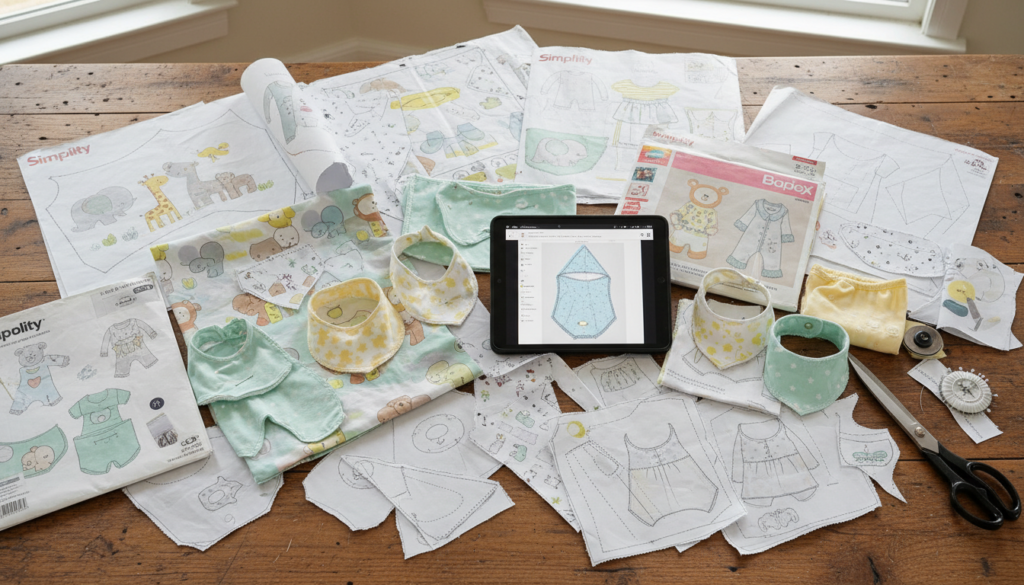
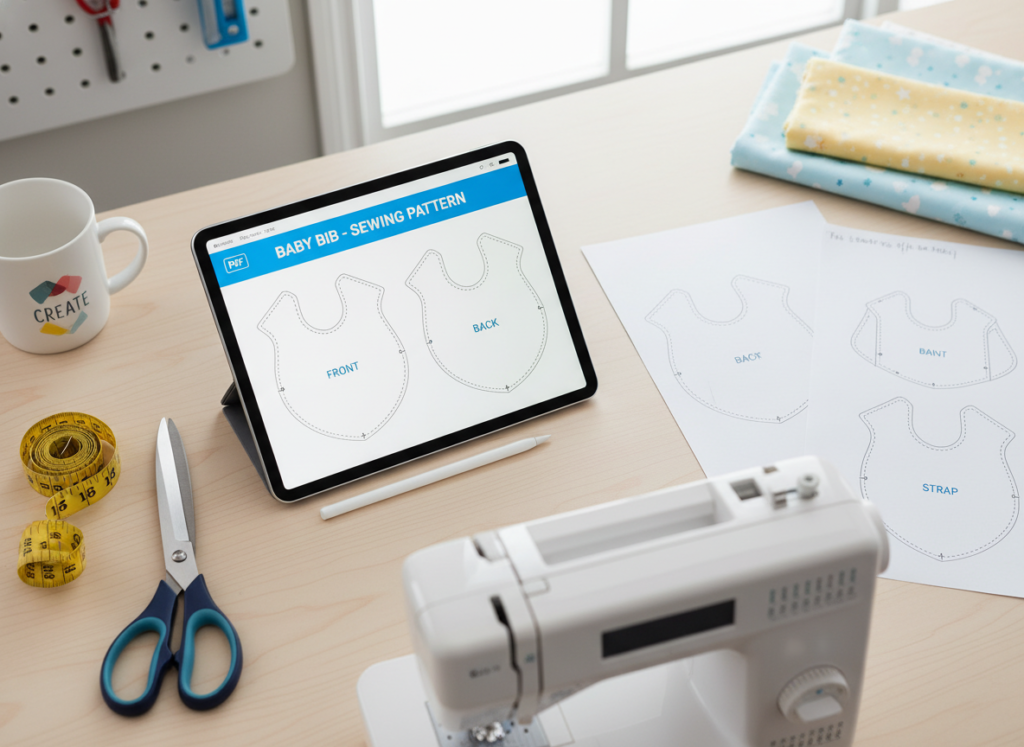
PDF sewing patterns download instantly to your device. Print them at home on regular paper. Some patterns require taping multiple pages together.
Check pattern reviews before downloading. Other sewers share helpful feedback about sizing, difficulty level, and instructions clarity.
Pattern Libraries and Communities
Pinterest boards curated by experienced sewers
Sewing community forums with pattern sharing
Designer websites offering free pattern downloads
YouTube channels with accompanying free patterns
Fabric store websites with promotional patterns
Join online sewing groups to connect with other beginners. Members share pattern recommendations, fabric suggestions, and encouragement.
Free sewing pattern libraries continue growing. Bookmark favorite sources for easy access when you need inspiration.
Building Your Sewing Skills Progressively
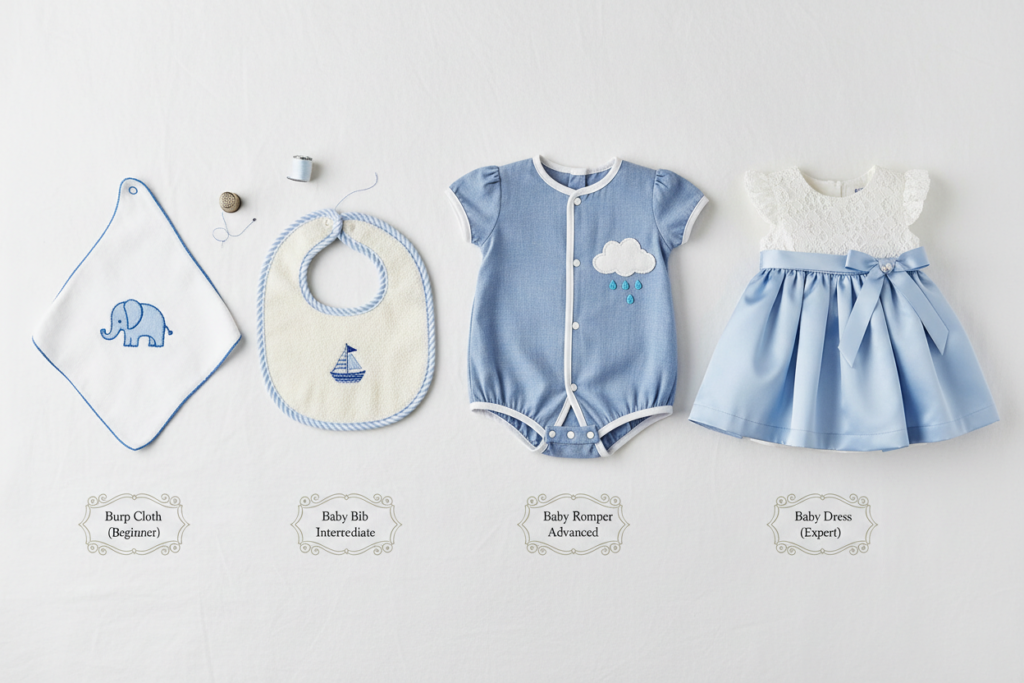
Start with simple projects and gradually tackle more complex ones. This progression builds confidence while developing new techniques.
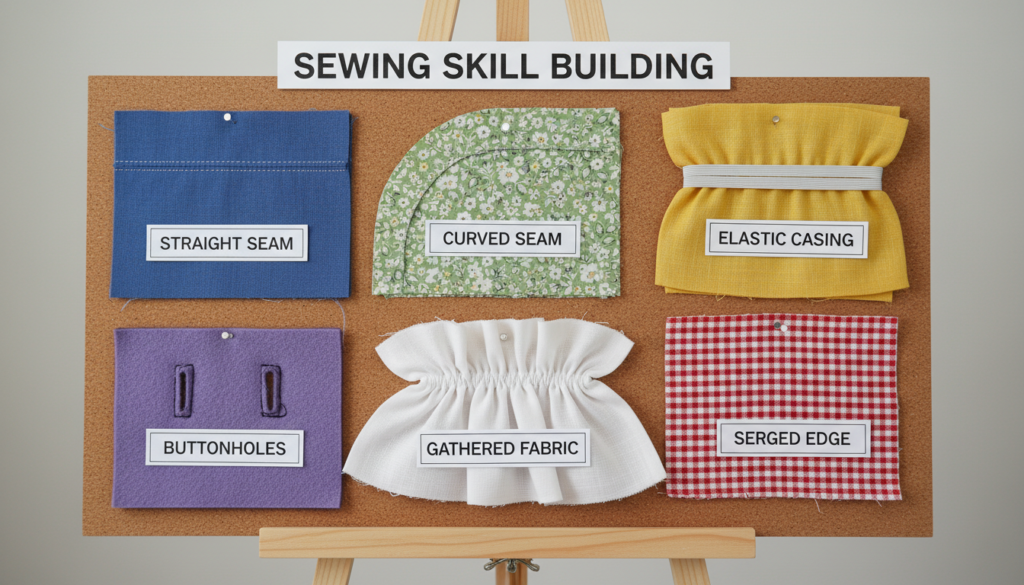
Skill Development Path
Begin with straight-seam projects like burp cloths and simple blankets
Progress to projects with basic curves like bibs
Add elastic techniques through changing pad covers and shorts
Move to simple garments with multiple pattern pieces
Challenge yourself with details like pockets and closures
Eventually try fitted garments with sleeves and more complex construction
Practice new techniques on scrap fabric first. This lets you troubleshoot without wasting project materials. Keep a scrap bin specifically for testing.
Setting Realistic Goals
Complete one project before starting another. Finishing builds momentum and satisfaction. Multiple unfinished projects can feel overwhelming.
Set aside dedicated sewing time. Even thirty minutes several times weekly maintains skills and progress. Consistency matters more than marathon sessions.
Motivation Tip: Keep a photo journal of completed projects. Reviewing your progress shows how far you’ve come and inspires continued learning.
Beginner sewing projects for baby offer the perfect introduction to this rewarding craft. Small projects build confidence quickly while creating useful items.
You’ve discovered fifteen beginner-friendly projects to get started. Each one teaches valuable skills while making something special for baby.
The sewing journey starts with a single stitch. Choose one project that excites you and gather your supplies. You’ll be amazed at what you can create.
Remember that every experienced sewer started as a beginner. Mistakes teach important lessons. Each completed project improves your skills.
Free sewing patterns and online communities provide endless support and inspiration. You’re joining a welcoming group of makers who love sharing knowledge.
Handmade baby items carry special meaning. Whether you’re sewing for your own baby or creating gifts, each stitch adds love to the final product.
Start simple and enjoy the process. Sewing provides creative satisfaction and practical results. Your baby sewing projects will be treasured for years.
Ready to Create Beautiful Baby Items with Confidence?
Join thousands of beginners who transformed their sewing skills with comprehensive, step-by-step guidance designed specifically for new sewers. Get instant access to detailed tutorials, patterns, and expert support that makes every project a success.
Your creative journey begins today. Pick up that fabric, thread your machine, and make something wonderful. The baby in your life deserves your handmade love.