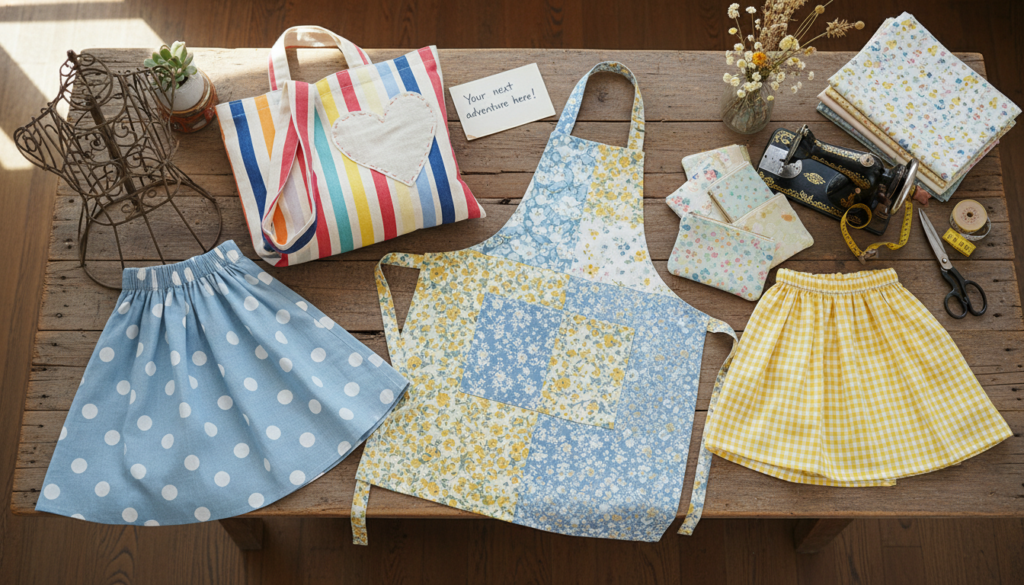
Learning to sew can feel overwhelming at first. The good news is that starting with an apron makes everything easier. This simple project teaches you essential skills without complicated steps.
An apron offers the perfect introduction to sewing. You’ll learn straight lines, basic stitching, and how to follow a pattern. Best of all, you’ll finish with something useful for your kitchen or craft space.
Whether you’ve never touched a sewing machine or tried a few projects before, this guide walks you through everything. We’ll cover fabric choices, measurements, and step-by-step techniques that work every time.
Ready to Start Your Sewing Journey?
Access comprehensive beginner-friendly sewing patterns and video tutorials that guide you through every stitch. Learn from expert instructors who make sewing simple and enjoyable.
Aprons stand out as ideal starter projects for several practical reasons. They require minimal fabric and don’t need perfect fitting like clothing does. You can make mistakes and still end up with a functional item.
The construction involves mostly straight lines and basic seams. You won’t struggle with curves or complicated techniques right away. Most apron patterns use simple rectangles and ties that come together quickly.
Another advantage is the quick completion time. Many basic aprons take just one to two hours to finish. This immediate success builds confidence for tackling more complex projects later.
Skills You’ll Learn
Measuring and cutting fabric accurately
Sewing straight seams on your machine
Creating clean edges and hems
Attaching straps and waist ties
Following pattern instructions step by step
Why Aprons Work Well
Minimal fabric required saves money
Forgiving fit means less stress
Quick projects provide fast results
Practical items you’ll actually use
Simple shapes build core skills
Starting with projects that give you practical experience makes sense. An apron serves a real purpose in your home. You’ll wear it while cooking or use it in your craft room, seeing your handiwork regularly.
Essential Materials and Tools for Your First Apron
Gathering the right supplies before you start makes the sewing process smooth. You don’t need expensive materials for beginner sewing projects apron construction. Basic tools and affordable fabric work perfectly.
Fabric Selection Guide
Cotton fabric stands as the best choice for your first apron. It’s easy to work with and handles washing well. Choose medium-weight cotton that isn’t too thin or too thick.
You’ll need about one to two yards depending on your apron style. Solid colors work great for beginners because you don’t worry about matching patterns. Save decorative prints for when you feel more confident.
Medium-weight cotton in solid colors or simple prints
Pre-wash your fabric to prevent shrinking later
Iron fabric smooth before cutting pieces
Avoid slippery or stretchy materials for first projects
Basic Tools You’ll Need
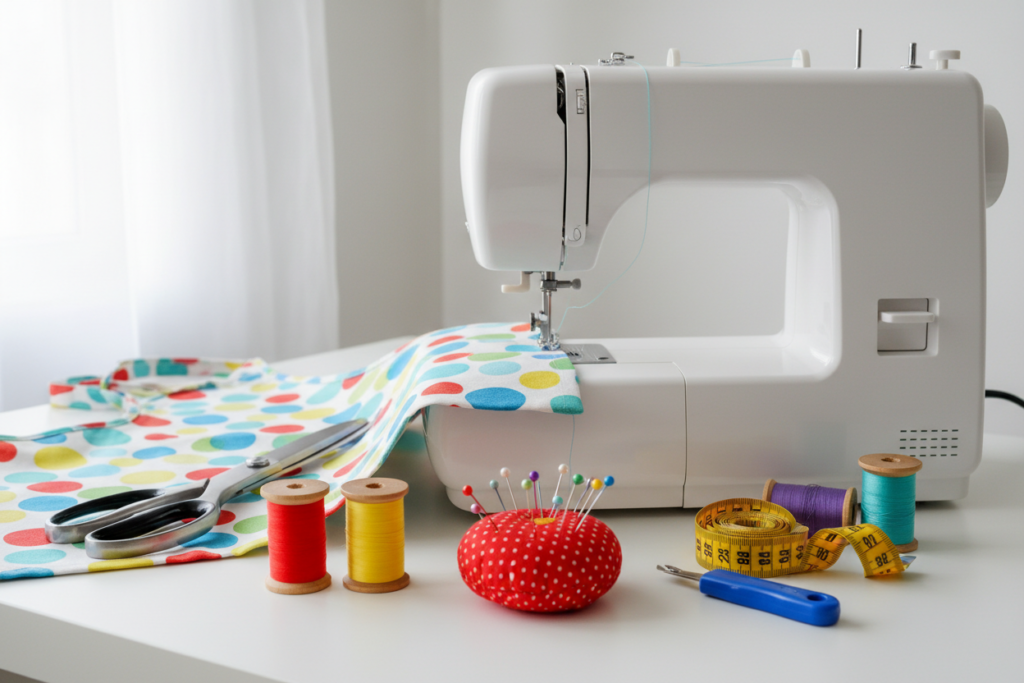
A sewing machine makes the work faster, though hand sewing works too. Most modern machines have basic straight stitch settings that work perfectly for apron construction.
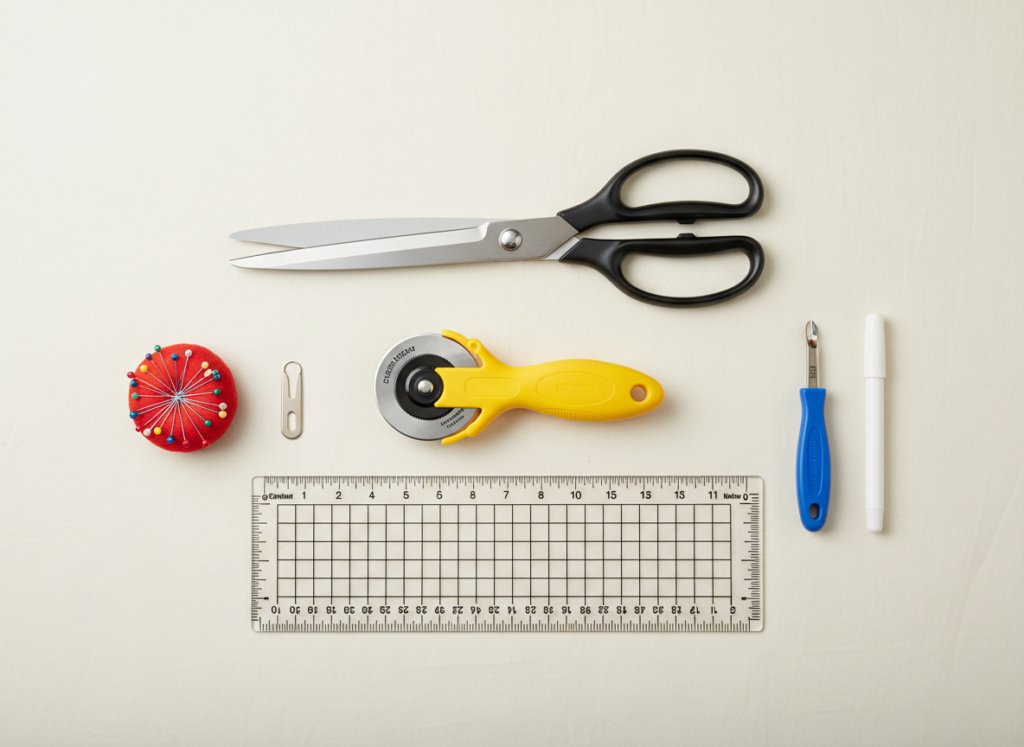
Sharp fabric scissors cut cleanly through material. Never use these scissors on paper as it dulls the blades quickly. A seam ripper fixes mistakes without frustration.
Sewing machine with straight stitch capability
Fabric scissors dedicated only to fabric cutting
Straight pins and pincushion for holding pieces
Measuring tape for accurate measurements
Iron and ironing board for pressing seams
Thread matching your fabric color
Master Professional Sewing Techniques
Learn the proper way to use every tool and select perfect fabrics for each project. Our detailed video lessons show you exactly what works and what to avoid as a beginner.
Understanding Different Apron Styles for Beginners
Several apron styles work well for first-time sewers. Each offers different advantages and complexity levels. Starting with simpler designs builds skills before moving to advanced patterns.
Half Apron Design
The half apron covers just your lower body from waist down. This style requires the least fabric and fewest steps to complete. You simply create a rectangular piece with a waistband and ties.
Most half aprons measure about eighteen to twenty-four inches long. The width runs roughly twenty to twenty-four inches across. These measurements work for most adults but adjust based on your needs.
Full Bib Apron Pattern
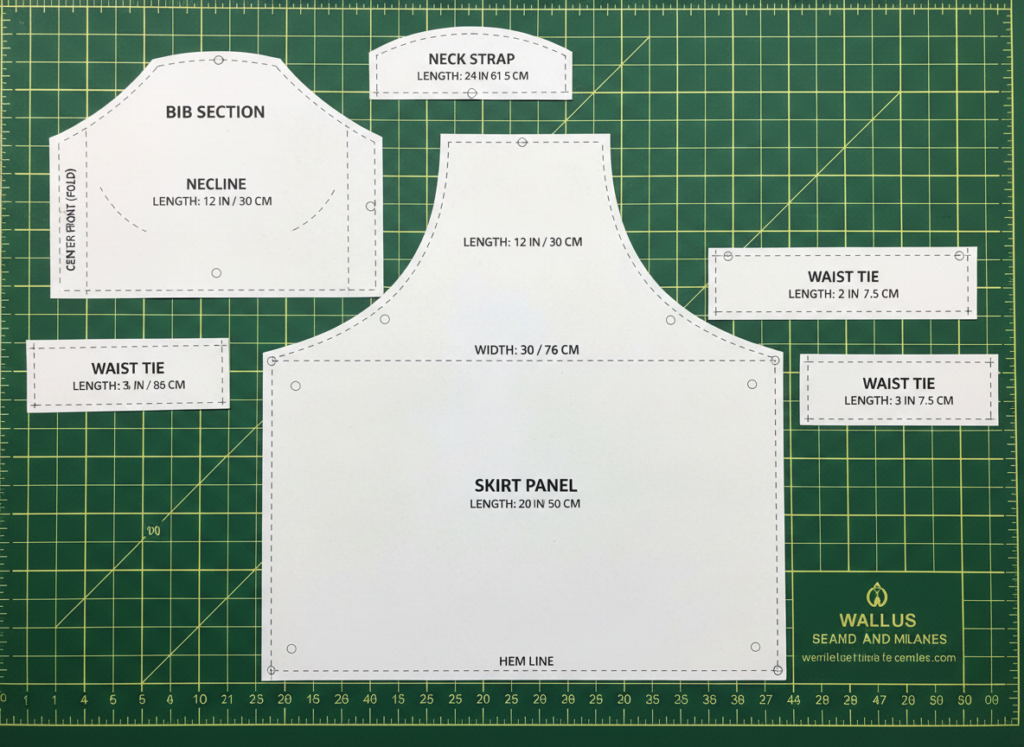
A full bib apron protects both your chest and lower body. The top apron section covers your torso while the bottom skirt portion shields your legs. This classic style requires a neck strap and waist ties.
The construction involves a few more pieces than a half apron. You’ll attach a bib section to the skirt part, then add neck and waist straps. The extra steps remain straightforward for beginners.
Side Apron Style
A side apron wraps around one hip and ties at the waist. This asymmetrical design offers quick access to pockets and looks stylish in kitchen settings. The side apron construction uses similar techniques as half aprons.
You create a rectangular or slightly curved piece that sits on your hip. Adding pockets makes this style extra functional. The side placement keeps the apron out of the way during cooking.
Half Apron
Simplest construction with just one main piece and ties. Perfect for complete beginners wanting fast results.
Easiest to make
Minimal fabric needed
Quick one-hour project
Full Bib Apron
Classic style with better coverage and protection. Slightly more complex but still beginner-friendly.
Complete coverage
Multiple pieces to sew
Two to three hour project
Side Apron
Trendy modern design with practical pocket placement. Same difficulty as half apron with style bonus.
Stylish asymmetric look
Easy pocket access
One to two hour project
Taking Accurate Measurements for Your Apron
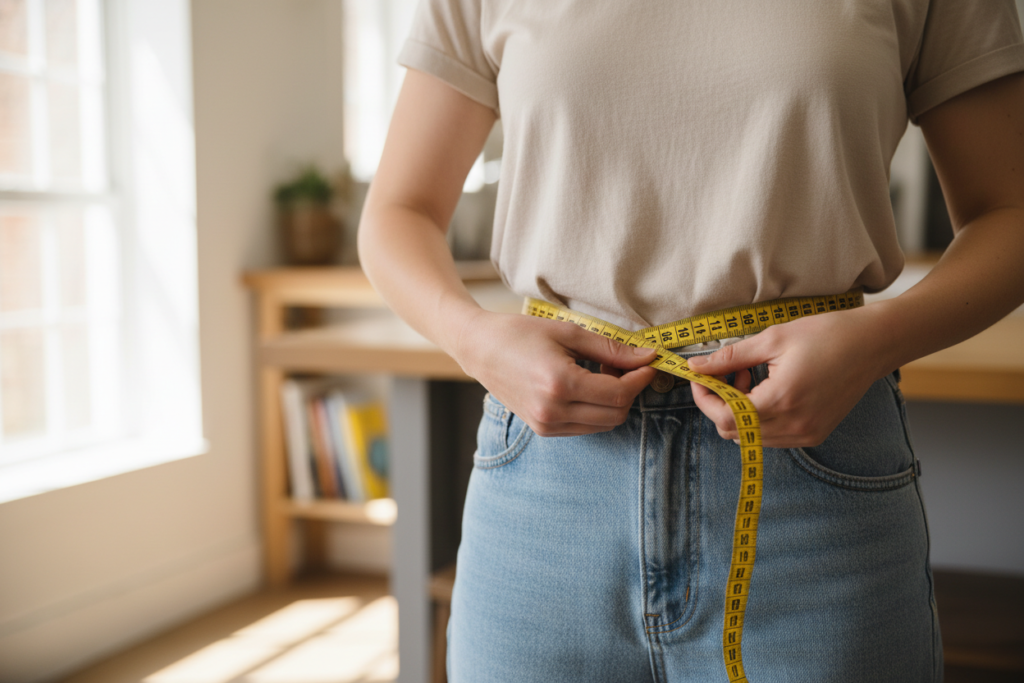
Proper measurements ensure your apron fits comfortably and looks proportional. You don’t need perfect precision, but getting close to standard measurements helps. Taking a few minutes to measure prevents frustration later.
Standard Apron Measurements
Adult aprons typically measure between twenty-eight to thirty-two inches in length. The width ranges from twenty-four to twenty-eight inches across the widest part. These standard measurements fit most people comfortably.
For a child’s apron, reduce measurements by about one-third. A child apron usually measures eighteen to twenty inches long and sixteen to eighteen inches wide. Adjust based on the child’s actual size.
Measure from your waist to desired length point
Measure around your widest hip area for width
Add four inches to width for seam allowance and movement
Neck strap length should be about twenty-four inches
Waist strap pieces need to be thirty-six inches each
Adjusting for Personal Fit
Everyone’s body differs, so feel free to customize measurements. A taller person might want extra length to protect more of their legs. Someone who wants looser fit adds a few inches to width measurements.
Write down your measurements before cutting fabric. Double-check numbers to catch any errors early. Remember to add seam allowance of half an inch on all edges.
Never Worry About Sizing Again
Get access to sizing calculators and customizable pattern templates that adjust to your exact measurements. Our comprehensive guides ensure perfect fit every single time you sew an apron.
Following a clear process makes apron construction straightforward. This guide walks through creating a simple half apron that builds essential skills. Take your time with each step and don’t rush the process.
Preparing Your Fabric
Start by washing and drying your fabric before cutting. This pre-washing prevents shrinkage after you complete your apron. Press the fabric smooth with an iron to remove all wrinkles.
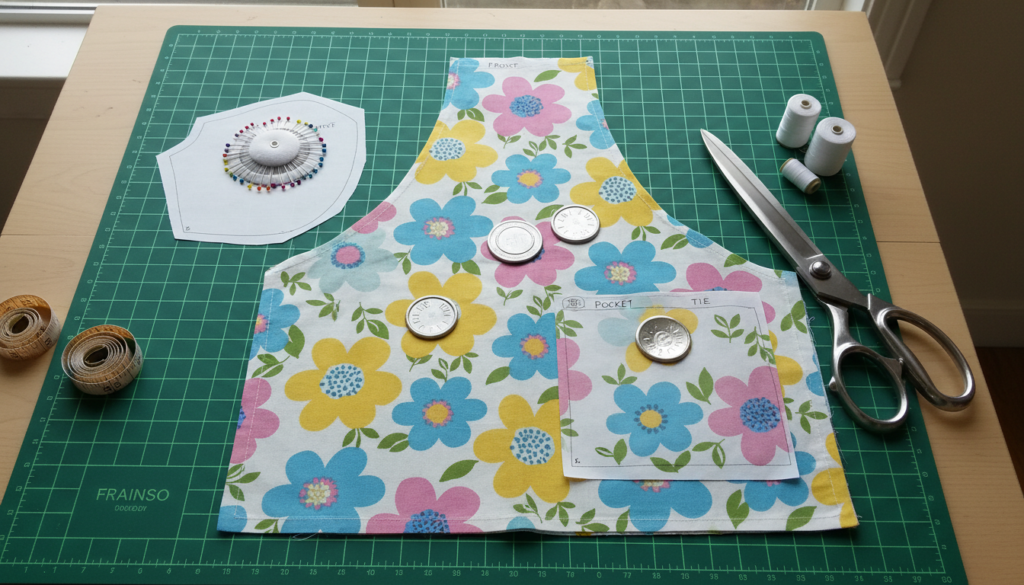
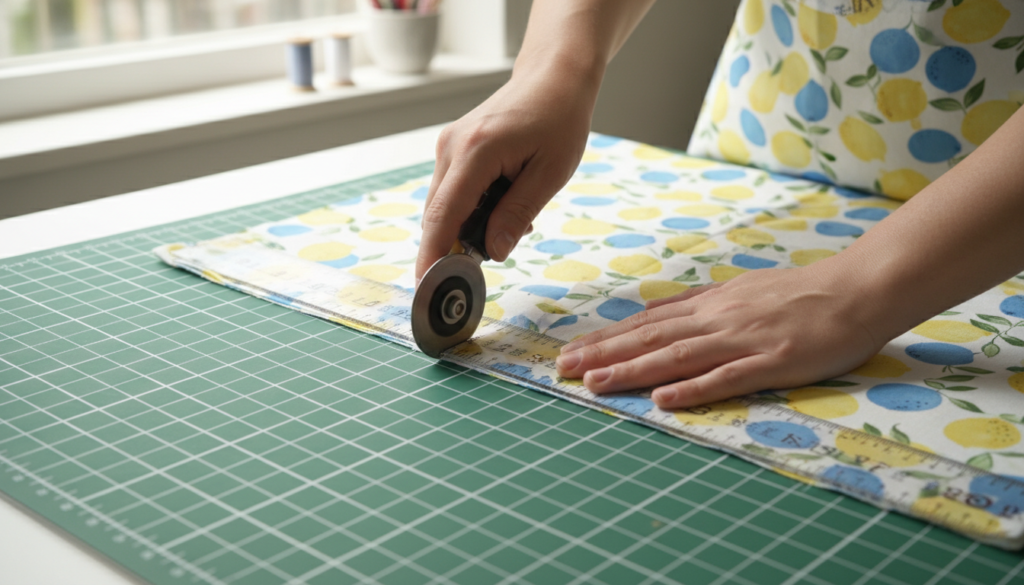
Fold fabric in half with right sides together. This allows you to cut symmetrical pieces easily. Place your pattern on the fabric, making sure the grain line runs straight.
Wash and dry fabric to pre-shrink material
Iron fabric until completely smooth and flat
Fold fabric in half matching selvage edges
Pin pattern pieces to fabric following grain line
Cut carefully along pattern edges with sharp scissors
Cutting Your Apron Pieces
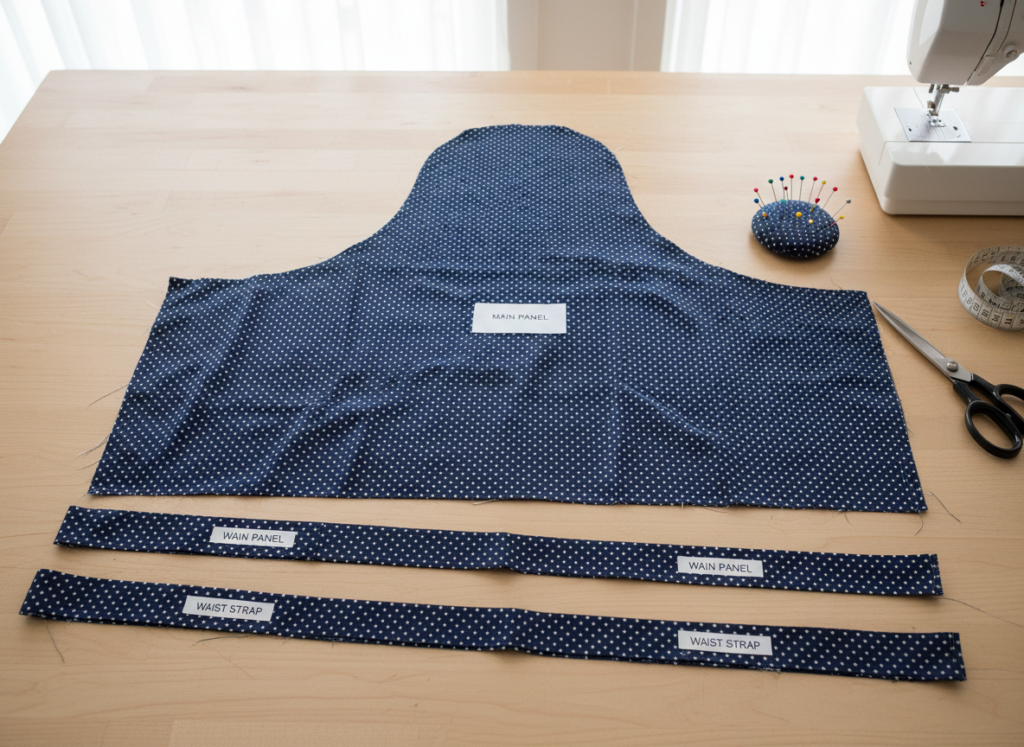
Cut one main apron piece measuring twenty-four inches wide by twenty-eight inches long. Cut two waist strap pieces, each measuring four inches wide by thirty-six inches long. Add half-inch seam allowance to all measurements.
Mark the wrong side of each piece with tailor’s chalk. This helps you keep track of which side faces inward during construction. Transfer any pattern markings to your fabric pieces.
Hemming the Edges
Hem the bottom and side edges first before attaching straps. Fold each raw edge under half an inch toward the wrong side. Press this fold flat with your iron to create a crisp edge.
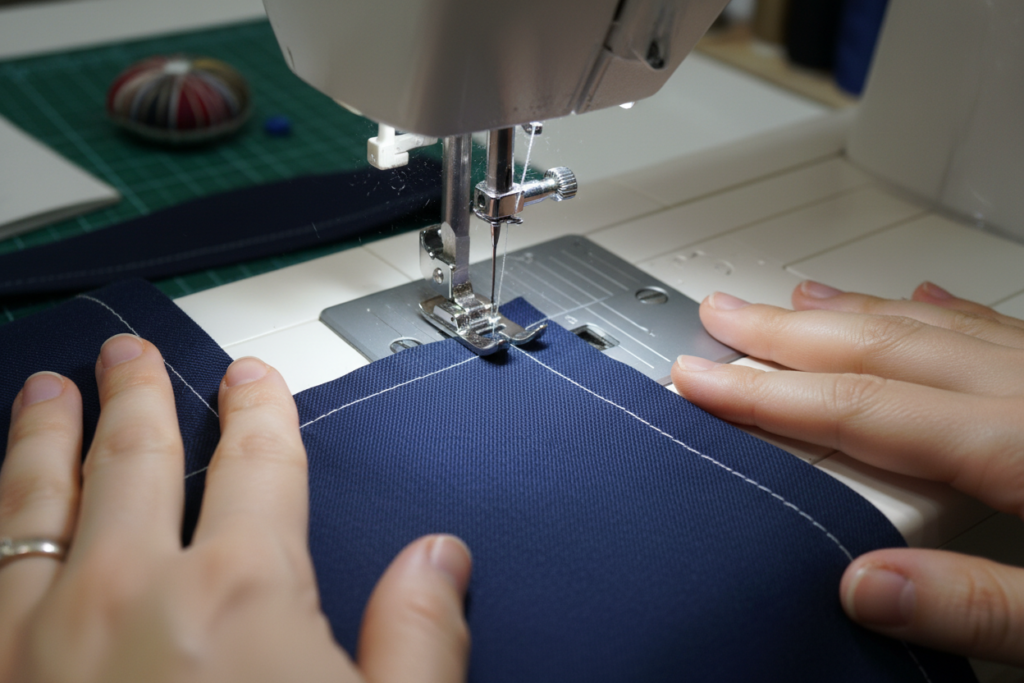
Fold the edge under another half inch and press again. This creates a double-fold hem that hides raw edges neatly. Pin the hem in place, then stitch close to the inner folded edge.
Fold bottom edge up half inch and press with iron
Fold same edge up another half inch and press again
Pin folded hem securely along entire bottom edge
Stitch along inner fold line using straight stitch
Repeat process for both side edges of apron
Creating and Attaching Waist Straps
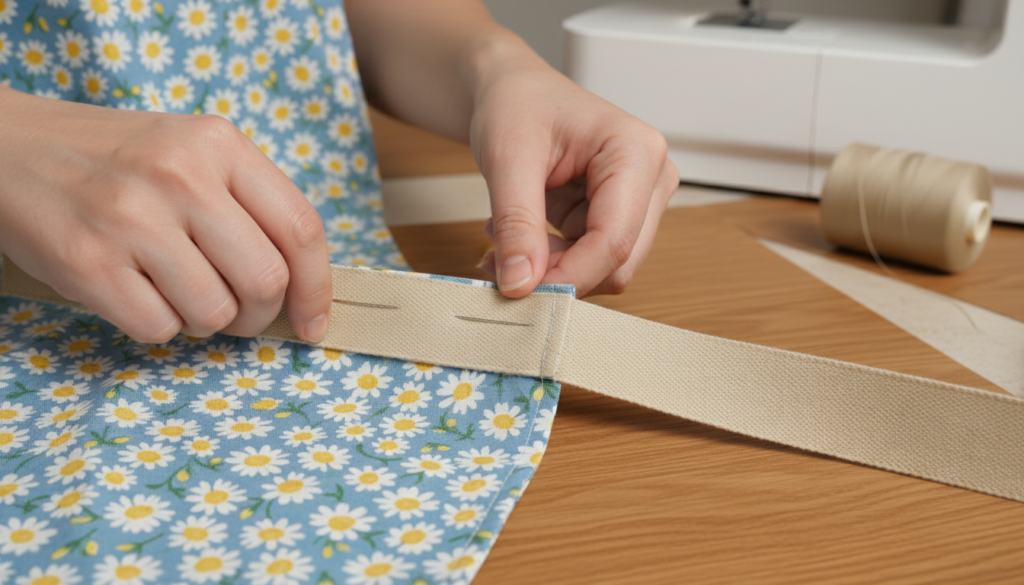
Take one waist strap piece and fold it in half lengthwise with right sides together. Stitch along the long edge with a half-inch seam allowance. Turn the strap right side out using a safety pin.
Press the strap flat with the seam running along one edge. Tuck the raw ends inside the strap about half an inch. Press these ends flat to prepare for attaching to the apron.
Position one strap end on the right side of the apron at the waist line. The top edge of the strap should align with the top edge of the apron piece. Pin securely in place.
Stitch the strap to the apron, sewing a rectangle with an X through it for extra strength. This reinforced stitching prevents straps from pulling away during use. Repeat with the second strap on the opposite side.
Finishing the Top Edge
Fold the top raw edge down half an inch toward the wrong side. Press this fold flat with your iron. Fold the edge down another inch and press seam again to create a clean finished edge.
Stitch along the bottom of this folded edge. This creates a casing that looks professional and adds stability to the top of your apron. Press the entire finished apron one final time.
Watch Every Technique in Action
See professional seamstresses demonstrate each step with close-up video tutorials. Learn the tricks that make your stitching look polished and professional from your very first project.
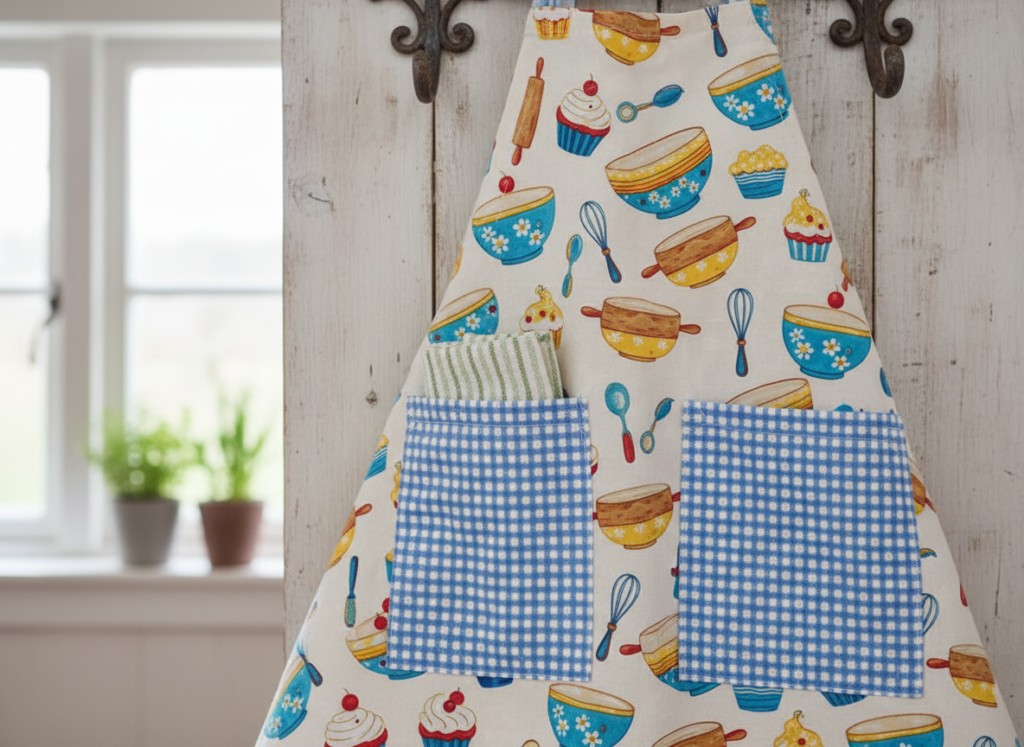
Pockets make aprons more functional and add visual interest. A simple patch pocket works perfectly for beginner sewing projects apron construction. You can add one large pocket or several smaller ones.
Simple Patch Pocket Instructions
Cut a pocket piece measuring eight inches wide by seven inches tall. Add half-inch seam allowance to all sides. This creates a good-sized pocket for holding kitchen tools or craft supplies.
Fold the top edge down one inch toward the wrong side. Stitch along this fold to create a finished top edge. This hemmed edge prevents fraying and looks neat.
Cut pocket rectangle from matching or contrasting fabric
Fold top edge down one inch and stitch across
Fold remaining three edges under half inch and press
Position pocket on apron front where desired
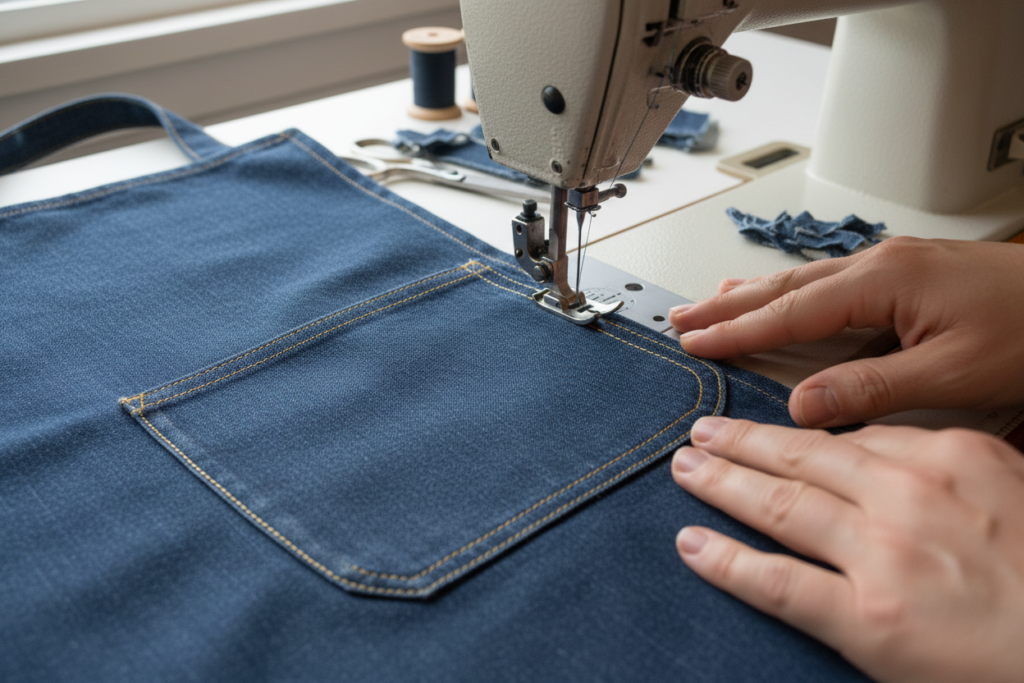
Pin pocket in place and stitch around three sides
Backstitch at top corners for reinforcement
Pocket Placement Tips
Position pockets where you’ll actually use them. Most people place pockets on the lower half of the apron about six to eight inches from the bottom edge. Center the pocket or offset it slightly to one side.
Stitch along the side and bottom edges, leaving the top open. Use a straight stitch close to the folded edge. Backstitch at the beginning and end to secure your stitching.
Troubleshooting Common Beginner Sewing Issues
Every sewist encounters challenges when learning. Knowing how to fix common problems saves time and reduces frustration. Most issues have simple solutions once you understand the cause.
Thread Tension Problems
Loops on top or bottom of fabric indicate tension issues. Check that your machine is threaded correctly through all guides.
Rethread both top and bobbin threads
Adjust tension dial gradually
Use matching thread weights
Clean lint from bobbin area
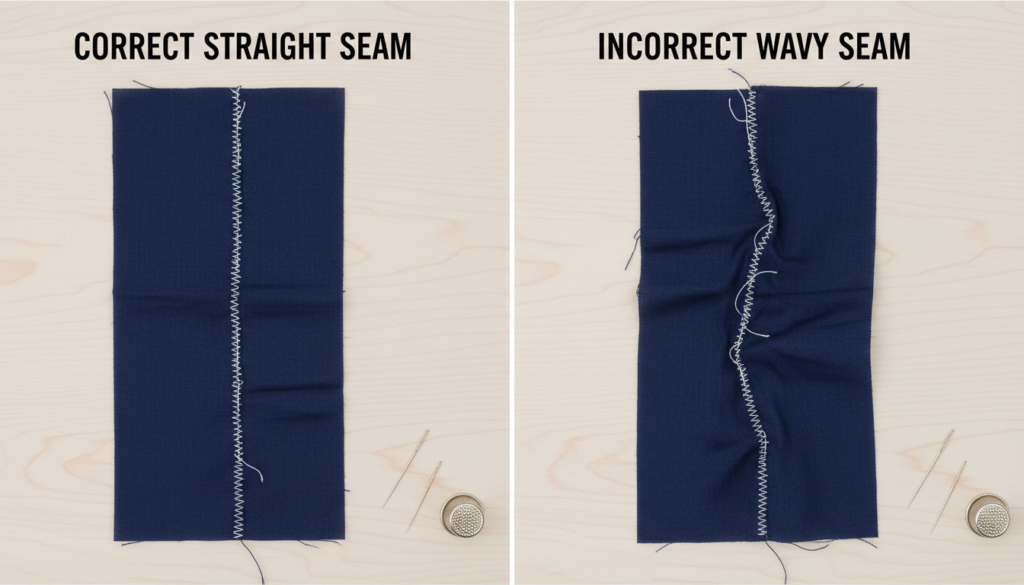
Uneven Seams
Wavy or crooked seams happen when fabric shifts during sewing. Pin pieces together securely before stitching.
Use more pins to hold fabric
Sew slowly and guide gently
Mark your seam line first
Practice on scrap fabric
Fabric Puckering Solutions
Puckered fabric around seams usually means you’re pulling the material as you sew. Let the feed dogs move the fabric naturally. Your hands should only guide direction, not pull the fabric through.
Using the wrong needle size also causes puckering. Match your needle to your fabric weight. A size fourteen universal needle works well for medium-weight cotton used in most apron projects.
Stop pulling fabric while sewing
Use appropriate needle size for fabric
Adjust presser foot pressure if possible
Iron seams flat after stitching
Solve Problems Before They Start
Access comprehensive troubleshooting guides and technique correction videos. Learn professional secrets for avoiding common mistakes and achieving perfect results every time you sew.
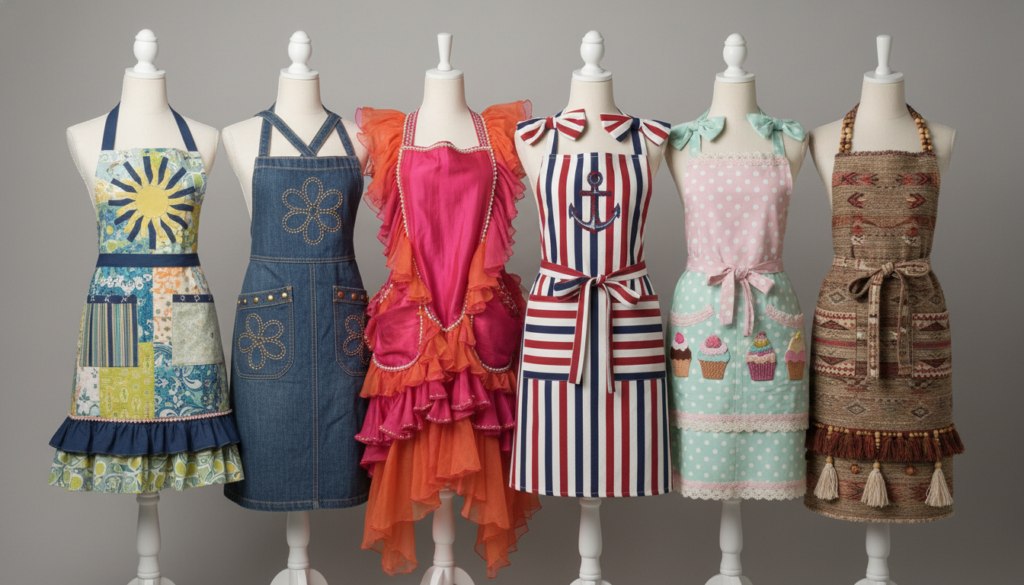
Once you master basic apron construction, trying variations keeps sewing interesting. Small changes create completely different looks while using the same core skills. These ideas work well for gifts or personal expression.
Fabric and Color Combinations
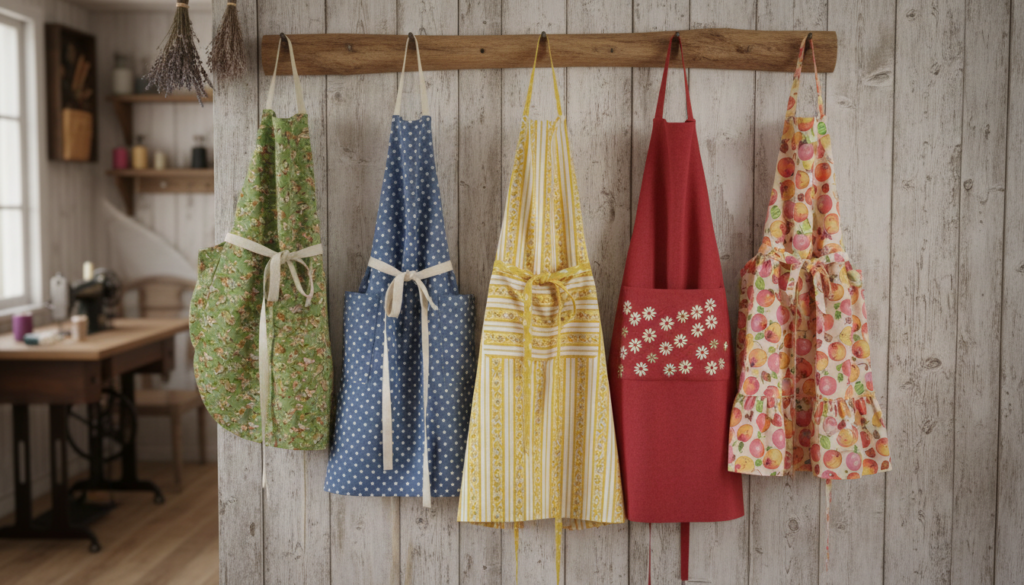
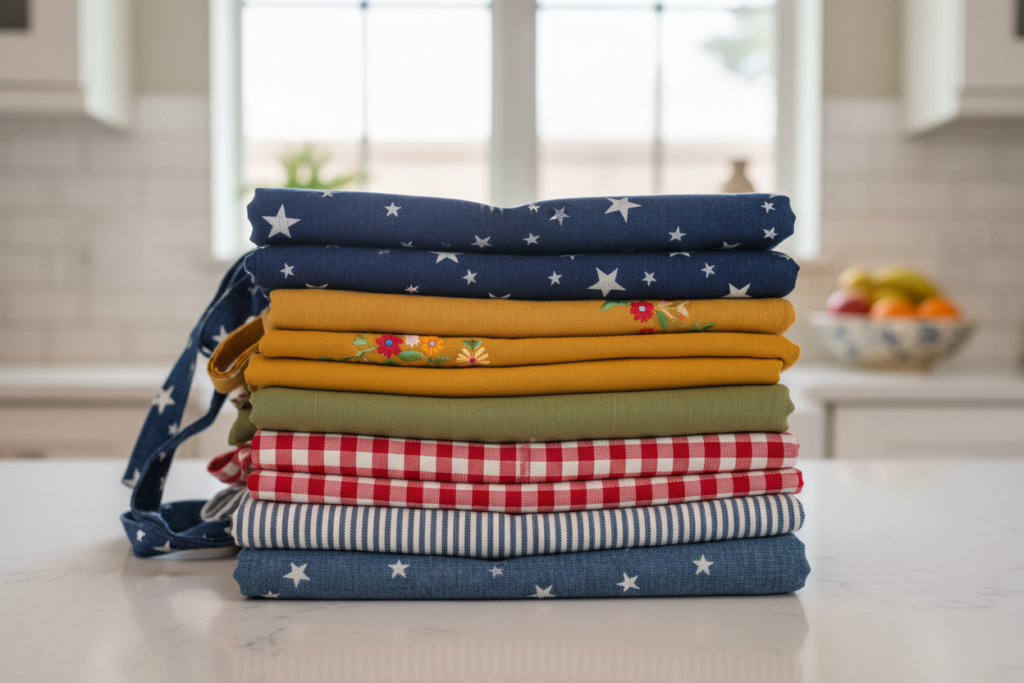
Mixing two complementary fabrics creates visual interest. Use one fabric for the main apron body and a contrasting fabric for pockets, straps, or trim. This technique makes your apron unique without adding complexity.
Consider seasonal themes when choosing fabric. Holiday prints work great for gifts while bright colors suit spring and summer cooking. Neutral tones create sophisticated aprons for any occasion.
Embellishment Ideas
Adding simple decorative touches personalizes your apron. Try these beginner-friendly embellishment methods after completing basic construction.
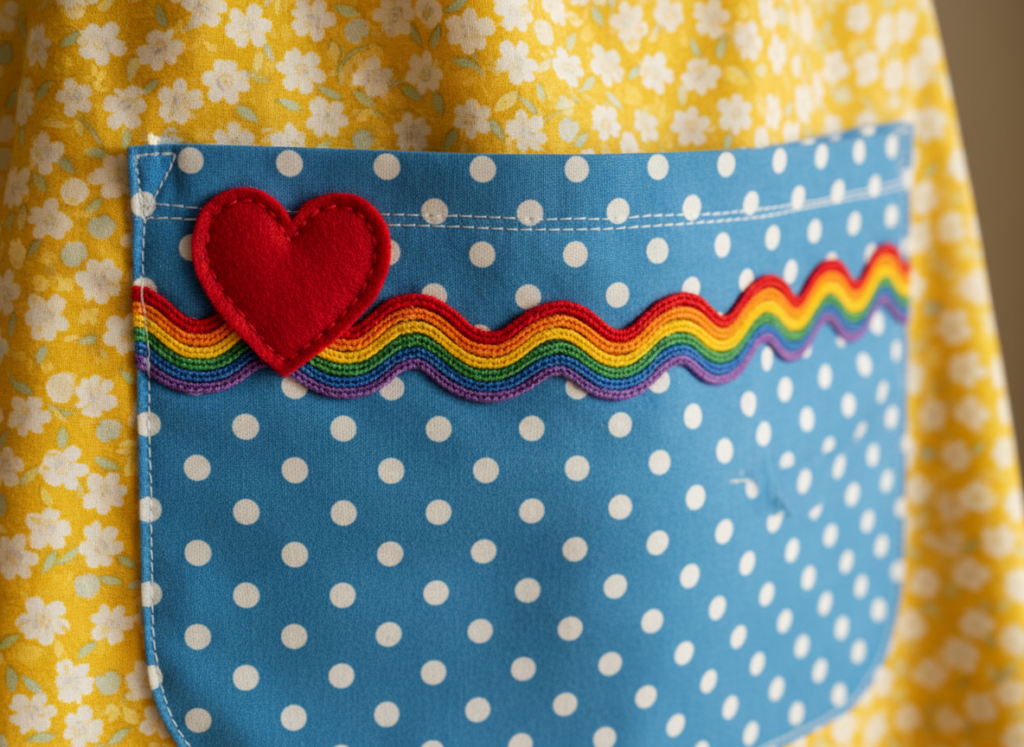
Trim and Rickrack
Stitch decorative trim along pocket edges or hem lines for extra charm.
Colorful rickrack adds vintage appeal
Bias tape creates clean borders
Lace trim adds feminine touch
Simple Appliqué
Iron-on fabric shapes make quick decorative additions without complex sewing.
Fuse shapes with heat-activated adhesive
Edge-stitch around shapes for durability
Layer multiple shapes for depth
Monogramming
Add initials or names using simple hand embroidery or machine stitching.
Mark letters with transfer paper
Use contrasting thread color
Practice on scrap first
Size Adaptations
Adjusting your apron pattern to make apron pieces for different recipients expands your skills. Creating a child’s version from an adult pattern teaches proportion and scaling.
Reduce all measurements by one-third for standard child sizing. A toddler needs even smaller dimensions. Making multiple sizes helps you understand how pattern pieces work together.
Caring for Your Handmade Apron
Proper care keeps your finished apron looking great for years. Cotton aprons wash easily and hold up well to regular use. Following simple care guidelines protects your sewing investment.
Washing Instructions
Machine wash cotton aprons in warm water with regular detergent. Turn aprons inside out before washing to protect any decorative elements. Avoid using bleach unless your fabric is white and bleach-safe.
Tumble dry on medium heat or hang to air dry. Remove aprons from the dryer while slightly damp to make ironing easier. Cotton wrinkles during washing, so expect to press your apron after each wash.
Wash in warm water on regular cycle
Turn inside out to protect embellishments
Dry on medium heat or hang dry
Iron while slightly damp for best results
Store hanging or neatly folded
Stain Treatment Tips
Treat stains quickly for best results. Rinse fresh stains under cold water immediately. Apply a small amount of dish soap directly to grease stains and work it in gently.
For set-in stains, pre-treat before washing. Most fabric stain removers work well on cotton. Test any product on a hidden area first to ensure it won’t damage your fabric.
Next Steps in Your Sewing Journey
Completing your first apron marks just the beginning of your sewing adventure. Building on these basic skills opens up countless project possibilities. Each new project teaches additional techniques and builds confidence.
Progressive Project Ideas
After mastering a basic apron, try these logical next steps. Each project introduces one or two new skills while reinforcing what you already know.
Make apron variations with different pocket styles
Create matching pot holders using quilting techniques
Sew simple tote bags applying similar construction methods
Try basic pillow covers with zipper insertions
Attempt simple skirts using elastic waistbands
Explore pajama pants with drawstring closures
Skill Development Path
Plan your project progression to build skills systematically. Start with variations of projects you’ve completed successfully. This reinforces techniques while adding small challenges.
Gradually introduce new elements like zippers, buttonholes, and curved seams. Taking on too much complexity too quickly leads to frustration. Steady progression builds lasting skills and confidence.
Skills to Master Next
Installing invisible zippers
Creating buttonholes and attaching buttons
Sewing curved seams smoothly
Working with knit fabrics
Adding interfacing for structure
Following commercial patterns
Resources for Learning
Online video tutorials for visual learners
Sewing books focused on specific techniques
Local sewing classes for hands-on practice
Online sewing communities for support
Pattern company websites with free tutorials
YouTube channels dedicated to beginner sewing
Continue Your Sewing Education
Access hundreds of progressive sewing projects with complete patterns, video instructions, and expert guidance. Build your skills systematically from beginner to advanced with structured courses designed for home sewers.
You now have everything needed to create your first beginner sewing projects apron successfully. The skills you learn through this simple project form the foundation for all future sewing endeavors. Don’t let perfectionism stop you from starting.
Remember that every experienced sewist started exactly where you are now. Your first apron might not look perfect, and that’s completely normal. Each project improves your skills and understanding.
Gather your materials and set aside a few hours this weekend. Follow the steps outlined in this guide at your own pace. Soon you’ll be wearing your handmade apron with pride, knowing you created something useful and beautiful.
The satisfaction of completing a project you can actually use motivates you to keep sewing. Each stitch builds muscle memory and confidence. Before long, you’ll tackle more complex projects with the same ease.
Transform Your Sewing Skills Forever
Join thousands of beginners who have successfully learned to sew with comprehensive online courses. Get lifetime access to patterns, videos, and community support that takes you from nervous beginner to confident creator.
Your creative journey begins with a single project. Make that project an apron, and watch your confidence soar as you master each technique. Happy sewing!