Making your own clothes brings incredible satisfaction. You choose fabric that speaks to your style. You create something unique that fits perfectly. And best of all, you gain skills that last forever.
This guide walks you through everything needed to sew beautiful women’s tops. We cover fabric selection, pattern basics, and construction steps. Each section builds your confidence one stitch at a time.
Ready to Create Beautiful Tops with Confidence?
Skip years of trial and error. Learn proven techniques that deliver professional results from your very first project.
Fabric choice determines your sewing experience. The right material forgives mistakes and sews easily. The wrong fabric frustrates beginners and creates problems.
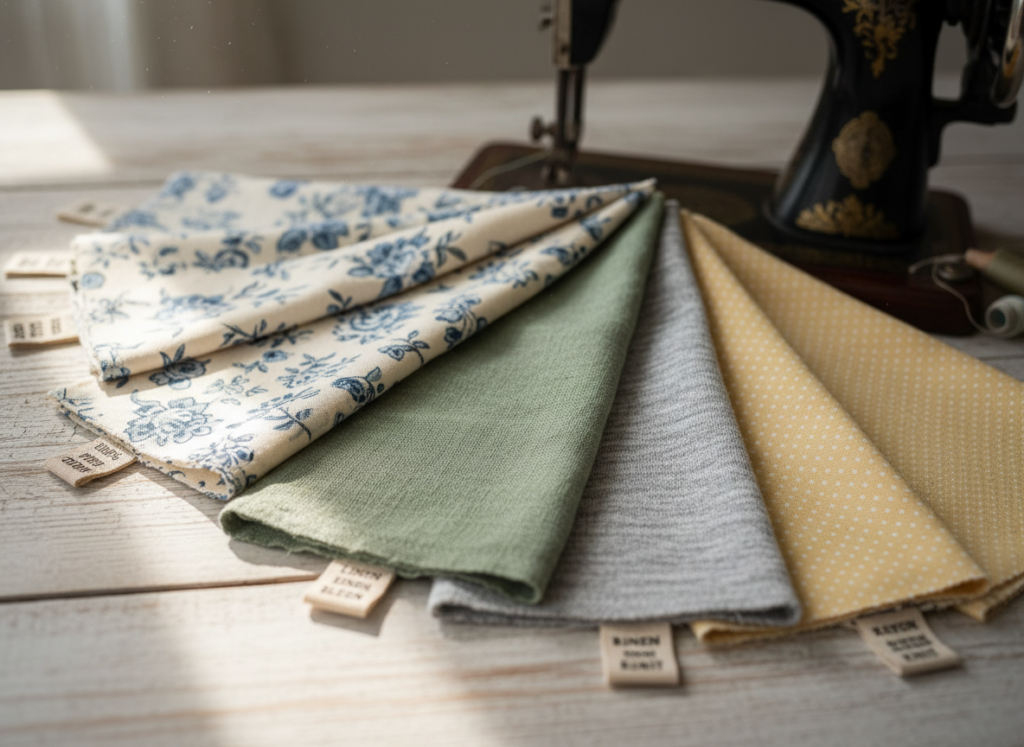
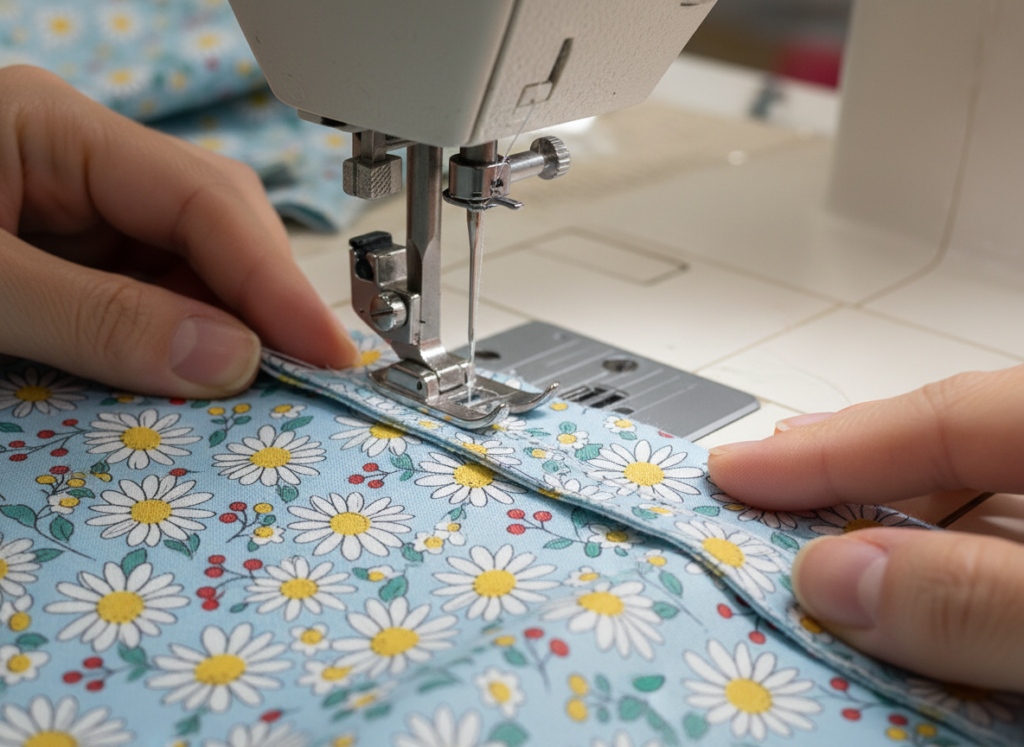
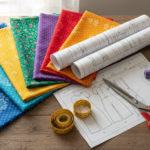
Cotton woven fabric works wonderfully for first projects. It holds its shape during cutting and sewing. The fabric feeds smoothly through your sewing machine without stretching or puckering.
Best Fabrics for Beginner Sewers
Lightweight cotton provides the perfect starting point. It comes in endless patterns and colors. The fabric washes well and maintains its appearance through many wears.
Cotton lawn and quilting cotton both work excellently. These fabrics offer enough body to handle easily. They press crisp and clean for professional-looking seams and hems.
Cotton poplin for structured everyday tops
Cotton voile for flowing summer styles
Linen blends for breathable warm-weather pieces
Chambray for casual button-front designs
Fabrics to Avoid When Starting
Stretch fabrics challenge new sewers significantly. Knit fabric moves and distorts during cutting. The material requires special needles and specific sewing machine settings.
Slippery fabrics like satin create frustration. These materials shift during cutting and pinning. Save these fabrics for later projects after building core skills.
Heavy fabrics strain basic machines. Thick material requires adjusted tension and stronger needles. Start with medium-weight options that your machine handles comfortably.
Master Fabric Selection and Beyond
Understanding fabric is just the beginning. Get expert guidance on every aspect of garment construction with professional sewing courses.
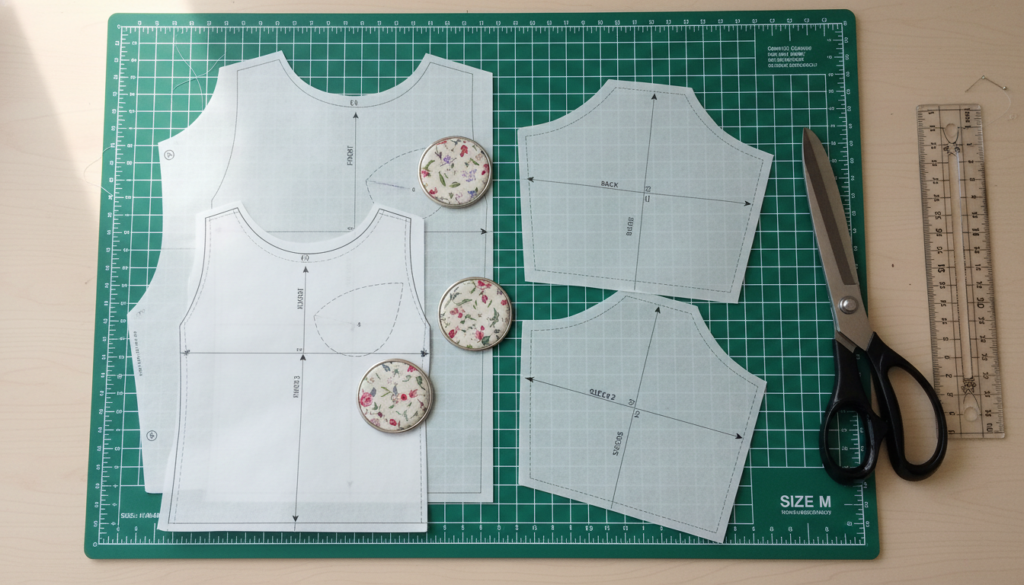
Patterns provide the blueprint for your top. They show exactly where to cut fabric. The pattern includes all measurements needed for proper fit.
Every sewing pattern contains essential information. The envelope lists required yardage and notions. Inside, you find tissue pattern pieces and detailed instructions.
Reading Pattern Markings
Pattern symbols communicate important construction details. Notches show where pieces connect. Dots indicate dart points or button placement.
Grainline arrows ensure proper fabric orientation. Place these parallel to the selvage edge. This alignment keeps your top hanging correctly on the body.
The cutting line appears as a solid outer edge. Seam allowances are included in most patterns. Check your pattern instructions to verify this measurement.
Selecting Your Size
Pattern sizing differs from ready-to-wear clothing. Take accurate bust measurement around the fullest part. Compare this number to the pattern size chart.
Length adjustments happen easily on most patterns. You can shorten or lengthen the body before cutting. Make these changes between the bust and hem markings.
Proper preparation prevents disappointment later. Fabric behaves differently before and after washing. Pre-washing eliminates surprises with your finished top.
Wash fabric the same way you plan washing the finished garment. Use identical water temperature and detergent. Dry using your preferred method for this fabric type.
Pressing Makes Perfect
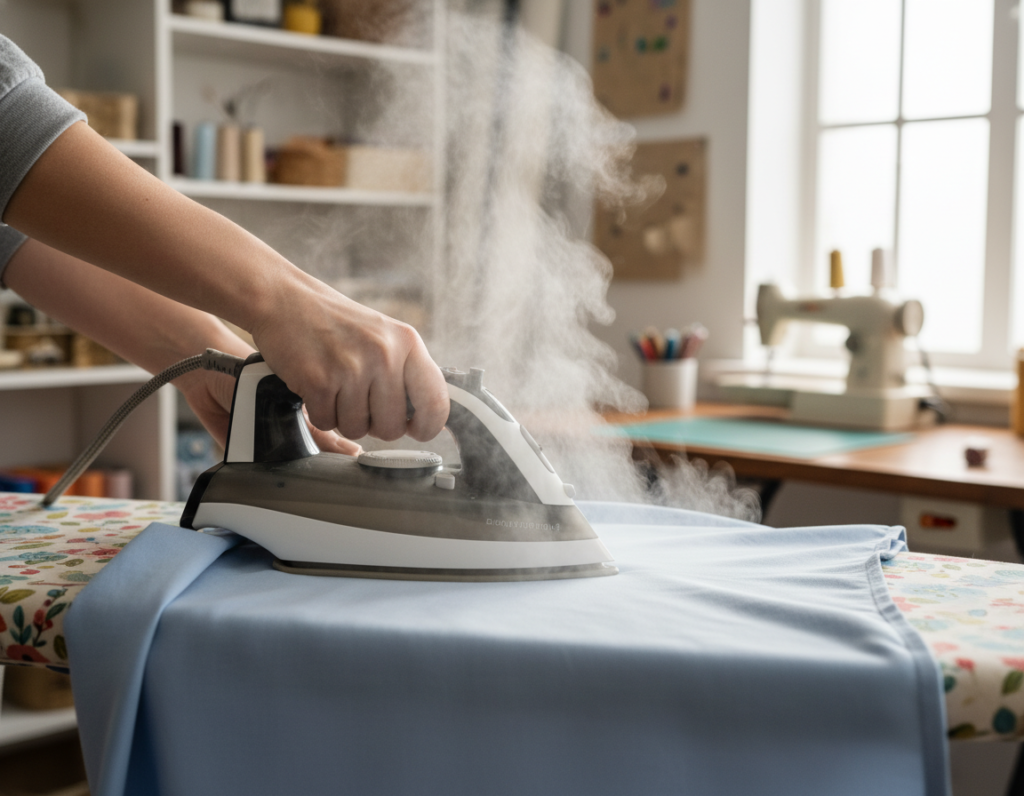
Press fabric completely smooth before pattern layout. Wrinkles distort measurements and create cutting errors. A hot iron removes creases and prepares fabric for accurate work.
Check the fabric grain after pressing. The crosswise and lengthwise threads should meet at right angles. Pull gently on the bias to straighten if needed.
Laying Out Pattern Pieces
Follow the layout diagram included with your pattern. These diagrams maximize fabric efficiency. They show the most economical arrangement for your chosen size.
Pin pattern pieces carefully to prevent shifting. Place pins inside the cutting line when possible. This technique keeps edges smooth and accurate.
Pattern weights offer an alternative to pinning. These hold tissue paper firmly without creating holes. They work especially well with delicate fabrics.
Perfect Your Cutting and Construction Skills
Learn professional techniques for precise cutting, expert seam finishing, and flawless garment assembly. Build confidence with every project.
Creating Your First Everyday Top: Step-by-Step Tutorial
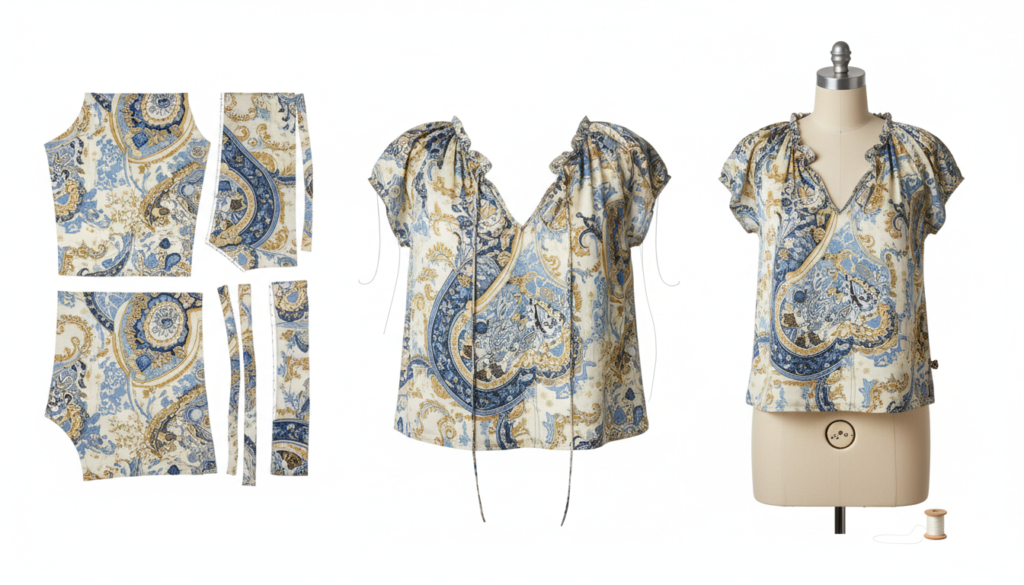
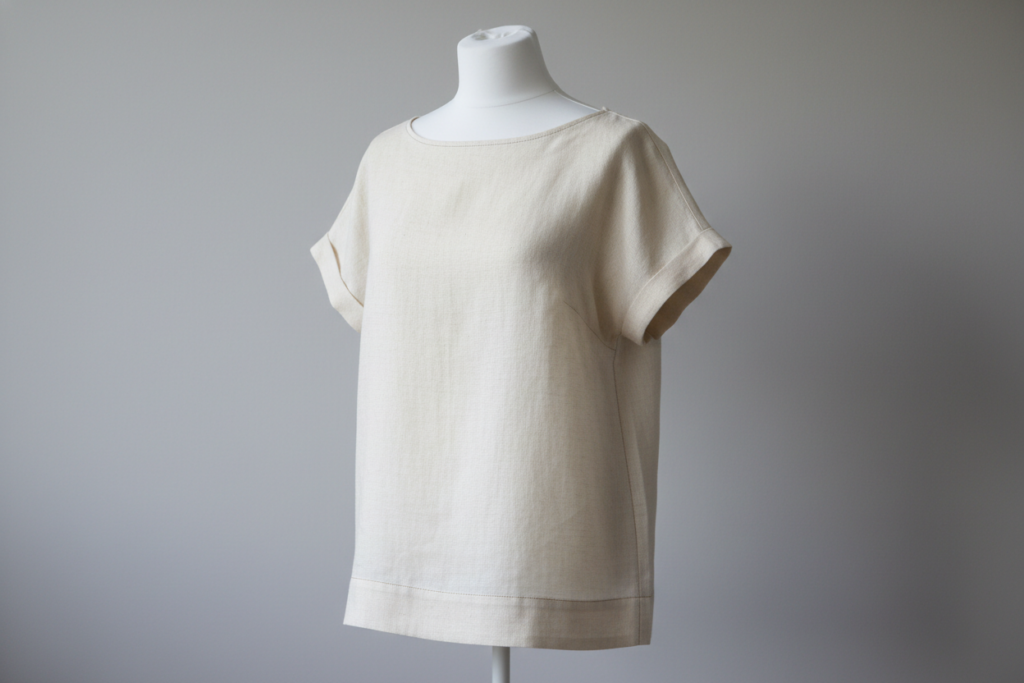
This simple top design works perfectly for beginners. The pattern features minimal pieces and straightforward construction. You create a wearable garment while learning essential techniques.
The everyday top includes a front piece, back piece, and optional sleeves. The neckline features bias binding for a professional finish. Side seams and shoulder seams create the basic structure.
Step 1: Cutting Your Fabric Pieces
Cut one front piece on the fold. This creates a symmetrical front without a center seam. The fold eliminates one seam and simplifies construction.
Cut two back pieces if your pattern includes a back opening. Otherwise, cut one back piece on the fold. Add sleeves if desired for your design.
Transfer all pattern markings to your fabric. Use tailor’s chalk or fabric marking pens. Mark notches, dots, and any dart lines accurately.
Step 2: Sewing Shoulder Seams
Place front and back pieces right sides together. Align shoulder edges carefully using notches. Pin along the shoulder seam line.
Sew shoulder seams using a straight stitch. Most tops use a standard seam allowance of five-eighths inch. Keep this distance consistent for proper fit.
Press seams open for a flat, professional appearance. Use the tip of your iron to avoid creasing the top part. Good pressing makes subsequent steps easier.
Step 3: Finishing the Neckline with Bias Binding
Bias binding creates a neat neckline edge. This technique works for curved necklines and armholes. The bias stretch allows smooth application around curves.
Open bias binding and align the raw edge with the neckline edge. Pin binding around the entire neckline. Ease the binding around curves without stretching.
Sew binding using the crease line as your guide. The fold line shows exactly where to stitch. Work slowly around curves for smooth results.
Fold binding to the wrong side of the top. The binding encases the raw edge completely. Press carefully, then topstitch close to the inner edge.
Cut bias binding strips at 45-degree angle to grain
Join binding strips with diagonal seams
Press binding in half lengthwise before applying
Miter binding at corners for crisp angles
Step 4: Attaching Sleeves
Match sleeve notches to shoulder seam and body notches. Pin sleeve into armhole opening. Distribute ease evenly around the sleeve cap.
Sew sleeve seam from one side to the other. Check that sleeve hangs smoothly without puckers. Press seam toward the body of the top.
Some tops feature sleeveless designs. Finish armholes with bias binding using the same neckline technique. This creates coordinating edges that look intentional.
Struggling with Sleeves or Necklines?
Get crystal-clear video demonstrations of every technique. Watch close-up instruction that shows exactly how to achieve professional results.
Pin front to back along side seams. If your top has sleeves, continue pinning down the sleeve underarm seam. Match all seams carefully.
Sew from the bottom hem edge up the side. Continue across the underarm and down the sleeve. This creates one continuous seam line.
Clip curves carefully without cutting through stitches. Press seams open or to one side. Good pressing creates shape and prevents twisting.
Step 6: Hemming the Bottom Edge
Press bottom edge up by one-quarter inch. Press again by desired hem depth. This double-fold hem encloses raw edges neatly.
Pin hem in place around entire bottom. Check hem length while wearing the top. Make adjustments before stitching permanently.
Topstitch close to the inner fold of the hem. Use matching thread for invisible stitching. Backstitch at beginning and end for security.
For curved hems, ease fullness with small gathering stitches first. This prevents puckering around the curve. Press carefully for smooth results.
Working with Stretch Fabric for Comfortable Tops
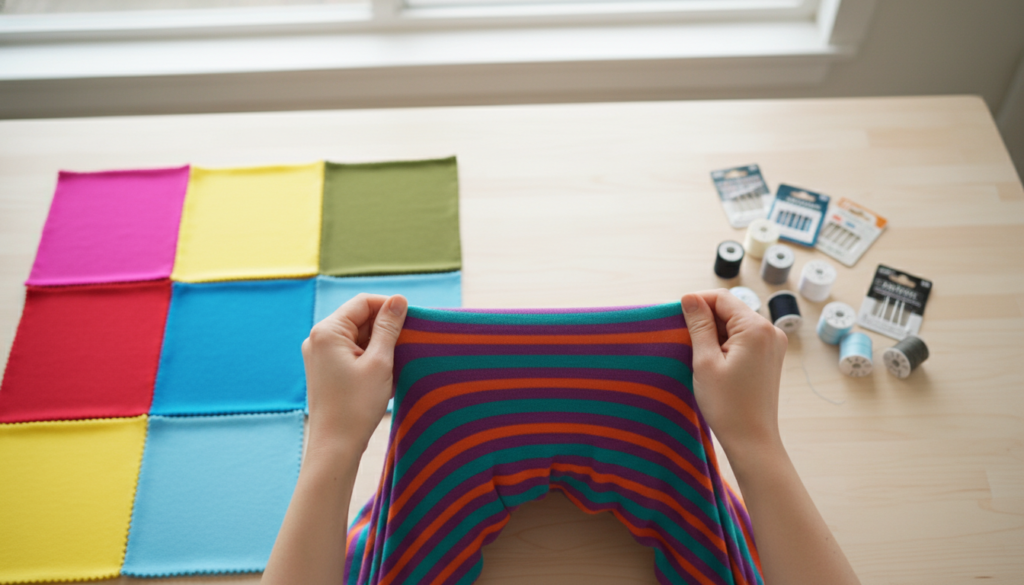
Stretch fabric creates comfortable, body-skimming tops. Knit fabric moves with you throughout the day. The material offers forgiveness in fit and ease of wear.
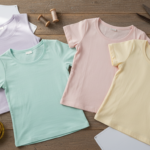
Jersey knit works beautifully for casual tops. This fabric stretches primarily in one direction. The material recovers its shape after wearing.
Essential Supplies for Knit Fabrics
Ballpoint needles prevent damage to knit fabric. The rounded tip slides between fibers instead of piercing them. This prevents runs and holes in the finished garment.
Stretch thread or polyester thread works best with knits. These threads have slight give that matches fabric stretch. The seams stretch without breaking during wear.
Walking feet help feed knit fabric evenly. This presser foot prevents stretching during sewing. The fabric feeds through your sewing machine smoothly.
Sewing Techniques for Knit Fabric
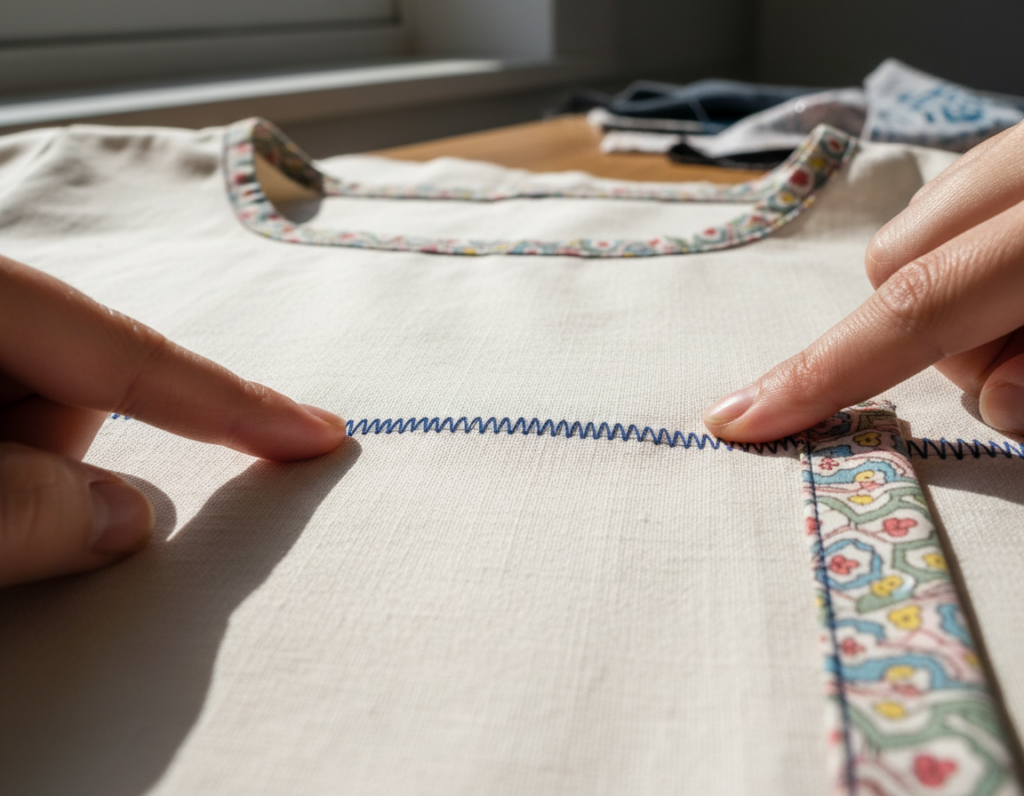
Use a narrow zigzag stitch instead of straight stitching. The zigzag allows seams to stretch with the fabric. Set your machine to small stitch length for security.
Avoid pulling fabric while sewing. Let the feed dogs move material naturally. Pulling creates wavy, stretched seams that never recover.
Finish necklines and armholes with matching knit binding. This creates stretchy edges that pull on easily. The binding should stretch the same amount as your fabric.
Master Knit Fabric Like a Professional
Discover insider techniques for sewing with stretch fabrics. Learn the secrets that make knit garments look store-bought instead of homemade.
Necklines transform basic tops into unique garments. Small changes create dramatically different looks. The same body pattern works for multiple style variations.
Experimenting with necklines builds your design skills. You learn to visualize changes before cutting. This confidence leads to creative custom clothing.
Popular Neckline Options
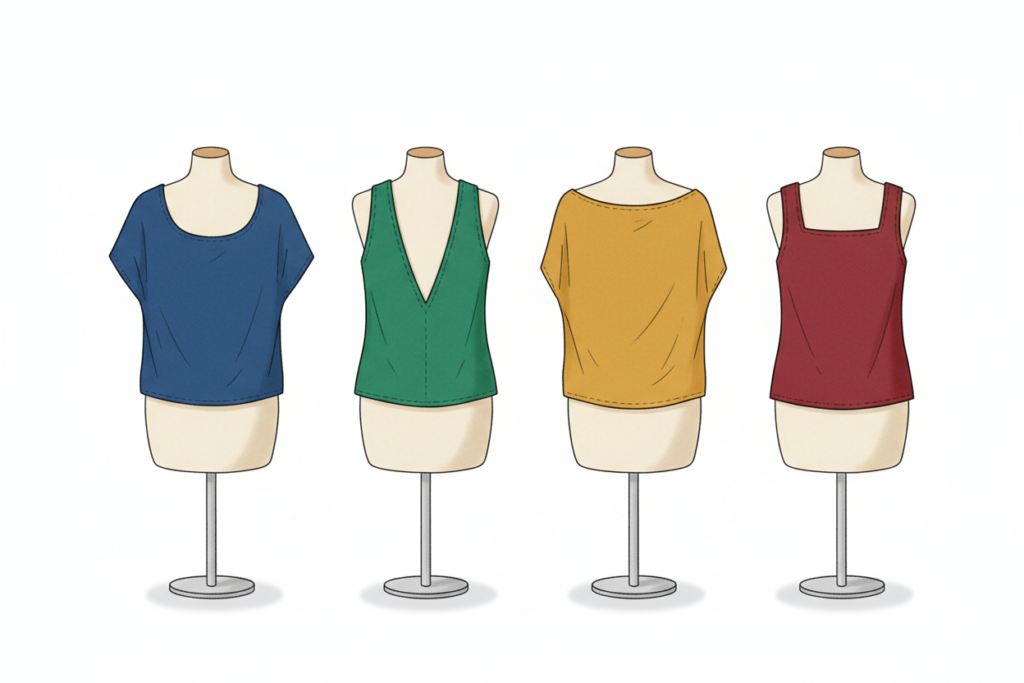
The scoop neckline creates a classic, flattering shape. This curve sits below the collarbone comfortably. Bias binding finishes the edge beautifully.
V-necklines elongate the neck and face. The point adds visual interest to plain fabric. Deep or shallow variations suit different preferences.
Boat necklines run straight across from shoulder to shoulder. This elegant style showcases collarbones attractively. The wide opening works well with statement necklaces.
Sleeve Length Variations
Cap sleeves offer minimal arm coverage. These short sleeves just cover the shoulder. The style works perfectly for warm weather.
Three-quarter sleeves balance coverage and comfort. This length ends between elbow and wrist. The sleeves work well across multiple seasons.
Long sleeves provide maximum coverage and warmth. Fitted sleeves create polished looks. Loose sleeves offer casual comfort.
Every sewer encounters challenges during learning. Recognizing problems quickly saves time and fabric. Most issues have simple solutions once identified.
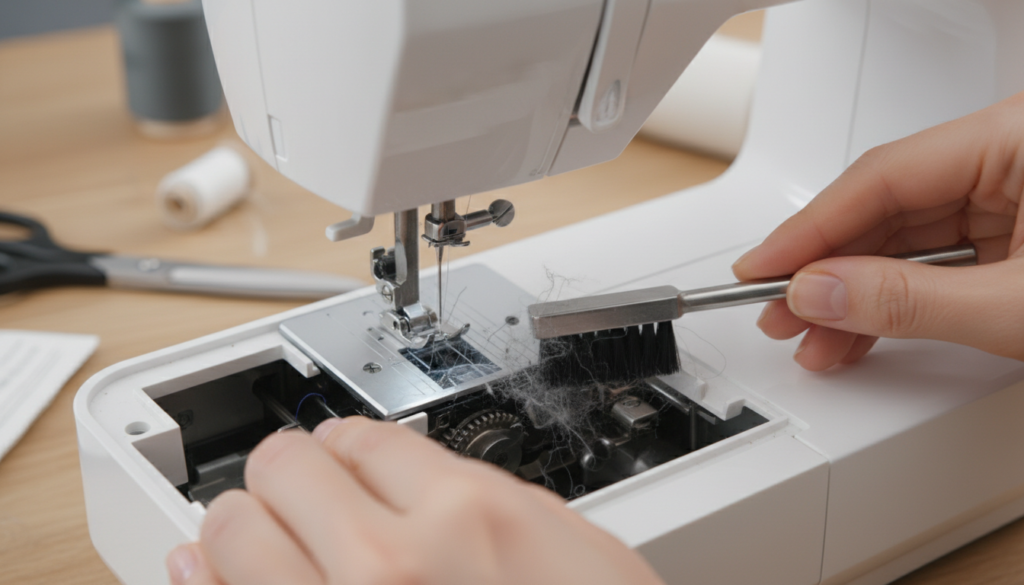
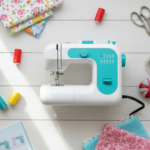
Understanding your sewing machine prevents many common problems. Regular maintenance keeps your machine running smoothly. Clean lint after each project for best performance.
Tension Issues
Uneven stitches indicate tension problems. Top thread too tight creates puckered seams. Bottom thread too tight makes loose upper stitches.
Test tension on fabric scraps before sewing your top. Adjust tension dial in small increments. Perfect stitches lock between fabric layers invisibly.
Rethread your machine completely if problems persist. Thread caught incorrectly causes persistent tension issues. Follow threading path exactly as shown in your manual.
Skipped Stitches
Skipped stitches create weak seams with gaps. Dull or wrong needles cause most skipping. Change needles regularly, especially when switching fabric types.
Check that your needle is inserted completely. The flat side must face the correct direction. Consult your machine manual for proper orientation.
Sewing too quickly can cause skipped stitches. Slow down, especially around curves and thick seams. Let the machine work at its own pace.
Puckered Seams
Puckering makes seams wavy and unprofessional. Excessive tension usually causes this problem. Loosening tension slightly often resolves puckering.
Pulling fabric while sewing also creates puckers. Guide fabric gently without forcing. The feed dogs should move material naturally.
Using a slightly longer stitch length helps with lightweight fabric. Test different lengths on scraps first. Find the setting that creates smooth seams.
Prevention Tips
Use quality thread appropriate for fabric weight
Keep machine clean and well-oiled
Select correct needle type and size
Test settings on fabric scraps first
Quick Fixes
Rethread machine from beginning
Install fresh needle
Adjust tension incrementally
Clean bobbin case thoroughly
Stop Wasting Time on Trial and Error
Get instant answers to sewing problems with comprehensive video tutorials. Learn from experts who have solved every issue you will encounter.
Small details elevate homemade tops to professional quality. Thoughtful finishing shows care and skill. These touches make garments last longer and look better.
Taking time with finishing techniques pays off in wear and appearance. Rushing through final steps wastes earlier careful work. Patience at this stage makes the difference.
Seam Finishing Methods
Finishing seam edges prevents fraying during washing. Pinking shears create a zigzag edge that resists raveling. This quick method works well for tightly woven fabric.
Zigzag stitching along raw edges offers more security. Sew close to the edge on each seam allowance. This technique works with any sewing machine.
French seams enclose raw edges completely. This technique creates professional interiors on sheer fabric. The seams look identical inside and outside the garment.
Pressing Throughout Construction
Press after every seam for best results. Heat sets stitches and creates crisp edges. Proper pressing makes the next construction step easier.
Use appropriate temperature for your fabric type. Test on scraps to prevent scorching or melting. Cotton handles high heat while synthetic fabrics need cooler settings.
Press seams open when possible for flat results. This distributes bulk evenly across the seam. Open seams create smoother lines in the finished top.
Topstitching for Strength and Style
Topstitching adds decorative detail while strengthening seams. Visible stitching creates clean lines and definition. The technique secures layers permanently.
Use a slightly longer stitch length for topstitching. Match thread color to fabric or choose contrasting thread. Keep stitching lines parallel to edges for professional appearance.
Practice on scraps before topstitching your project. Consistent spacing requires concentration and practice. Take your time for best results.
Create Store-Quality Garments at Home
Learn the insider finishing techniques that separate amateur projects from professional creations. Transform your sewing with expert instruction.
Proper care extends the life of handmade garments. Your careful construction deserves thoughtful maintenance. Good habits keep tops looking fresh for years.
Handmade items often require gentler care than mass-produced clothing. Taking extra care preserves your investment of time and materials. The effort proves worthwhile with lasting wear.
Washing Guidelines
Check fabric care instructions before washing. Follow recommendations for water temperature and detergent type. Ignoring these guidelines can damage your work permanently.
Turn tops inside out before washing. This protects outer surfaces from abrasion. The technique preserves colors and prevents pilling.
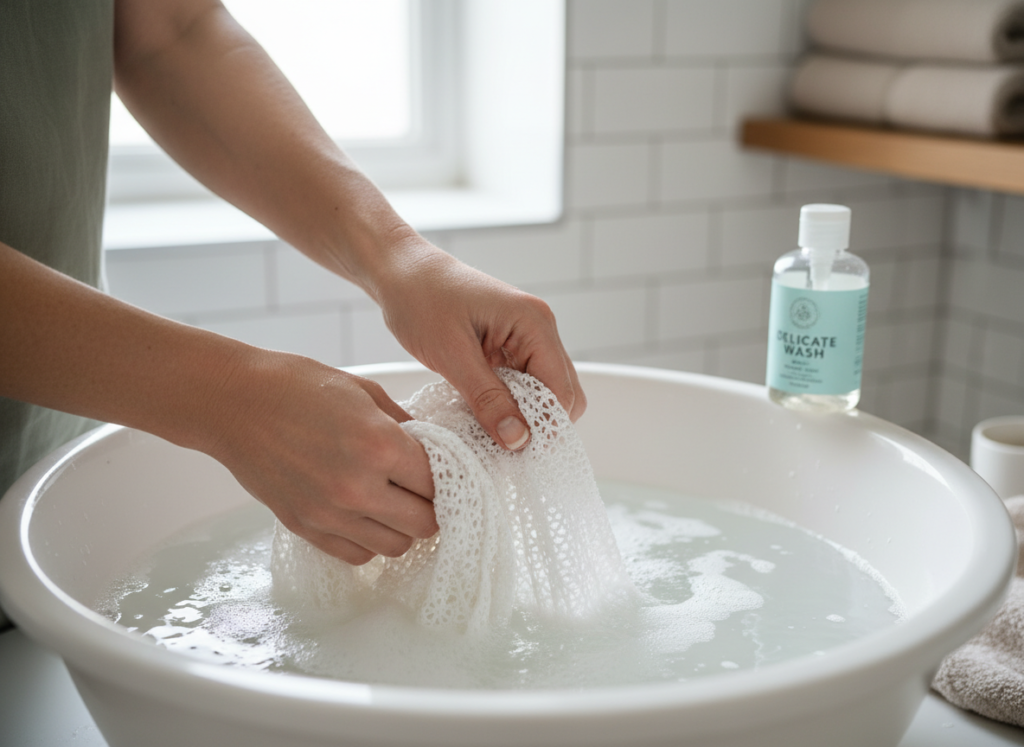
Use gentle cycle for delicate fabrics and construction. Harsh agitation stresses seams unnecessarily. Hand washing offers the safest cleaning for special pieces.
Drying and Storage
Air drying prevents shrinkage and damage. Lay tops flat on clean towels to dry. Reshape gently while damp for best results.
Hang tops on padded hangers to maintain shape. Wire hangers create shoulder bumps and stretch necklines. Quality hangers protect your careful construction.
Store folded knit tops to prevent stretching. Hanging stretches shoulder seams over time. Fold carefully along natural lines to minimize creasing.
Repair small issues immediately before they worsen
Press garments after washing for fresh appearance
Rotate wearing to extend garment life
Store away from direct sunlight to prevent fading
Your Next Steps in Sewing Mastery
Completing your first top marks an important milestone. You have learned fundamental skills that apply to countless projects. This foundation supports lifelong creative sewing.
Continue building skills with progressive projects. Each new top teaches different techniques. Confidence grows with every completed garment.
Expanding Your Skills
Try different neckline shapes on your next project. Experiment with sleeve variations for different looks. Small changes create an entire wardrobe from one basic pattern.
Challenge yourself with new fabric types gradually. Add one new element per project. This measured approach builds skills without overwhelming frustration.
Keep a sewing journal to track your progress. Note what worked well and what needs improvement. Document any pattern adjustments for future reference.
Building a Handmade Wardrobe
Plan coordinating pieces that work together. Choose fabrics in complementary colors and patterns. A cohesive handmade wardrobe offers maximum versatility.
Make multiples of successful patterns in different fabrics. This approach maximizes your pattern investment. You create variety without learning new construction.
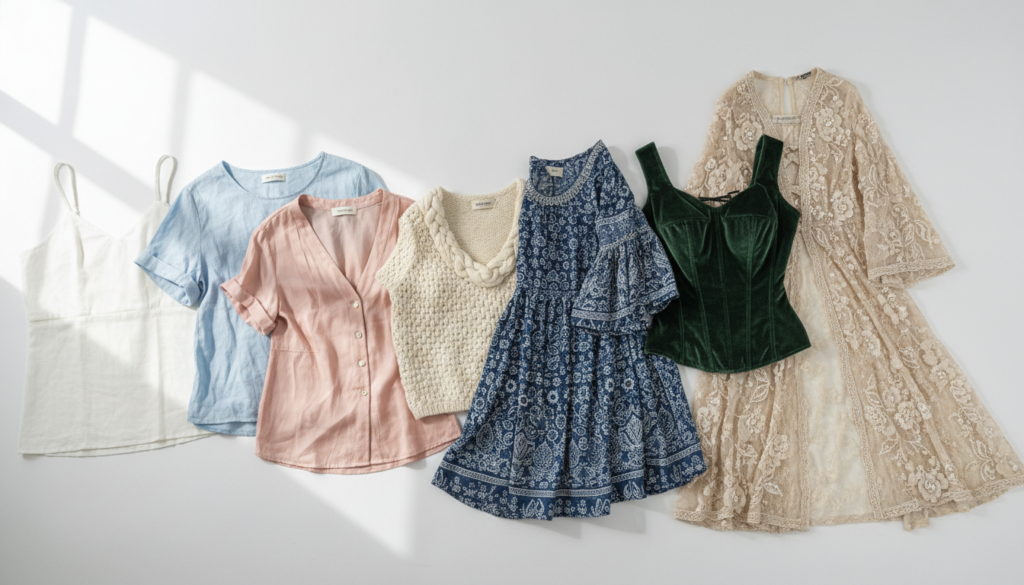
Consider the seasons when planning projects. Lightweight cotton tops suit summer perfectly. Heavier fabrics and longer sleeves work for cooler weather.
Ready to Transform Your Entire Wardrobe?
Join thousands of women who have discovered the joy of creating beautiful, custom-fit clothing. Get lifetime access to comprehensive sewing training that takes you from beginner to confident creator.
Your sewing journey has just begun. Each project brings new discoveries and capabilities. The skills you have learned open doors to unlimited creative expression. Keep practicing, keep learning, and most importantly, enjoy every stitch of the process.