Natural Clear Skin Tips: 12 Proven Ways to Glow Naturally
Your skin tells a story. Every day, it faces pollution, stress, and countless products promising miracles. But what if the secret to beautiful, clear skin lies not in expensive treatments, but in nature itself?
Achieving natural clear skin tips doesn’t require a complicated routine. It starts with understanding what your skin truly needs. Your body already knows how to heal and renew itself. You just need to support it with the right care and habits.
The journey to radiant skin begins with simple, proven methods. These approaches work with your skin’s natural processes rather than against them. They focus on nourishment, balance, and gentle care that transforms your complexion from within.
Understanding Your Skin Type and Its Unique Needs
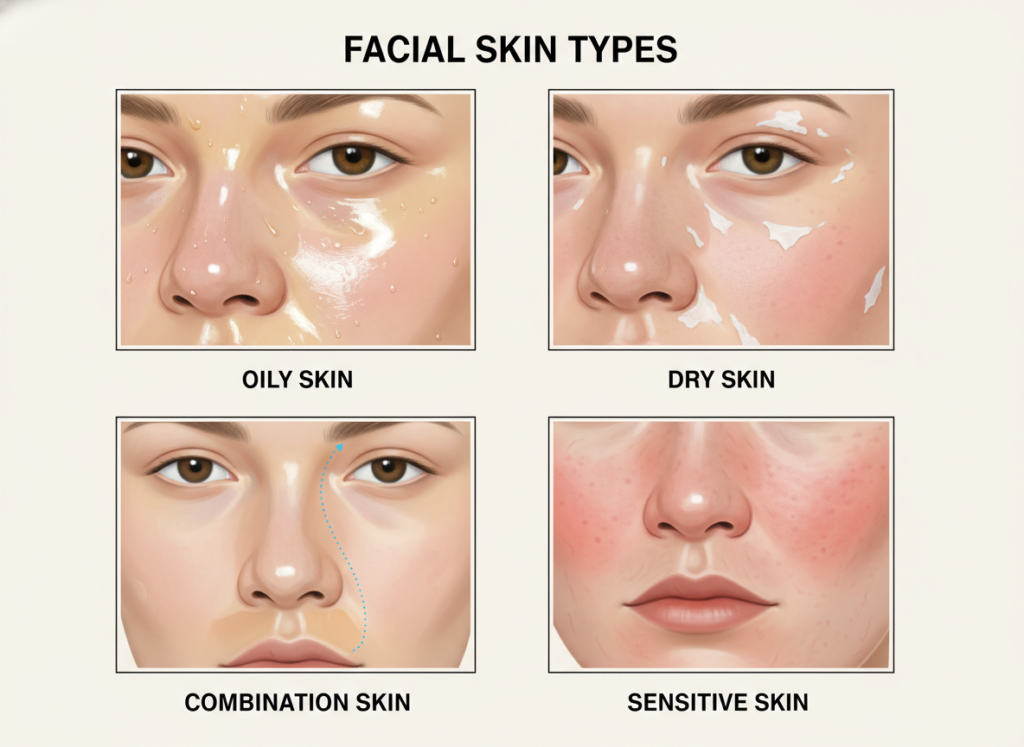
Every face is different. Your skin has its own personality, needs, and challenges. Recognizing your skin type forms the foundation of any effective care routine. This knowledge helps you choose the right products and avoid ingredients that might cause problems.
Normal skin maintains a healthy balance throughout the day. It shows minimal sensitivity and rarely experiences breakouts. People with this skin type often have small pores and a natural glow. Their care products should focus on maintaining this existing balance rather than correcting issues.
Oily skin produces excess sebum, especially in the T-zone. This oil production can lead to enlarged pores and frequent blemishes. However, this skin type often ages more slowly than others. The key involves managing oil without stripping away all natural moisture.
Dry skin feels tight and may show visible flaking. It often appears dull and can develop fine lines earlier than other types. This skin needs intensive hydration and barrier protection. Products rich in fatty acids and humectants work best for maintaining moisture levels throughout the day.
Combination skin displays different characteristics in different zones. The forehead, nose, and chin may be oily while cheeks remain dry. This skin type requires a targeted approach, treating each area according to its specific needs rather than applying the same care products everywhere.
Sensitive skin reacts easily to ingredients, weather, and stress. It may show redness, itching, or burning sensations. People with sensitive skin need gentle, fragrance-free care products. They should introduce new items slowly and always test products before full-face application.
Signs Your Current Routine Isn’t Working
Your face gives clear signals when something isn’t right. Increased breakouts, persistent redness, or excessive dryness all indicate your routine needs adjustment. These signs shouldn’t be ignored or covered up with more products.
Skin feels uncomfortable when the barrier function is compromised. Tightness, burning, or stinging after applying care products means your skin is distressed. Products should feel soothing and comfortable, never irritating or painful.
Changes in skin texture often reveal underlying issues. Rough patches, bumps, or uneven tone suggest your current approach isn’t addressing your skin’s actual needs. Sometimes less is more when it comes to skincare steps.
Hydration: The Foundation of Clear Skin

Water flows through every cell in your body. It carries nutrients, removes waste, and keeps your skin plump and elastic. Without adequate hydration, your skin becomes dull, tight, and more prone to wrinkles. This simple element plays a massive role in achieving that coveted glow.
Your body loses water constantly through breathing, sweating, and normal metabolic processes. Replacing this water should be your first priority each morning. Starting your day with a full glass of water jumpstarts your metabolism and begins the process of flushing toxins from your system.
Drinking eight glasses of water throughout the day helps maintain optimal skin hydration. But individual needs vary based on activity level, climate, and body size. Pay attention to your skin’s appearance and how you feel. Dry lips, headaches, and skin tightness often signal dehydration.
Water quality matters as much as quantity. Filtered water removes chlorine and other chemicals that can dry out your skin. Some people notice improvements in their complexion simply by switching from tap water to filtered or spring water for both drinking and face washing.
Foods That Boost Hydration
Your diet provides another powerful source of hydration. Many fruits and vegetables contain high water content along with vitamins and minerals that support skin health. Watermelon, cucumber, celery, and strawberries all contribute to your daily fluid intake.
These hydrating foods offer more than just water. They deliver antioxidants that protect skin cells from damage. They provide vitamins that support collagen production. Eating a variety of colorful, water-rich foods creates a foundation for beautiful skin from the inside out.
Transform Your Skin From Within
Discover the complete system thousands have used to achieve naturally clear, radiant skin. This proven program combines hydration strategies with targeted nutrition for visible results in weeks.
External Hydration Techniques
Drinking water addresses internal hydration, but your skin also needs moisture applied directly to its surface. This external hydration creates a protective barrier that locks in moisture and prevents water loss throughout the day.
Hyaluronic acid serums attract and hold water in the upper layers of skin. This ingredient can hold up to 1000 times its weight in water. Applying it to damp skin maximizes its effectiveness and gives your face an instant plump, dewy appearance.
Moisturizers seal in hydration by creating a barrier on the skin surface. Choose formulas appropriate for your skin type. Lightweight gels work well for oily skin, while richer creams benefit dry skin. Apply moisturizer immediately after cleansing, while your face is still slightly damp.
The Perfect Cleansing Routine for Your Face
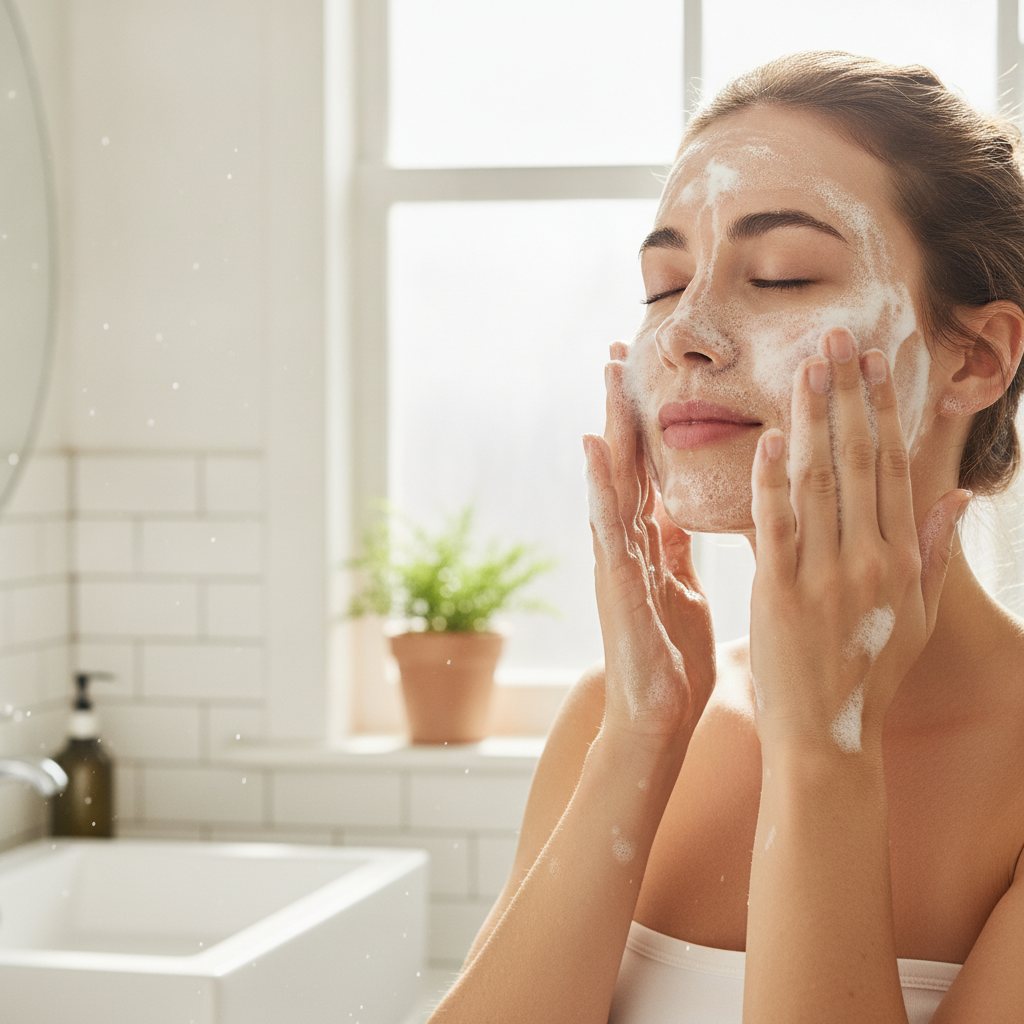
Cleansing removes the day’s buildup of dirt, oil, and environmental pollutants. This step sets the stage for everything that follows in your skincare routine. But many people cleanse incorrectly, either using harsh products or skipping this crucial step entirely.
Morning cleansing washes away oil and sweat that accumulated during the night. Your skin cells regenerate while you sleep, shedding dead cells that need removal. A gentle cleanser in the morning refreshes your complexion and prepares it for the day ahead.
Evening cleansing requires more attention. Throughout the day, your face collects makeup, sunscreen, pollution, and bacteria. Double cleansing works exceptionally well for thorough removal. Start with an oil-based cleanser to break down makeup and sunscreen, then follow with a water-based cleanser to remove any remaining residue.
Water temperature affects your cleansing results. Hot water strips away natural oils and can damage the skin barrier. Cold water doesn’t effectively remove dirt and oil. Lukewarm water provides the perfect balance, cleansing thoroughly without causing irritation or excessive dryness.
Choosing the Right Cleanser
The right cleanser for your skin type makes a significant difference in your results. Gel cleansers work well for oily skin, helping control excess oil production. Cream cleansers benefit dry skin, providing hydration while cleaning. Foam cleansers offer a middle ground for combination skin.
Natural ingredients in cleansers provide gentle yet effective cleaning. Look for products containing aloe vera, chamomile, or green tea. These ingredients clean without stripping away protective oils. They soothe sensitive skin and reduce inflammation while maintaining the skin’s natural balance.
Avoid cleansers with sulfates, artificial fragrances, or alcohol. These ingredients can disrupt your skin barrier and lead to irritation, dryness, or increased oil production. Your cleanser should leave your face feeling clean and comfortable, never tight or squeaky.
Morning Routine
- Splash face with lukewarm water
- Apply gentle cleanser to damp skin
- Massage in circular motions for 30 seconds
- Rinse thoroughly with lukewarm water
- Pat dry with clean towel
Evening Routine
- Remove makeup with oil cleanser
- Follow with water-based cleanser
- Massage gently for 60 seconds
- Rinse completely with lukewarm water
- Pat skin dry gently
Powerful Natural Ingredients for Clear Skin
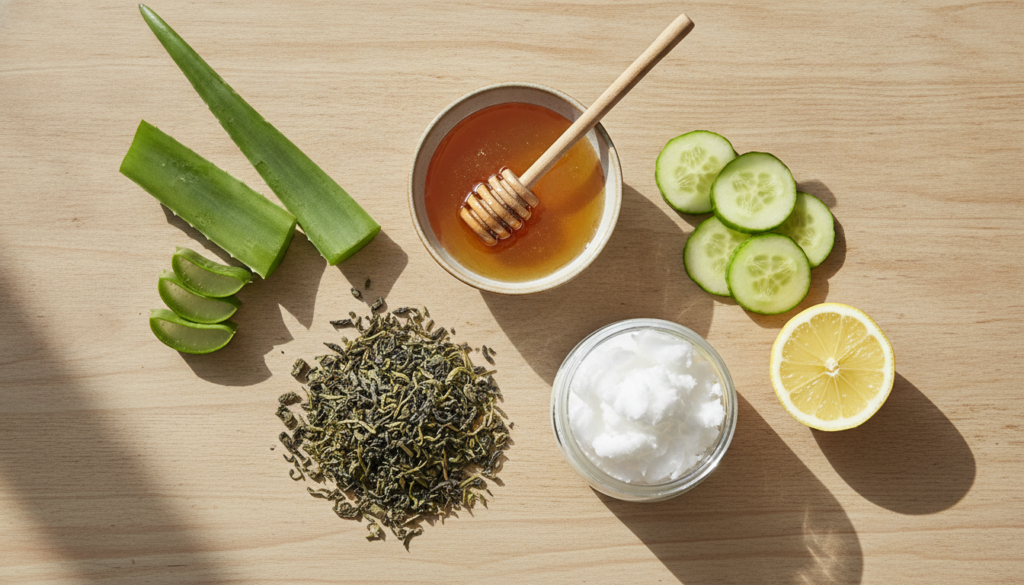
Nature provides powerful solutions for skin concerns. These ingredients have been used for centuries across different cultures. They work gently yet effectively, supporting your skin’s natural healing processes without harsh chemicals or synthetic additives.
Aloe vera soothes inflammation and accelerates healing. This succulent plant contains vitamins, minerals, and amino acids that nourish skin. Fresh aloe gel can be applied directly to the face to calm redness, reduce acne, and provide intense hydration. It works particularly well for sensitive skin that reacts to many commercial products.
Tea tree oil fights bacteria that cause blemishes. This essential oil has natural antimicrobial properties that target acne-causing bacteria without the harsh side effects of chemical treatments. Always dilute tea tree oil with a carrier oil before applying to skin. A small amount goes a long way in preventing and treating breakouts.
Honey acts as a natural humectant, drawing moisture into the skin. Raw honey also contains enzymes and antioxidants that promote healing and prevent bacterial growth. Using honey as a face mask provides deep hydration while gently exfoliating dead skin cells. This golden ingredient suits all skin types and rarely causes reactions.
Vitamin-Rich Ingredients
Vitamins play crucial roles in skin health. Vitamin C brightens complexion and stimulates collagen production. You can find it in fresh lemon juice, oranges, and rosehip oil. These natural sources provide antioxidant protection while evening out skin tone and reducing dark spots.
Vitamin E protects skin cells from free radical damage. This fat-soluble vitamin supports barrier function and helps retain moisture. Almonds, avocados, and wheat germ oil all contain high levels of vitamin E. Applying these ingredients topically or consuming them in your diet benefits your skin from multiple angles.

Honey Magic
Raw honey transforms dull skin into a glowing complexion. This natural antibacterial heals blemishes while locking in essential moisture for all-day softness.

Aloe Vera Healing
This desert plant soothes irritation instantly. Packed with vitamins and minerals, aloe vera calms redness and speeds up skin recovery naturally.
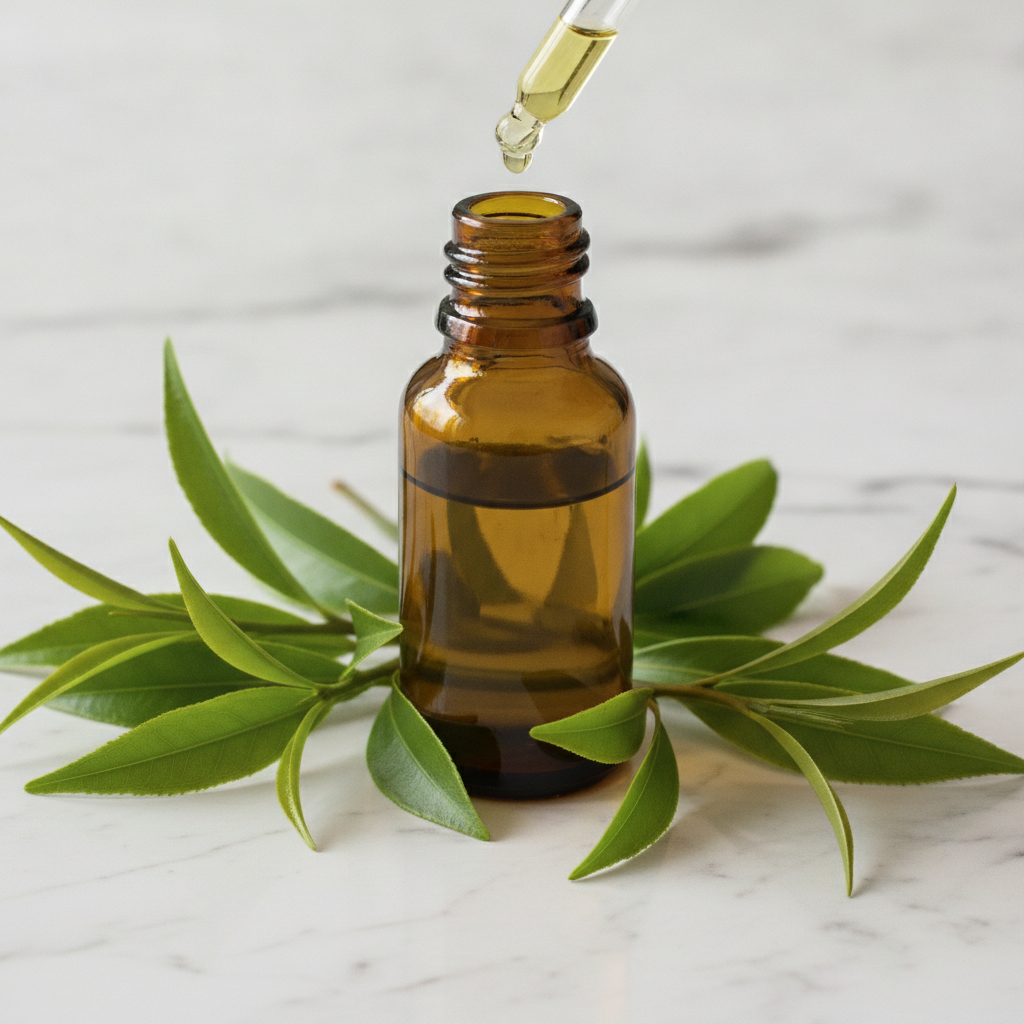
Tea Tree Power
Nature’s answer to stubborn breakouts. This potent oil fights bacteria and reduces inflammation without harsh chemicals that damage your skin barrier.
Oil-Based Natural Solutions
Facial oils might seem counterintuitive, especially for those with oily skin. However, the right oils actually help balance your skin’s natural oil production. They provide essential fatty acids that strengthen the skin barrier and lock in moisture without clogging pores.
Jojoba oil closely resembles your skin’s natural sebum. This similarity makes it easily absorbed and less likely to cause breakouts. It balances oil production in oily skin while providing moisture to dry patches. People with combination skin find jojoba oil particularly beneficial.
Rosehip oil delivers vitamins A and C along with essential fatty acids. These nutrients fade scars, reduce hyperpigmentation, and promote cell turnover. A few drops massaged into damp skin each night can dramatically improve skin texture and tone over time.
Coconut oil works well as a makeup remover and deep moisturizer. However, it can clog pores in some people. Test it on a small area first. If your skin tolerates it well, coconut oil provides intensive hydration and has natural antibacterial properties that keep skin clear.
Foods That Transform Your Complexion

Beautiful skin starts from within. The foods you eat directly impact your complexion. Every meal provides an opportunity to nourish your skin cells with the vitamins, minerals, and nutrients they need to glow. Your diet affects skin appearance more than many expensive creams ever could.
Omega-3 fatty acids reduce inflammation throughout your body, including your skin. These essential fats strengthen skin cells and support barrier function. Salmon, walnuts, chia seeds, and flaxseeds all provide abundant omega-3s. Including these foods regularly helps combat redness, irritation, and inflammatory skin conditions.
Antioxidant-rich foods protect your skin from free radical damage. Berries, dark chocolate, and green tea all contain powerful antioxidants that fight aging and environmental stress. These foods help maintain collagen, reduce wrinkles, and keep your complexion bright and youthful.
Leafy greens deliver vitamins A, C, and K along with folate and iron. Spinach, kale, and Swiss chard support skin cell turnover and repair. They also provide chlorophyll, which some research suggests may help protect against sun damage and reduce inflammation.
Unlock Your Skin’s Full Potential
Join thousands who discovered the proven nutrition plan that clears skin from the inside out. This comprehensive program reveals exactly which foods heal and which foods harm your complexion.
Foods to Avoid for Clear Skin
Some foods trigger inflammation and worsen skin conditions. Dairy products cause breakouts in many people due to hormones naturally present in milk. If you struggle with acne, try eliminating dairy for a month to see if your skin improves. Many notice dramatic changes within weeks.
Refined sugar spikes insulin levels and triggers inflammation. This process damages collagen and elastin, leading to premature aging. Sugar also feeds acne-causing bacteria and increases oil production. Reducing sugar intake often results in clearer, brighter skin within days.
Processed foods contain additives, preservatives, and unhealthy fats that burden your body. These ingredients create inflammation and oxidative stress. Choosing whole, unprocessed foods gives your skin the nutrients it needs without the harmful additives that cause problems.
Meal Planning for Glowing Skin
Creating a skin-friendly eating plan doesn’t require complicated recipes. Focus on whole foods in their natural state. Build meals around vegetables, lean proteins, healthy fats, and complex carbohydrates. This approach naturally provides the nutrients your skin craves.
Breakfast might include berries with Greek yogurt and walnuts. Lunch could feature a large salad with salmon and avocado. Dinner might consist of grilled chicken with roasted vegetables and quinoa. Snacks of fresh fruit, nuts, or vegetable sticks keep your energy stable and your skin nourished throughout the day.
Skin-Loving Proteins
Protein supports collagen production and tissue repair. Choose clean sources that nourish without triggering inflammation.
- Wild-caught salmon rich in omega-3s
- Free-range eggs with complete amino acids
- Grass-fed lean meats for iron and zinc
- Legumes providing fiber and protein
Essential Healthy Fats
Good fats maintain skin moisture and support cell membrane integrity. They keep your complexion soft and supple.
- Avocados packed with vitamin E
- Extra virgin olive oil for antioxidants
- Raw nuts and seeds for minerals
- Fatty fish providing omega-3 balance
Antioxidant Powerhouses
These foods fight free radicals and protect your skin from environmental damage and premature aging.
- Blueberries with anthocyanins
- Dark chocolate containing flavonoids
- Green tea for catechins
- Tomatoes rich in lycopene
Vitamin-Rich Vegetables
Vegetables deliver essential vitamins and minerals that support every aspect of skin health and renewal.
- Sweet potatoes for beta-carotene
- Bell peppers loaded with vitamin C
- Leafy greens providing vitamin K
- Broccoli containing sulforaphane
The Sleep-Skin Connection

Sleep works as your skin’s natural repair time. During deep sleep, your body increases blood flow to your face, rebuilds collagen, and repairs damage from UV exposure. Missing out on quality sleep shows up quickly on your face through dark circles, puffiness, and dull complexion.
Most adults need seven to nine hours of sleep each night for optimal skin health. During this time, your body produces growth hormone, which aids in cell reproduction and regeneration. Without adequate sleep, this crucial repair process gets interrupted, leading to premature aging and skin problems.
Your sleep position affects your skin too. Sleeping on your back prevents compression wrinkles that form when your face presses against a pillow night after night. If you must sleep on your side, invest in a silk or satin pillowcase. These smooth fabrics create less friction than cotton, reducing the formation of sleep lines.
Creating a Skin-Friendly Sleep Environment
Your bedroom environment impacts both sleep quality and skin health. Keep your room cool, between 60 and 67 degrees Fahrenheit. This temperature range promotes deeper sleep and prevents excessive sweating that can clog pores. Good air circulation also helps maintain skin health during the night.
A humidifier adds moisture to dry indoor air. This extra humidity prevents skin from becoming dehydrated overnight. People who use humidifiers often wake up with softer, more supple skin. This simple device makes a particularly big difference during winter months when heating systems dry out the air.
Your nighttime skincare routine prepares your skin for optimal repair. Cleanse thoroughly to remove all makeup, sunscreen, and daily buildup. Apply treatment products like retinol or vitamin C serum. Follow with a nourishing night cream that supports your skin’s regeneration while you sleep.
Master the Nighttime Routine
Discover the evening skincare system dermatologists recommend for maximum overnight repair. This proven method optimizes your sleep time for dramatically clearer skin by morning.
Sleep Habits That Harm Your Skin
Going to bed with makeup on blocks pores and prevents skin from breathing. This habit leads to breakouts, irritation, and accelerated aging. No matter how tired you feel, always cleanse your face before sleep. Keep makeup wipes by your bed for nights when you can’t manage a full routine.
Late-night screen time disrupts your circadian rhythm and affects skin repair processes. Blue light from devices suppresses melatonin production, making it harder to fall asleep. It may also cause oxidative stress in skin cells. Turn off screens at least an hour before bed for better sleep and healthier skin.
Inconsistent sleep schedules confuse your body’s natural rhythms. Going to bed and waking at different times each day interferes with your skin’s repair cycle. Try to maintain regular sleep and wake times, even on weekends. This consistency supports better skin health and overall wellness.
Managing Stress for Clearer Skin

Stress triggers hormonal changes that directly affect your skin. When you feel stressed, your body produces cortisol, a hormone that increases oil production and inflammation. This hormonal shift often leads to breakouts, redness, and other skin issues that seem to appear out of nowhere.
Chronic stress compromises your skin barrier. This protective layer keeps moisture in and irritants out. When stress weakens this barrier, your skin becomes more sensitive, dry, and prone to reactions. Managing stress helps maintain a strong, healthy barrier that protects against environmental damage.
Stress also affects your habits in ways that harm your skin. You might skip your skincare routine, eat poorly, or get less sleep when feeling overwhelmed. These stress-induced behaviors compound the direct effects of stress hormones, creating a cycle of skin problems.
Effective Stress-Relief Techniques
Deep breathing exercises calm your nervous system almost immediately. When you feel stress building, take five slow, deep breaths. Breathe in through your nose for a count of four, hold for four, then exhale through your mouth for four. This simple practice lowers cortisol levels and brings a sense of calm.
Regular exercise reduces stress hormones and increases endorphins. Physical activity also boosts circulation, delivering more oxygen and nutrients to your skin. Aim for at least 30 minutes of movement most days. Walking, yoga, dancing, or any activity you enjoy all provide benefits for your mood and your complexion.
Meditation and mindfulness practices rewire your brain’s stress response. Even five minutes of quiet meditation each day can make a difference. Apps and guided videos make starting a meditation practice easy. Many people notice improvements in both their stress levels and their skin within weeks of starting a regular practice.
Lifestyle Changes That Reduce Stress
Setting boundaries protects your mental health and your skin. Learn to say no to commitments that drain your energy. Prioritize activities that bring you joy and relaxation. Creating space in your schedule for self-care isn’t selfish. It’s essential for managing stress and maintaining healthy skin.
Social connections buffer against stress. Spending time with supportive friends and family provides emotional relief and perspective. Even a quick phone call with someone who makes you laugh can lower stress hormones and improve your mood. These positive social interactions benefit your overall health, including your skin.
Nature exposure reduces stress naturally. Time outdoors lowers cortisol and blood pressure while boosting mood. A walk in a park, gardening, or simply sitting outside for 15 minutes can reset your stress response. This outdoor time also provides vitamin D, which supports skin health in multiple ways.
Natural Sun Protection Methods
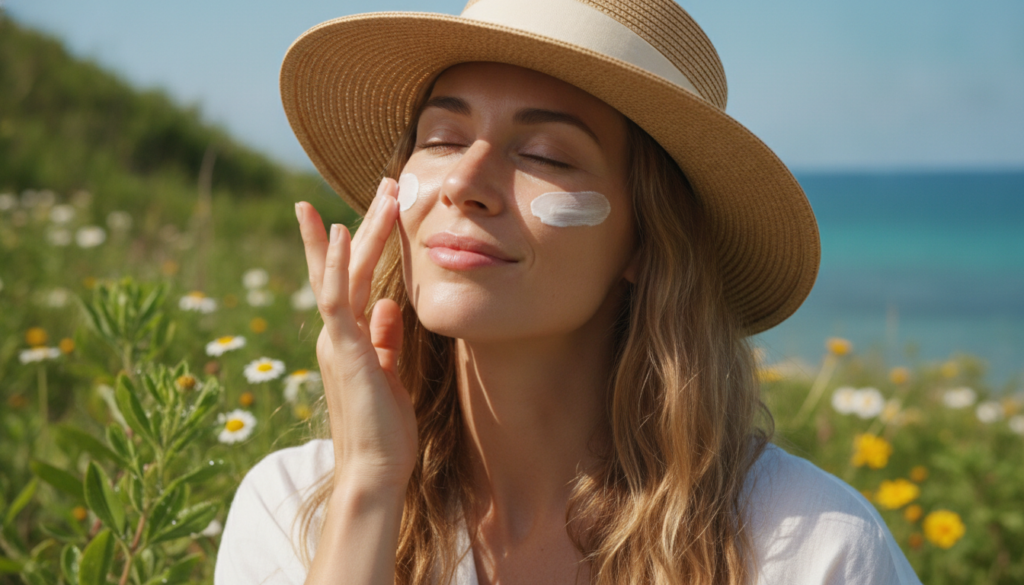
Sun exposure causes up to 80% of visible facial aging. UV rays break down collagen, create dark spots, and damage skin cells. Protecting your skin from the sun represents one of the most important steps in any skincare routine. This protection prevents damage rather than trying to repair it later.
Natural sun protection starts with avoiding peak sun hours. The sun’s rays are strongest between 10 AM and 4 PM. When possible, stay in the shade during these hours. If you must be outside, seek shelter under trees, umbrellas, or other cover. This simple habit dramatically reduces your UV exposure.
Protective clothing offers excellent defense against sun damage. Wide-brimmed hats shade your face, ears, and neck. Long sleeves and pants made from tightly woven fabric block UV rays. Some clothing now comes with built-in UPF protection, providing even more defense against sun damage.
Natural Sunscreen Options
Mineral sunscreens use zinc oxide or titanium dioxide to physically block UV rays. These natural ingredients sit on top of your skin, reflecting sunlight away. They work immediately upon application and don’t absorb into your bloodstream like chemical sunscreens. People with sensitive skin often tolerate mineral formulas better.
Apply sunscreen 15 minutes before going outside. Use enough product to cover all exposed skin thoroughly. Most people don’t apply nearly enough sunscreen to get the protection listed on the bottle. A full shot glass worth covers your entire body. Don’t forget often-missed spots like ears, neck, and the tops of your feet.
Reapply sunscreen every two hours when outdoors. Water, sweat, and towel drying all remove sunscreen from your skin. If swimming or sweating heavily, reapply more frequently. This consistent reapplication maintains protection throughout the day and prevents burns and long-term damage.
Morning Protection
Start each day with broad-spectrum mineral sunscreen as your final skincare step. This daily habit prevents cumulative sun damage that leads to premature aging and uneven tone.
Antioxidant Defense
Layer vitamin C serum under sunscreen for extra protection. Antioxidants neutralize free radicals from UV exposure, providing an additional shield against sun damage.
After-Sun Care
Soothe and repair skin after sun exposure with aloe vera and hydrating masks. Proper after-sun care minimizes damage and helps your skin recover faster.
Foods That Boost Sun Protection
Certain foods provide internal sun protection by fighting free radicals. Tomatoes contain lycopene, a powerful antioxidant that accumulates in skin and offers some UV protection. Eating cooked tomatoes or tomato paste maximizes lycopene absorption. Regular consumption may reduce sunburn severity.
Green tea polyphenols protect against UV damage from the inside out. Drinking green tea regularly or applying it topically provides antioxidant defense. Some studies show green tea can reduce redness and DNA damage from sun exposure. This doesn’t replace sunscreen but offers complementary protection.
Omega-3 fatty acids reduce inflammation from sun exposure. These healthy fats may help prevent sunburn and protect against UV-induced skin cancer. Eating fatty fish, walnuts, or flaxseeds several times per week supports your skin’s natural sun defense mechanisms.
Exercise for Radiant Skin

Physical activity increases blood flow throughout your body, including to your skin. This enhanced circulation delivers oxygen and nutrients to skin cells while carrying away waste products. The result is a healthy, natural glow that no highlighter can replicate. Regular exercise creates this radiant effect from within.
Sweating during exercise opens pores and helps flush out toxins and debris. This natural cleansing process can improve skin clarity when combined with proper post-workout hygiene. Always cleanse your face soon after exercising to remove sweat and prevent it from mixing with bacteria and oils.
Exercise reduces stress hormones that trigger breakouts and inflammation. Physical activity produces endorphins, your body’s natural mood boosters. These feel-good chemicals improve mental health while simultaneously benefiting your skin. The stress-reducing effects of regular exercise show up clearly in your complexion.
Best Exercises for Skin Health
Cardiovascular exercise pumps blood most effectively to your skin. Running, cycling, swimming, or dancing all increase heart rate and circulation. Aim for at least 30 minutes of cardio most days of the week. You don’t need intense workouts. Moderate exercise that makes you slightly breathless provides excellent benefits.
Yoga combines physical movement with stress reduction. Certain poses, like downward dog and headstands, increase blood flow to your face. The relaxation and mindfulness aspects of yoga lower cortisol levels. Many yoga practitioners report improvements in their skin clarity and glow after establishing a regular practice.
Strength training builds muscle and supports healthy aging. Resistance exercise helps maintain collagen production as you age. It also improves posture, which can affect how your skin looks. Better posture reduces wrinkles and sagging by properly supporting facial structures.
Complete Fitness and Skin Program
Discover the exercise routine specifically designed to maximize skin benefits. This comprehensive program combines the best movements for circulation, detoxification, and stress reduction that transforms your complexion.
Post-Exercise Skin Care
Remove makeup before working out. Exercising with makeup on traps sweat, oil, and bacteria against your skin. This combination clogs pores and leads to breakouts. Start your workout with a clean face to allow your skin to breathe and sweat freely.
Wipe away sweat during your workout if it drips heavily. Excessive sweat sitting on skin can cause irritation, especially if you have sensitive skin. Keep a clean towel handy and gently blot sweat without rubbing harshly. This prevents salt and minerals in sweat from irritating your face.
Cleanse within 30 minutes after finishing your workout. Post-exercise cleansing removes sweat, bacteria, and any debris that accumulated during your session. Follow with your regular skincare routine. This timing prevents post-workout breakouts while allowing your skin to benefit from the increased circulation.
Gentle Exfoliation for Smooth Skin
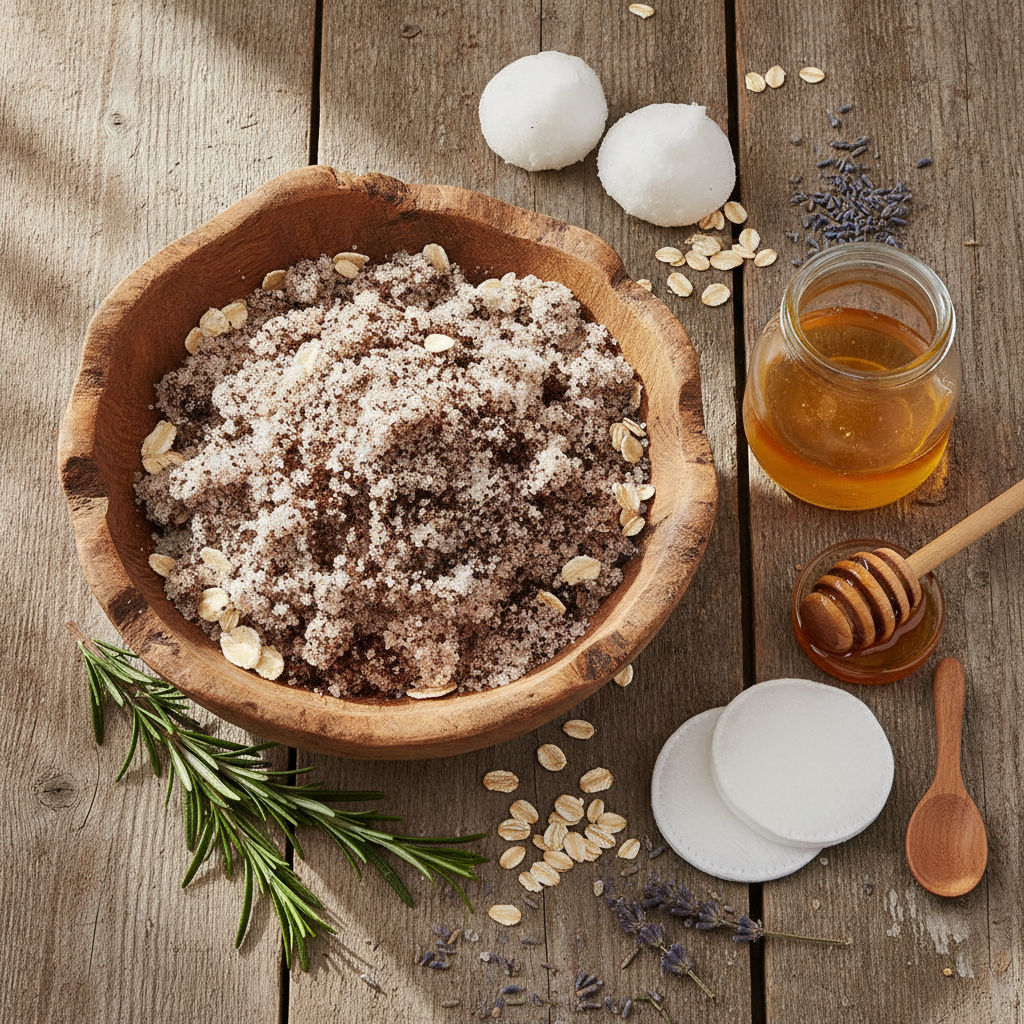
Exfoliation removes dead skin cells that accumulate on your face. These cells make your complexion look dull and uneven. They also block pores and prevent skincare products from penetrating effectively. Regular exfoliation reveals the fresh, glowing skin underneath while improving product absorption.
Your skin naturally sheds dead cells, but this process slows with age. Environmental factors and product buildup can also interfere with natural shedding. Gentle exfoliation speeds up this renewal process, giving you brighter, smoother skin. The key word is gentle. Over-exfoliation damages your skin barrier and causes more problems than it solves.
Two main types of exfoliation exist: physical and chemical. Physical exfoliants use small particles or tools to manually scrub away dead cells. Chemical exfoliants use acids or enzymes to dissolve the bonds holding dead cells to your skin. Both methods work well when used correctly for your skin type.
Natural Physical Exfoliants
Sugar makes an excellent gentle physical exfoliant. Mix fine white or brown sugar with honey or oil to create a natural scrub. The sugar granules polish away dead cells while honey provides antibacterial benefits. This DIY scrub works for most skin types and costs pennies to make.
Ground oatmeal soothes while it exfoliates. This option suits sensitive skin that reacts to harsher scrubs. Oatmeal contains compounds that reduce inflammation and calm irritation. Mix ground oats with water, yogurt, or honey for a gentle exfoliating mask that won’t irritate delicate skin.
Coffee grounds offer moderate exfoliation plus antioxidants. Used coffee grounds from your morning brew work perfectly. The caffeine in coffee may temporarily tighten and brighten skin. Mix grounds with coconut oil for a body scrub that’s too harsh for facial use but perfect for smoothing rough areas like elbows and knees.
Natural Chemical Exfoliants
Alpha hydroxy acids (AHAs) come from fruits and milk. Lactic acid from yogurt and milk provides gentle exfoliation suitable for sensitive skin. Glycolic acid from sugar cane penetrates deeper and works well for sun damage and wrinkles. These water-soluble acids work on the skin surface to reveal brighter, smoother tone.
Beta hydroxy acid (BHA), specifically salicylic acid, comes from willow bark. This oil-soluble acid penetrates pores, making it ideal for oily and acne-prone skin. BHA reduces blackheads and prevents breakouts while exfoliating the surface. It offers anti-inflammatory benefits that calm redness and irritation.
Fruit enzymes from papaya and pineapple provide natural exfoliation. Papain and bromelain break down dead skin cells without physical scrubbing. These enzymes work more gently than acids, making them perfect for sensitive skin. A mashed papaya or pineapple mask delivers natural enzymatic exfoliation at home.
Exfoliation Frequency and Technique
Most skin types benefit from exfoliating two to three times per week. Sensitive skin might only tolerate once weekly exfoliation. Oily, thicker skin can sometimes handle daily chemical exfoliation. Start slowly and observe how your skin responds. Redness, excessive dryness, or increased breakouts signal over-exfoliation.
Always use gentle pressure with physical exfoliants. Your skin needs polishing, not scrubbing. Use light circular motions for about 30 seconds, then rinse thoroughly. Pressing hard or scrubbing vigorously damages your skin barrier and causes micro-tears that lead to inflammation and sensitivity.
Apply chemical exfoliants to clean, dry skin. Leave them on for the recommended time, then rinse or proceed with your routine as directed. Start with lower concentrations and gradually increase if needed. Your skin may tingle slightly, but burning or stinging means the product is too strong.
Facial Massage Techniques
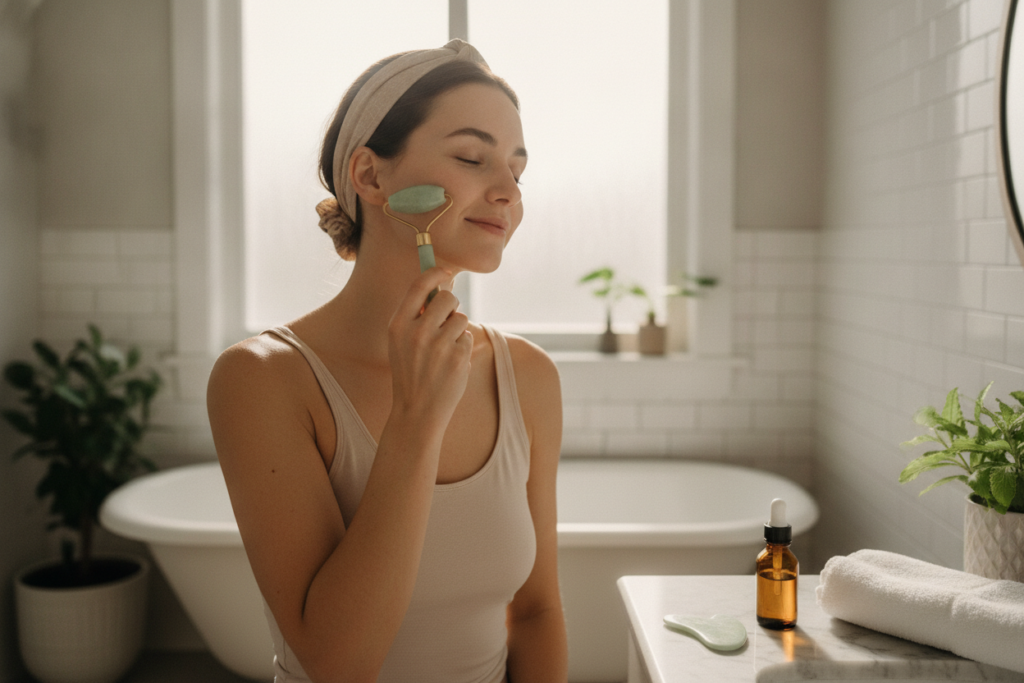
Facial massage boosts circulation and promotes lymphatic drainage. This simple practice reduces puffiness, enhances glow, and may even reduce the appearance of fine lines. Just five minutes of daily massage can make a noticeable difference in how your skin looks and feels.
Increased blood flow from massage delivers oxygen and nutrients to skin cells. This nourishment supports collagen production and cell renewal. The temporary flush you see after massage indicates enhanced circulation working to revitalize your complexion from within.
Lymphatic drainage removes toxins and excess fluid from facial tissues. This process reduces puffiness, particularly around the eyes and jawline. Regular massage helps maintain a sculpted, defined facial contour while supporting your skin’s natural detoxification processes.
Basic Facial Massage Steps
Start with clean hands and a freshly cleansed face. Apply a few drops of facial oil to provide slip and prevent pulling on delicate skin. Warm the oil between your palms before applying. This preparation ensures smooth, comfortable massage that won’t tug or damage your skin.
Begin at your neck, using upward strokes from collarbone to jaw. This direction supports lymphatic flow and prevents sagging. Use your fingertips or palms with gentle but firm pressure. Repeat each stroke three to five times before moving to the next area.
Move to your jaw, using your knuckles to trace from chin to ear along the jawline. This motion helps release tension and define your jaw. Many people hold stress in their jaw without realizing it. This massage technique relaxes those muscles while improving contour.
Massage your cheeks with upward and outward motions. Start at the sides of your nose and sweep out toward your ears. Use your fingertips in gentle circular motions. This technique lifts and firms while draining fluid that causes puffiness.
- Reduces overnight puffiness
- Awakens and energizes complexion
- Preps skin for makeup application
- Drains accumulated lymphatic fluid
- Creates natural healthy glow
Morning Massage Benefits
- Releases facial tension from day
- Enhances product absorption
- Promotes relaxation before sleep
- Supports overnight skin repair
- Provides calming self-care ritual
Evening Massage Benefits
Tools for Enhanced Massage
Jade rollers and gua sha tools amplify massage benefits. These traditional tools have been used for centuries in Chinese skincare. The cool stone feels soothing on skin while the rolling or scraping motion enhances lymphatic drainage and product penetration.
Jade rollers work best for depuffing and calming. Roll from the center of your face outward, always working in the direction of lymphatic flow. The cooling effect helps constrict blood vessels, reducing inflammation and redness. Store your roller in the refrigerator for extra depuffing power.
Gua sha tools provide deeper tissue work. Hold the tool at a 15-degree angle and use gentle pressure to scrape along facial contours. This technique releases muscle tension and promotes circulation more intensely than fingers alone. Regular gua sha practice can enhance facial definition over time.
Seasonal Skincare Adjustments
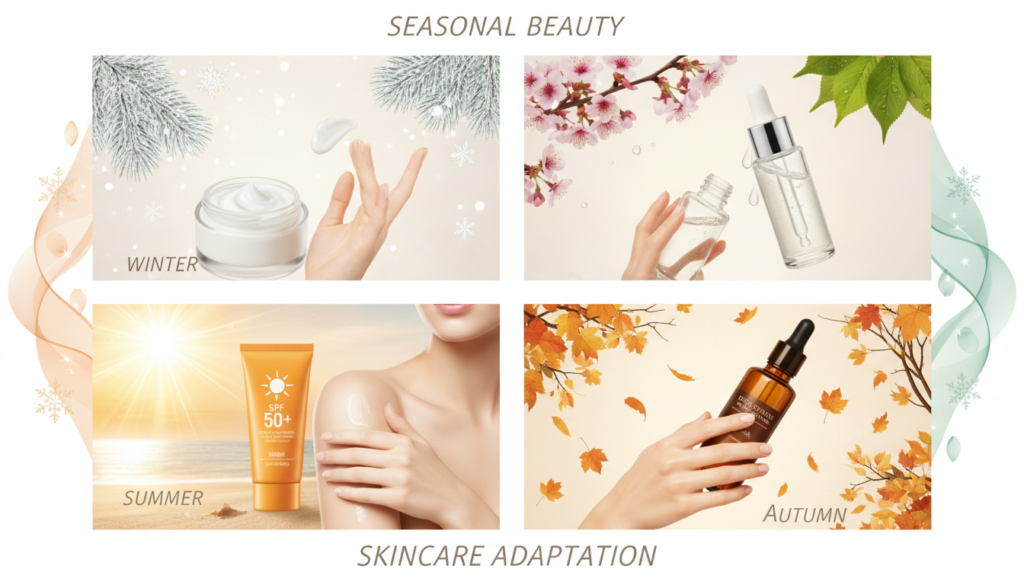
Your skin’s needs change with the seasons. Temperature, humidity, and environmental factors all affect your complexion differently throughout the year. Adapting your routine to match these changes keeps your skin balanced and healthy regardless of weather conditions.
Winter brings cold, dry air that strips moisture from your skin. Indoor heating further dehydrates your complexion. During these months, switch to richer moisturizers and add hydrating serums. Your skin needs extra protection against harsh conditions that compromise its barrier function.
Summer heat and humidity increase oil production for many people. Lighter products work better in warm weather. Switch to gel-based moisturizers and oil-free formulas. However, don’t skip moisturizer entirely. Even oily skin needs hydration, especially with increased sun exposure and air conditioning.
Spring Skincare Transition
Spring offers a perfect time to exfoliate away winter’s dull, dead skin buildup. As weather warms, your skin prepares for increased oil production. Gentle exfoliation helps prevent clogged pores while revealing fresh, glowing skin underneath. This seasonal renewal prepares your complexion for the months ahead.
Lighter moisturizers suit spring’s moderate temperatures. Transition from heavy winter creams to lighter lotions or gel-creams. Your skin still needs moisture but may feel greasy with overly rich products. Listen to your skin and adjust product weights accordingly.
Spring allergies can trigger skin reactions. Pollen and other allergens may cause redness, itching, or breakouts. Gentle, fragrance-free products minimize additional irritation. An antihistamine can help if allergies significantly affect your skin during this season.
Year-Round Clear Skin System
Get the complete seasonal skincare guide that adapts to your skin’s changing needs throughout the year. This comprehensive program ensures perfect skin in every season with customized routines for each climate challenge.
Fall Skincare Recovery
Fall focuses on repairing summer sun damage. This season provides the ideal time for stronger treatments like retinol or vitamin C serums. Cooler weather means less sun exposure, reducing the risk of sensitivity from these powerful ingredients. Focus on renewal and repair during autumn months.
Humidity drops as fall progresses, signaling time to increase moisture. Gradually transition back to richer products before winter arrives. Adding a facial oil or switching to a creamier moisturizer prevents the dryness that comes with falling temperatures and indoor heating.
Fall brings harvest foods that benefit your skin. Pumpkins, sweet potatoes, and squash all contain beta-carotene that supports skin health. These seasonal foods provide antioxidants that repair summer damage while preparing your skin for winter. Eating seasonally often naturally provides what your skin needs.
Climate-Specific Considerations
Humid climates require lighter products year-round. Heavy creams may feel uncomfortable and lead to breakouts in consistently moist air. Gel-based moisturizers and oil-free formulas work better in tropical or humid environments. However, don’t skip moisturizer completely even if your skin feels oily.
Dry climates demand intensive hydration regardless of season. Desert environments and high altitudes strip moisture from skin quickly. Layer hydrating products, starting with a serum, then a moisturizer, and possibly adding a facial oil on top. Use a humidifier at night to add moisture to dry indoor air.
Extreme temperature changes require careful barrier protection. If you move between very hot outdoors and cold air conditioning, or vice versa, your skin barrier faces stress. Focus on strengthening your barrier with ceramides and fatty acids. These ingredients help your skin adapt to temperature fluctuations.
Choosing Natural Skincare Products
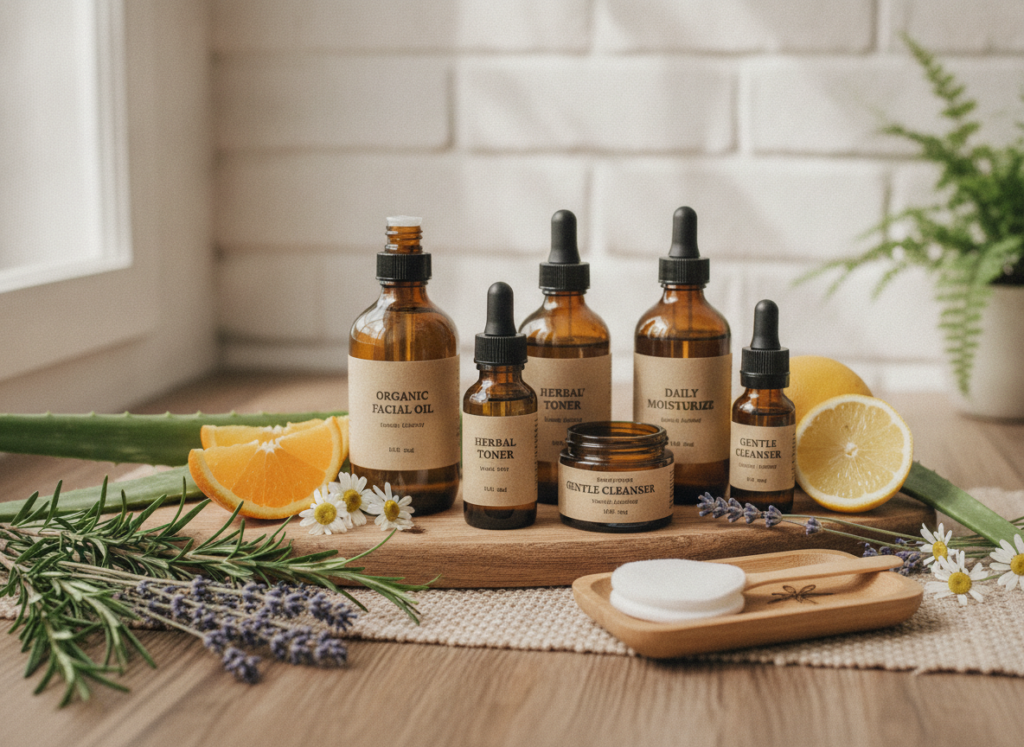
The skincare market overflows with products making bold promises. Natural products work with your skin rather than against it. They nourish with plant-based ingredients that your skin recognizes and can use effectively. Choosing the right natural care products requires understanding labels and knowing what your skin truly needs.
Reading ingredient lists reveals what you’re actually putting on your face. Ingredients appear in order of concentration, with the highest amounts listed first. Look for recognizable plant extracts, oils, and botanicals near the top of the list. If water and fillers dominate the first five ingredients, the product may not deliver promised benefits.
Avoid common irritants even in natural products. Essential oils, though natural, can cause sensitivity in many people. Fragrance, whether natural or synthetic, frequently triggers reactions. If you have sensitive skin, choose fragrance-free formulas even from natural brands. Your skin will thank you for this careful selection.
Understanding Natural Certifications
Organic certification ensures ingredients were grown without synthetic pesticides. USDA Organic, COSMOS, and Ecocert represent reputable certifying bodies. These certifications verify that products meet strict standards for natural and organic ingredients. They provide assurance beyond mere marketing claims.
Cruelty-free certification means products weren’t tested on animals. Look for the Leaping Bunny or PETA bunny logo. Vegan products contain no animal-derived ingredients. These certifications matter to many people seeking ethical beauty options. They also often indicate higher-quality, more thoughtfully formulated care products.
Clean beauty remains largely unregulated, with no standard definition. Brands define “clean” differently, creating confusion. Look beyond the clean label to actual ingredients. Some clean brands still include questionable ingredients, while some conventional brands have reformulated with safer components. Research matters more than marketing terms.
Ingredients to Seek
- Hyaluronic acid for intense hydration
- Niacinamide for barrier support and tone
- Vitamin C for brightness and protection
- Retinol for cell turnover and renewal
- Peptides for collagen support
- Ceramides for barrier repair
- Plant oils rich in fatty acids
- Botanical extracts for antioxidants
Ingredients to Avoid
- Parabens that disrupt hormones
- Sulfates that strip natural oils
- Synthetic fragrances causing irritation
- Phthalates linked to health concerns
- Formaldehyde-releasing preservatives
- Mineral oil that clogs pores
- Artificial colors providing no benefit
- Denatured alcohol that dries skin
Testing New Products Safely
Patch testing prevents full-face reactions to new care products. Apply a small amount of product to your inner forearm or behind your ear. Wait 24 to 48 hours to see if redness, itching, or irritation develops. This simple test can save you from a painful reaction across your entire face.
Introduce one new product at a time into your routine. Using multiple new items simultaneously makes it impossible to identify which product causes problems if reactions occur. Wait at least a week between adding new products. This patient approach protects your skin and helps you understand what works.
Give products time to work before judging effectiveness. Most ingredients need at least four weeks to show results. Your skin’s natural renewal cycle takes about 28 days. Expecting overnight miracles leads to disappointment and product hopping that never allows anything to actually work.
Building a Consistent Routine
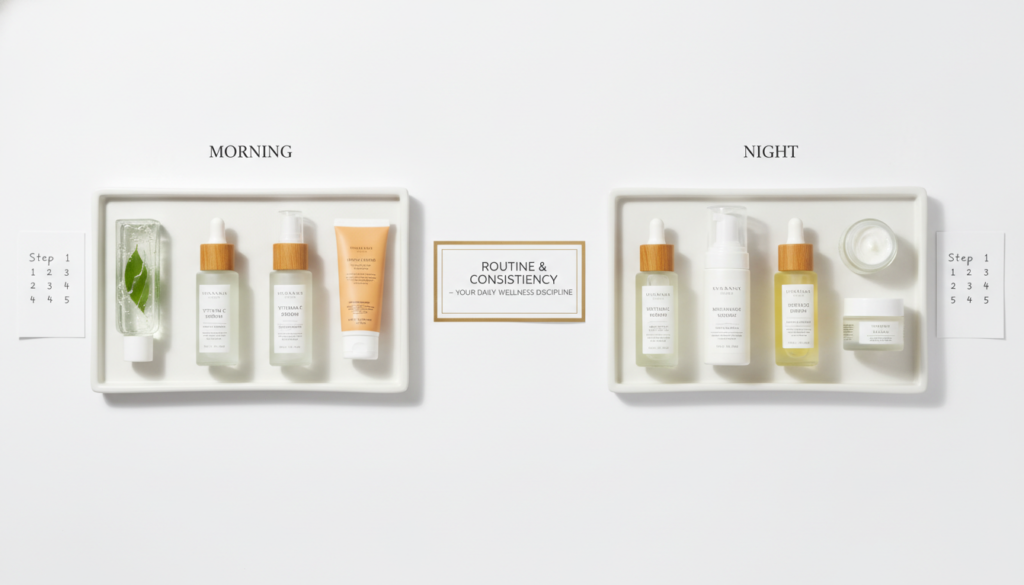
Consistency transforms good skincare into great results. Your skin responds to regular care, not sporadic efforts. A simple routine performed daily outperforms an elaborate routine done occasionally. Building sustainable habits creates the foundation for lasting skin improvements.
Start with a basic three-step routine: cleanse, moisturize, and protect. Master these fundamentals before adding extras. A simple routine you actually follow beats a complicated regimen you skip regularly. Once basic steps become automatic habits, you can gradually add targeted treatments as needed.
Morning routines focus on protection. Cleanse to remove nighttime oil and cell turnover. Apply antioxidant serum to defend against environmental damage. Moisturize to maintain hydration. Finish with sunscreen to prevent UV damage. This sequence prepares your skin to face the day’s challenges.
Evening Routine Essentials
Night routines emphasize repair and renewal. Double cleanse to remove all traces of sunscreen, makeup, and daily buildup. Apply treatment products like retinol or acids. These active ingredients work best at night when your skin enters repair mode. Finish with a nourishing night cream to support overnight regeneration.
Your skin repairs itself most actively during sleep. Supporting this natural process with appropriate products maximizes results. Night creams tend to be richer and more nourishing than day moisturizers. They don’t need SPF and can focus entirely on hydration and active ingredients.
Removing all makeup before bed prevents clogged pores and breakouts. Sleeping with makeup on blocks your skin’s renewal processes. It traps bacteria and prevents skin from breathing. No matter how tired you feel, cleansing before sleep represents a non-negotiable habit for clear skin.
Your Personalized Routine Blueprint
Stop guessing and get a customized skincare routine designed for your specific skin type and concerns. This proven system takes you step-by-step through morning and evening routines that deliver real results.
Making Your Routine Sustainable
Keep products visible and easily accessible. Storing everything under the sink means you’re less likely to use it consistently. Display your routine essentials on your bathroom counter or in an organizer. This visibility serves as a reminder and removes barriers to following through.
Link skincare to existing habits. Brush your teeth, then cleanse your face. Make coffee, then apply sunscreen. Anchoring new skincare habits to established routines helps them stick. This psychological trick works because you’re not creating an entirely new habit from scratch.
Simplify when necessary. Life gets busy, and some days you won’t complete a full routine. Having a simplified version for hectic days prevents complete abandonment. Even just cleansing and moisturizing beats skipping everything. Permission to simplify makes consistency more achievable long-term.
Tracking Your Progress
Take photos every four weeks to document changes. Your mirror reflection becomes familiar, making it hard to notice gradual improvements. Photos provide objective evidence of progress. Take pictures in the same lighting, same angle, at the same time of day for accurate comparison.
Keep a skincare journal noting what you use and how your skin responds. Record breakouts, dry patches, or improvements. This journal helps identify patterns and triggers. Over time, you’ll understand exactly what your skin needs and what it doesn’t tolerate well.
Celebrate small wins along the way. Notice when a blemish heals faster than usual. Acknowledge when your skin feels softer or looks brighter. These small improvements motivate continued consistency. Focusing only on remaining imperfections discourages the dedication required for real transformation.
Your Journey to Natural Clear Skin

Clear skin doesn’t happen overnight. This journey requires patience, consistency, and a willingness to listen to what your skin tells you. Every small step you take builds toward lasting transformation. The natural clear skin tips shared here provide a foundation, but your commitment brings them to life.
Remember that perfect skin doesn’t exist. Everyone experiences occasional breakouts, dry patches, or sensitivity. These temporary issues don’t define your skin’s overall health or your success. What matters is the general trend toward improvement and how you feel about your reflection.
Your skin is unique. What works for others might not work for you, and that’s perfectly normal. Use these guidelines as a starting point, then adjust based on your individual responses. Trust yourself to know what feels right for your skin. This intuitive understanding develops over time through careful observation.
Natural approaches require patience but deliver lasting results. Quick fixes rarely create permanent change. By nourishing your skin from the inside out with proper hydration, nutrition, sleep, and gentle care, you create a foundation that supports lifelong skin health. These habits benefit not just your complexion but your overall wellness.
Start where you are with what you have. You don’t need expensive products or complicated routines to achieve beautiful skin. Simple, consistent care with natural ingredients often outperforms elaborate regimens filled with harsh chemicals. Begin with one or two changes and build from there.
Begin Your Clear Skin Transformation
Take the first step toward the clear, radiant skin you deserve. This complete natural skincare system has helped thousands achieve their skin goals. Your transformation starts today with proven methods that work with your skin’s natural healing power.
The face you show the world reflects the care you give yourself. Investing time in proper skincare represents an act of self-love and self-respect. You deserve to feel confident in your skin. These natural clear skin tips empower you to take control of your complexion and create the clear, glowing skin you’ve always wanted.
Your skin tells your story. Make it a story of health, vitality, and natural beauty that shines from within.