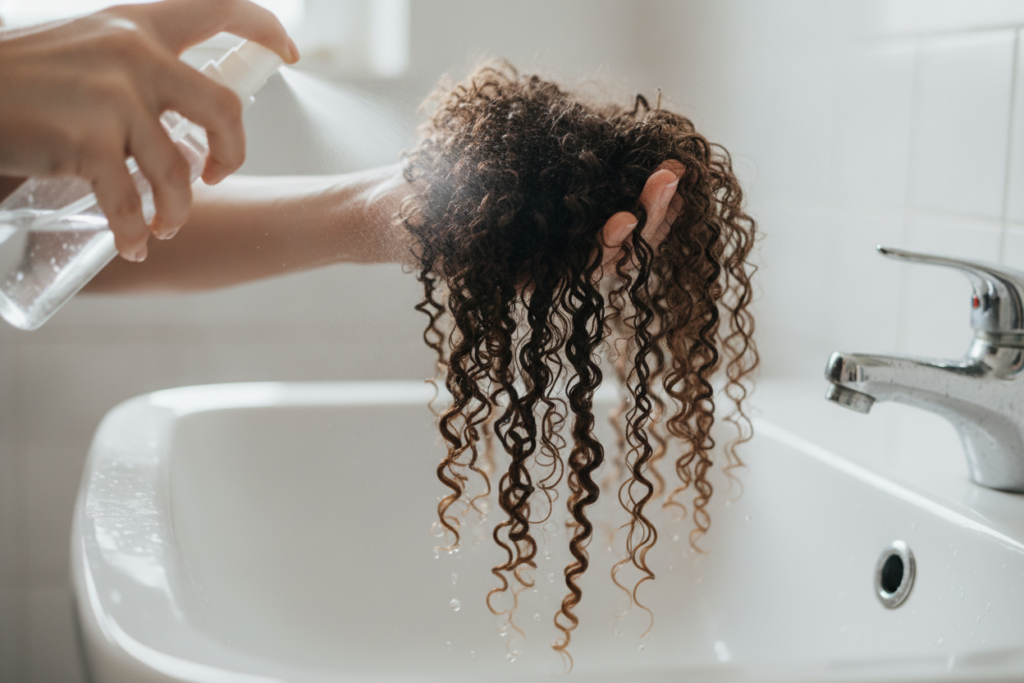
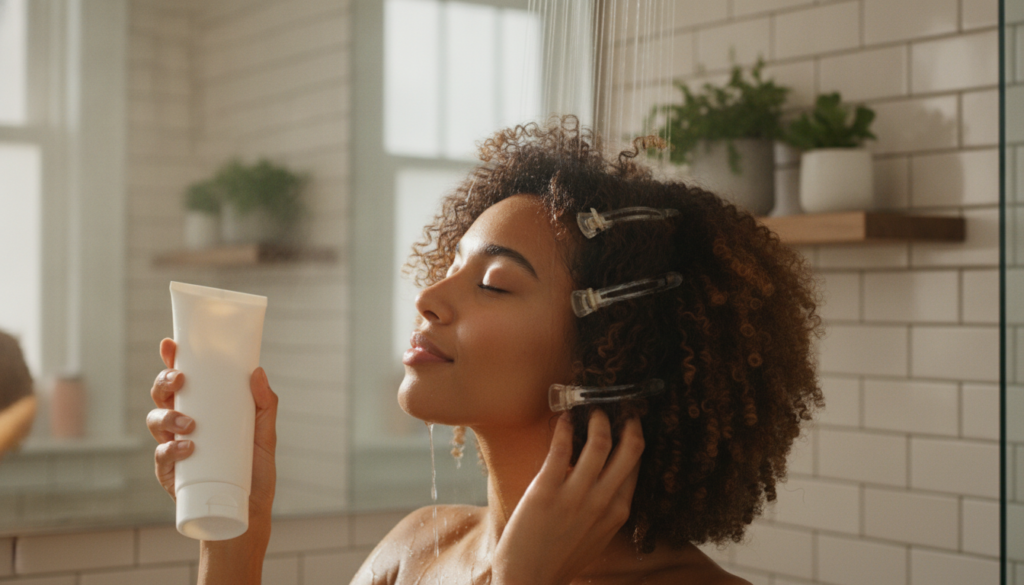
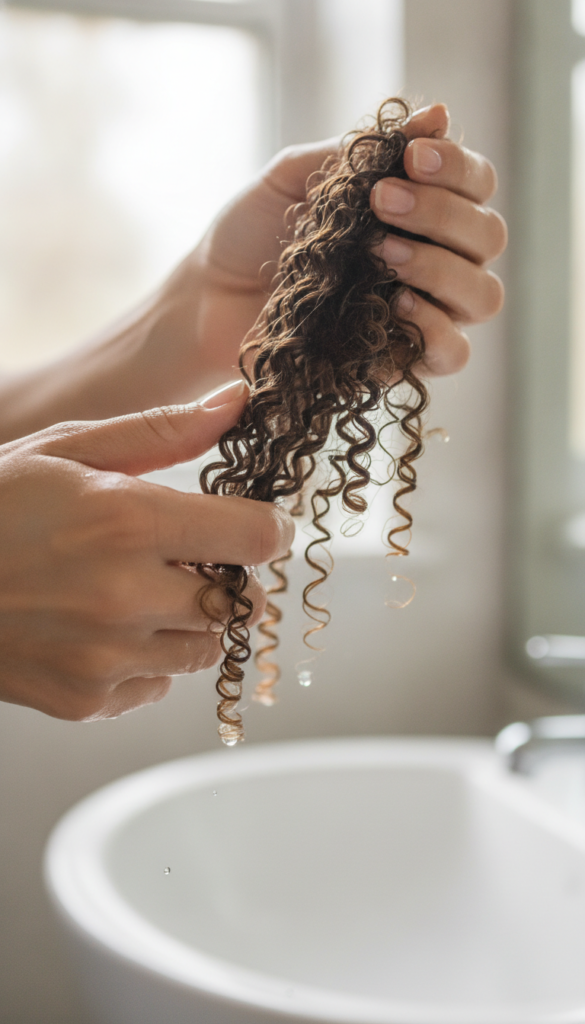
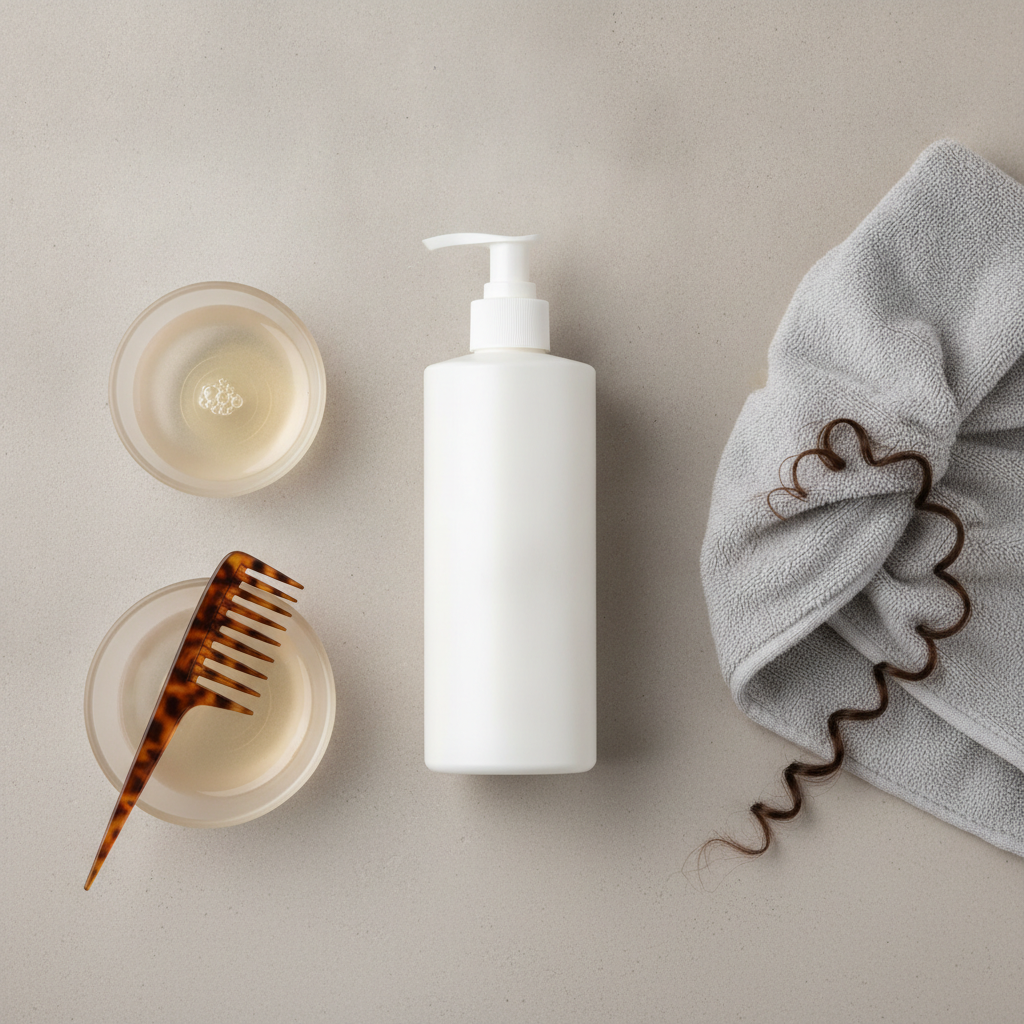
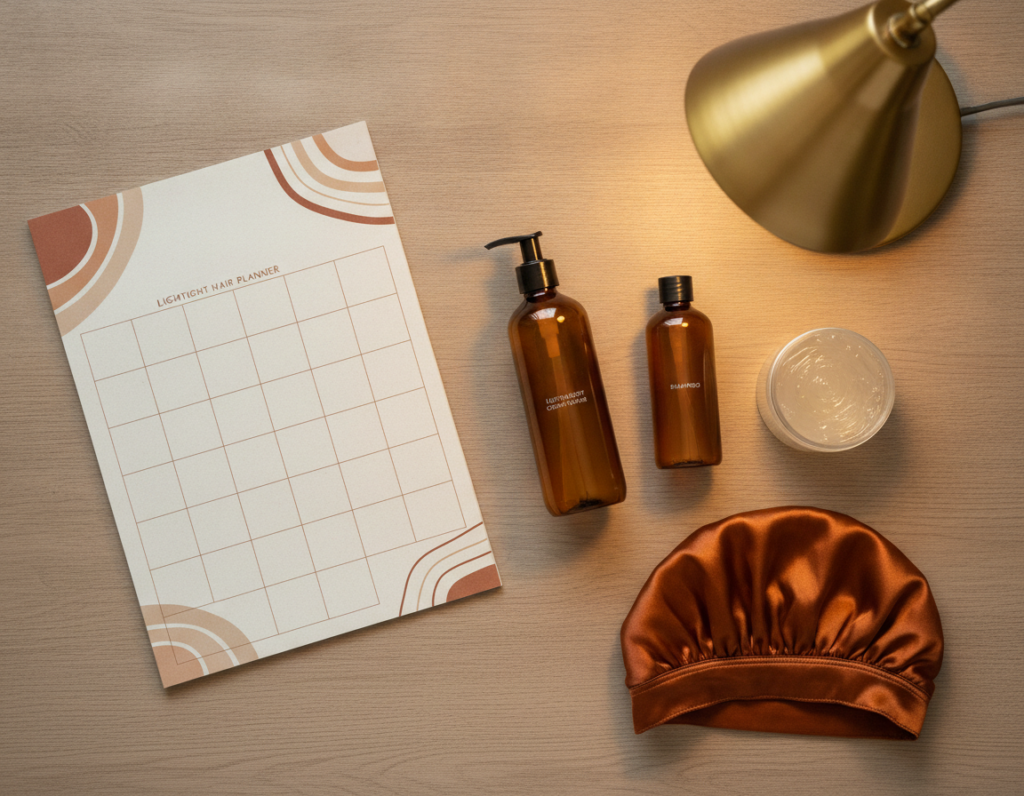
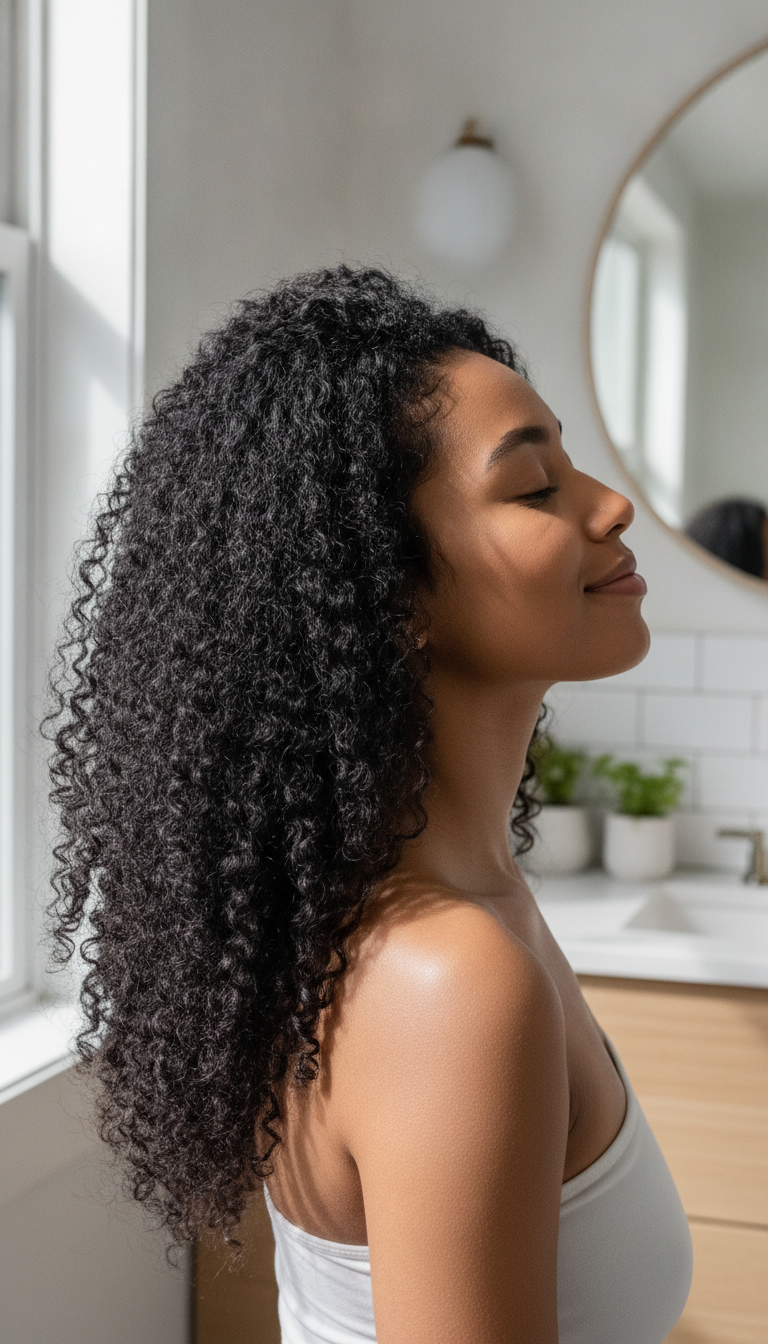
Does water sit on your curls instead of soaking in? Do rich creams make your hair feel coated, dull, or flat? You may have low porosity hair. The right routine can help moisture move into the hair without leaving heavy buildup behind.
This guide explains how to identify your porosity, choose useful ingredients, and build a simple wash and styling routine. You will also learn how to use Low Porosity Curly Hair Products without weighing hair down.
What Low Porosity Curly Hair Means
Hair porosity describes how easily water and products move through the cuticle. The cuticle is the outer layer of each strand. When the cuticle lies fairly flat, water may take longer to enter and moisture may sit on the surface.
Low porosity hair is not automatically damaged hair. It can be healthy, shiny, and strong. The challenge is getting moisture inside the strand instead of leaving a film outside it.
Curly hair often needs careful balance. Curls need water and conditioner, but too much product can reduce volume and definition. A light routine usually works better than layering several rich products.
Low porosity hair at a glance
Water may bead or sit on the strands.
Products can remain on the surface.
Hair may take a long time to become fully wet.
Heavy moisture can reduce bounce.
Gentle heat may help conditioner work better.
Important: Porosity can vary across your head. The ends may behave differently from the roots, especially if you use heat, color, or chemical treatments.
How to Identify Your Hair Porosity
Daily behavior is often more useful than a single home test. Watch how your hair reacts during washing, conditioning, and styling. Hair porosity is a guide, not a permanent label.
Common signs of low porosity hair
Shampoo takes time to spread through the hair.
Water runs over the curls before they feel saturated.
Conditioner seems to sit on top of the strands.
Hair dries slowly after wash day.
Protein products may make the hair feel stiff quickly.
Roots become dull or coated after repeated styling.
Use a simple wash-day check
Start with clean hair. Notice how long it takes for water to reach the roots. Next, apply a small amount of conditioner to wet sections. If the conditioner glides over the surface but does not seem to soften the strand, try more water and smaller sections.
The popular float test is not always reliable. Oil, residue, strand thickness, and air trapped in the hair can change the result. Your real routine gives better clues about porosity hair needs.
Ask these three questions
Does water absorb quickly or sit on top?
Do rich products soften the hair or coat it?
Does the hair improve after clarifying?
Ingredients That Work Well for Low Porosity Hair
The best products for low porosity curls are often light, water-based, and easy to rinse. Ingredients matter, but the full formula matters more. A rich ingredient is not always bad. The amount and product type make a difference.
Light moisture
Look for formulas that add slip without a thick coating.
Aloe vera
Glycerin in a suitable climate
Panthenol
Honey or agave extracts
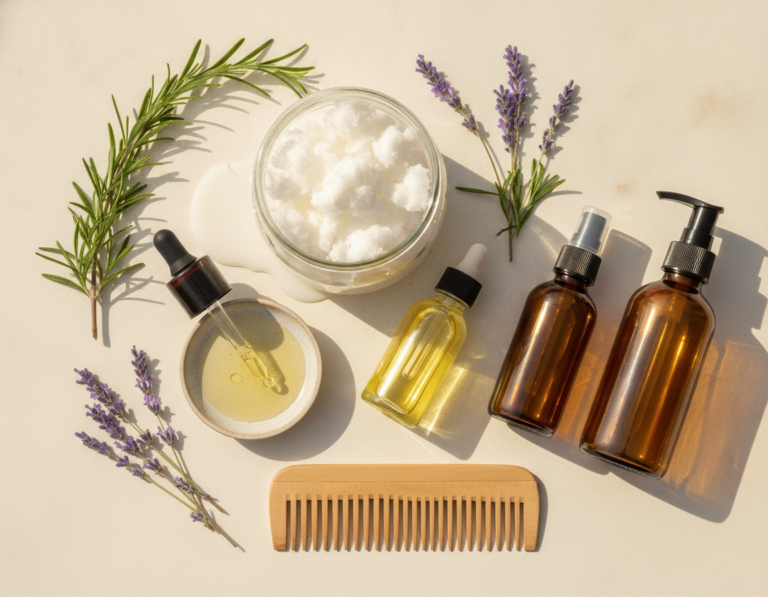
Helpful oils
Use a few drops instead of covering the whole head.
Argan oil
Jojoba oil
Grapeseed oil
Sweet almond oil
Light styling support
These ingredients can help hold curl shape.
Flaxseed gel
Light polymers
Rice protein in moderation
Hydrolyzed wheat protein
Use protein with care
Protein can strengthen and support definition, but low porosity hair may become dry or rigid when protein is used too often. Start with a small amount once every few weeks. If curls feel rough after protein, pause it and focus on water and conditioner.
What about shea moisture and coconut oil?
Shea Moisture products can work for some curls, but many formulas are rich. A small amount may be useful for very dry or dense hair. Fine curls may need a lighter conditioner or styling product.
Coconut oil can make some hair feel hard, dry, or coated. If you use it, test a small section first. Do not assume that a popular oil suits every hair type.
Ready to compare lighter options?
Explore a product-focused option after checking the ingredients and choosing the texture your curls can handle.
You do not need a crowded shelf. A basic routine can include shampoo, conditioner, leave-in conditioner, and one styling product. Add a deep conditioner or hair oil only when your hair shows a clear need.
Shampoo
Choose a gentle cleanser for regular use. A shampoo that rinses clean can help prevent buildup while keeping the scalp comfortable.
Conditioner
A rinse-out conditioner should provide slip and softness without leaving a waxy feel. Apply it to soaking wet hair and rinse well.
Leave-in conditioner
Use a small amount of leave-in conditioner when your curls need extra softness. Dilute it with water in your hands if the formula feels too thick.
How to choose by hair behavior
Fine curls often prefer foam, mousse, or a thin gel.
Dense curls may need a little more conditioner in small sections.
Dry ends may benefit from a richer treatment once a month.
Flat roots usually need fewer layers and less oil.
Frizz after drying may call for better water distribution before more product.
A Wash-Day Routine for Low Porosity Curly Hair
A good routine begins with full saturation. Take time to let water reach every section. This step can make more difference than adding another product.
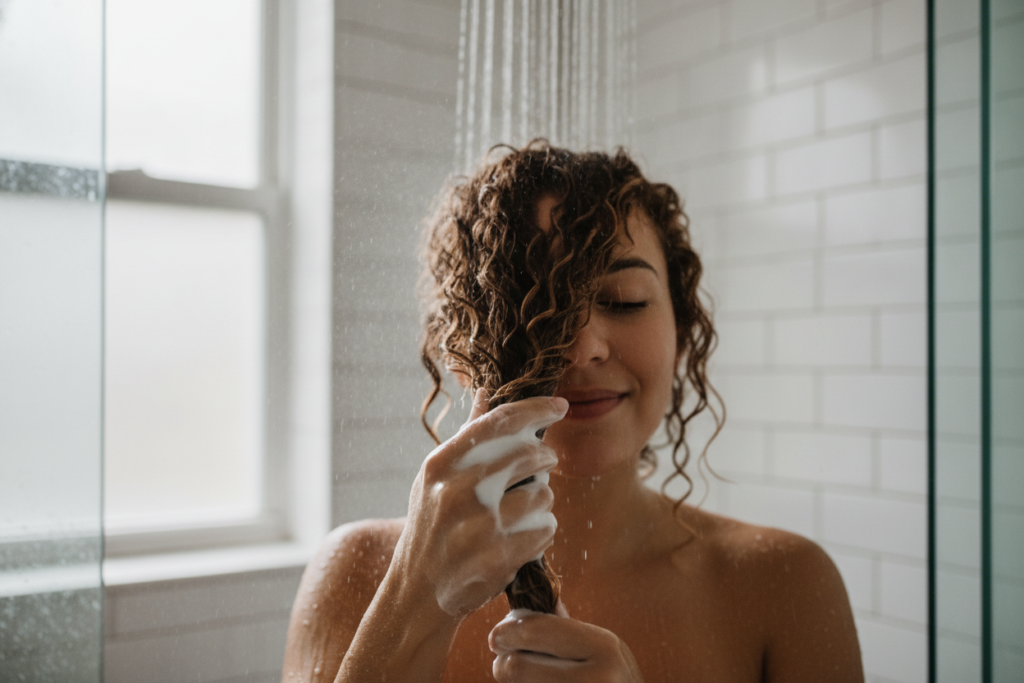
Wet the hair fully. Use warm water and separate the curls with your fingers. Do not rush the roots.
Cleanse the scalp. Massage shampoo into the scalp with your fingertips. Let the rinse carry the foam through the lengths.
Condition in sections. Apply conditioner from mid-length to ends. Add water as you smooth it through.
Detangle gently. Use fingers or a wide-tooth comb. Start at the ends and move upward.
Rinse based on weight. Leave a small amount if the hair is dry. Rinse more fully if the curls feel coated.
Style while very wet. Water helps spread gel and leave-in conditioner across the hair.
Why warm water can help
Warm water may help the cuticle lift slightly and allow conditioner to spread more easily. It should feel comfortable, not hot. Finish with a cooler rinse if that feels better for your scalp and curls.
When to use a deep conditioner
A deep conditioner can help dry hair, but it may be too rich for frequent use. Try it once a month or after a period of dryness. Use gentle heat for a short time if the product instructions allow it. Always rinse thoroughly.
How to Add Moisture Without Weighing Hair Down
Low porosity hair often needs moisture delivered in thin layers. Start with water. Then add the smallest amount of conditioner or styling product that gives the result you want.
The water-first method
Place a small amount of product in your palm. Add water and rub your hands together. Smooth the mixture over wet curls. This helps distribute the product and reduces thick spots.
Work in four to eight sections.
Use less product near the roots.
Add more only after the curls show a need.
Scrunch to encourage curl shape.
Signs you used too much
Heavy product can make the hair feel sticky, dull, or limp. It may also take a long time to dry. If the curls lose volume soon after styling, reduce the amount before changing the entire routine.
Flat roots
Greasy-looking ends
White residue
Slow drying
Do you need hair oil?
Hair oil is optional. It can reduce a dry feel and add shine, but it does not replace water or conditioner. Apply one or two drops to the ends after the hair is dry. Avoid using oil as the first moisture step.
Simple rule: If your hair feels coated, remove product before adding more moisture. More layers will not solve buildup.
Styling Low Porosity Curls for Definition
Styling works best when curls are wet and separated into manageable sections. The goal is even coverage, not a heavy layer.
A simple styling order
Apply a thin leave-in conditioner if needed.
Use gel or mousse for definition and hold.
Brush or finger-coil small sections if desired.
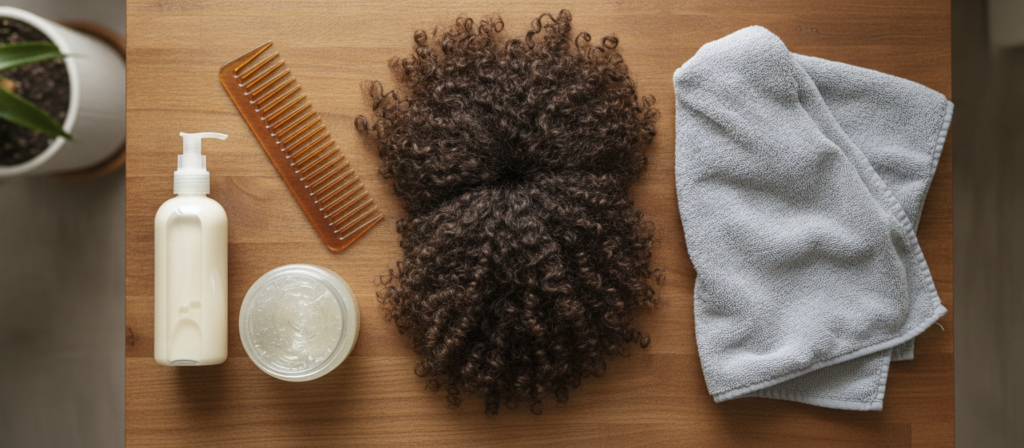
Scrunch with a microfiber towel or cotton T-shirt.
Let the hair air dry or use a diffuser on low heat.
Break the cast only when the hair is fully dry.
Choosing a gel
A light gel can provide definition without the weight of a thick cream. If your hair feels dry, use more water before using more gel. If your curls lose shape quickly, try a stronger hold formula in a smaller amount.
Using heat safely
A diffuser can speed drying and support volume. Use low or medium heat and keep the diffuser moving. Avoid placing high heat close to one area for a long time. Heat protection is useful when a formula is designed for it.
Build a lighter styling routine
Use this product guide as a starting point, then adjust the amount based on curl density, strand size, and climate.
Buildup is common when products remain on the hair surface. It can make curls feel heavy and prevent conditioner from spreading. The solution is usually better cleansing and fewer layers.
Signs of buildup
Hair feels waxy after washing.
Curls look dull even when they are moisturized.
Water takes longer to reach the strands.
Gel flakes when mixed with other products.
Roots feel heavy or greasy soon after wash day.
Use a clarifying shampoo carefully
A clarifying shampoo can remove residue more deeply than a gentle cleanser. Use it when the hair feels coated, often every few weeks rather than every wash. Follow with conditioner because clarifying can leave the hair feeling less soft.
If your scalp is sensitive, choose a gentle clarifying formula and avoid scrubbing harshly. A product with tea tree may feel refreshing, but fragrance and essential oils can irritate some scalps. Stop using a formula that causes burning, redness, or itching.
Can apple cider vinegar help?
Some people use diluted apple cider vinegar as an occasional rinse. It may help the hair feel cleaner, but it is not required. Never apply undiluted cider vinegar to the scalp. A tested clarifying shampoo offers more predictable use and clear directions.
Reset without over-cleansing
Clarify only when the hair needs it. If the curls feel clean and flexible, continue with your normal shampoo. Over-cleansing can make the hair feel dry and encourage a cycle of adding too much product.
CTA Lessons from Ranking Hair Product Guides
The three ranking URLs represent strong content angles for this search. The Allure result suggests an editorial roundup. Its likely reader is already comparing products, so direct shopping links and short product descriptions fit a warm audience.
The Holistic Enchilada result suggests a detailed educational guide. This audience needs help diagnosing a problem before buying. The strongest CTA for this format is a natural next step, such as exploring a lightweight routine after learning why rich products may fail.
The Desumama result suggests a practical, family-friendly shopping article. Readers may want clear product categories and easy routine advice. A friendly button placed after a useful recommendation can move a cold reader toward a product click without sounding aggressive.
Page angle
Primary goal
Audience
Offer type
Useful CTA
Editorial roundup
Inform and sell
B2C warm prospect
Physical hair products
Shop or compare products
Educational porosity guide
Inform
B2C cold prospect
Physical products and routine advice
Find a suitable routine
Practical curly hair list
Inform and sell
B2C cold to warm
Product recommendations
Explore curl care options
CTA patterns worth using
Place a soft action after the reader understands the problem.
Use buttons that state the benefit or next step.
Match one CTA to one intent, such as cleansing or styling.
Repeat important links only after new information.
Keep the tone helpful and avoid pressure.
Make product links open in a new window.
Compare products with your hair type in mind
Start with lightweight formulas, then check how your curls respond over two or three wash days.
Changing every product at once makes it hard to know what works. Use a simple plan and change one step at a time.
Week one: observe
Use your normal shampoo and conditioner. Track how quickly the hair becomes wet, how long it takes to dry, and whether the roots feel coated.
Use enough water.
Apply products in sections.
Write down the result.
Week two: simplify
Remove one unnecessary layer. Try a smaller amount of leave-in conditioner or replace a thick cream with a lighter formula.
Keep one styling product.
Reduce oil use.
Check curl volume.
Weeks three and four: refine
Test one change, such as a clarifying shampoo or a stronger gel. Keep the rest of the routine steady so the result is easier to judge.
Clarify only if needed.
Test protein slowly.
Repeat what works.
Keep the routine measurable
Rate softness, volume, definition, and buildup from one to five after each wash. This helps you separate a formula problem from an application problem.
When to try strengthen restore products
Strengthen restore treatments may help hair that is fragile from coloring or heat. They are not a default step for every low porosity routine. If the hair feels stiff, alternate the treatment with a moisturizing conditioner and use less often.
Low Porosity Curly Hair Products FAQ
Is low porosity hair always dry?
No. Low porosity hair can hold moisture well once water enters the strand. It may feel dry when products sit on the surface or when buildup blocks water and conditioner.
How often should I use a clarifying shampoo?
Use clarifying shampoo when your hair feels coated, dull, or difficult to wet. Many people need it every few weeks, but the right schedule depends on products, scalp oil, sweat, and water quality.
Should I use a leave-in conditioner?
A leave-in conditioner can help if your curls need softness or slip. Use a small amount on very wet hair. Fine curls may prefer a spray or diluted formula.
Can high porosity hair products work for low porosity curls?
Sometimes, but high porosity hair products are often richer and may contain heavier oils or butters. Test a small amount and watch for coated roots, flat curls, or slow drying.
Is coconut oil good for low porosity curly hair?
It depends on the strand and formula. Coconut oil can make some hair feel stiff or dry. Test it in a small section before adding it to your full routine.
What is the best way to apply conditioner?
Apply conditioner to soaking wet hair in sections. Add water while smoothing it through. This helps the conditioner spread without requiring a large amount.
Remember the response test
Your hair gives useful feedback. Soft, flexible, bouncy curls usually indicate a good balance. Coated, brittle, or limp curls suggest that the routine needs less product or a better cleansing step.
Build a Light Routine That Your Curls Can Use
Low porosity curls usually respond well to water-first application, light formulas, careful conditioning, and regular attention to buildup. A gentle shampoo, flexible conditioner, small amount of leave-in conditioner, and one styling product may be enough.
Do not compare your hair with someone who has high porosity hair. High porosity hair often needs richer moisture, while low porosity hair may become weighed down by the same products. Your strand size, density, climate, and styling habits also matter.
Start slowly. Clarify when residue appears, use protein in moderation, and adjust the amount before replacing every product. With consistent care, your curls can look soft, defined, and full without heavy layers.
Take the next step for your curls
Review your current routine, choose one lightweight change, and explore products that support clean, moisturized, defined hair.
A lighter routine is not about using fewer products at all costs. It is about using the right amount, in the right order, with enough water to help your hair receive the moisture.