Fall brings incredible opportunities for creative sewers to turn their passion into profit. As temperatures drop and people search for cozy home decor and handmade gifts, the demand for unique sewing projects skyrockets. Whether you’re preparing for craft fairs or building an online shop, choosing the right fall sewing projects to sell can transform your hobby into a thriving seasonal business.
This Website contains affiliate links. That means I may earn a small commission if you purchase through my links, at no extra cost to you.
The beauty of fall sewing projects lies in their versatility and appeal. From quick beginner-friendly items to more elaborate creations, there’s a perfect project for every skill level. This comprehensive guide walks you through profitable ideas that actually sell, complete with insights on materials, time investment, and pricing strategies.
Ready to Build Your Fall Sewing Business?
Access our complete collection of fall sewing patterns, step-by-step tutorials, and proven selling strategies to launch your handmade business this season.
Fall represents one of the most profitable seasons for handmade sewing businesses. The combination of holiday preparation, cooler weather needs, and gift-giving occasions creates multiple revenue streams. Understanding market dynamics helps you choose projects that align with customer demand.
Seasonal demand peaks in September through November. Customers actively search for unique items that capture the essence of autumn. Unlike mass-produced goods, handmade sewing projects offer personalization and quality that shoppers value. This creates premium pricing opportunities for skilled crafters.
Market Advantages
Fall sewing projects benefit from multiple market advantages that drive sales. The seasonal urgency encourages faster purchasing decisions. Customers view these items as limited-time offerings, reducing price sensitivity and increasing perceived value.
Holiday decoration demand starts early September
Gift-buying season extends through Thanksgiving
Home refresh trends align with fall nesting behavior
Weather changes create immediate product needs
Profit Potential
The profit margins on fall sewing projects often exceed other seasonal items. Lower material costs combined with premium pricing create favorable economics. Quick turnaround times allow for higher inventory velocity during the short selling window.
Time-efficient projects maximize your earning potential during the busy fall season. These easy sewing ideas require minimal fabric, simple techniques, and quick completion times. Perfect for beginners or experienced sewers looking to boost inventory rapidly.
Fabric Pumpkin Decorations
Fabric pumpkins consistently rank among the best-selling fall sewing projects. These charming decorations require minimal fabric and take just 15-30 minutes to create. Customers love collecting different sizes and patterns to create seasonal vignettes throughout their homes.
Construction uses basic circle pattern pieces gathered at the top. Add a cinnamon stick or wooden dowel for the stem. Embellishments like burlap leaves or twine bows increase perceived value. Price these at $8-15 for small sizes and $18-30 for larger statement pieces.
Material cost averages $1-3 per pumpkin
Production time allows 4-6 pieces per hour
Sell individually or in sets of three
Use scrap fabric to minimize waste
Popular fabrics include cotton, burlap, and fleece
Headbands represent exceptional profit potential with minimal investment. These quick projects appeal to all ages and work beautifully with fall fabrics. The simple construction makes them perfect for batch production during peak selling season.
Create twisted styles, bow headbands, or simple stretchy versions. Each style uses approximately one-quarter yard of fabric. Elastic or stretchy knit fabrics work best for comfort. The key is offering variety in patterns while maintaining consistent quality.
Material cost ranges from $0.75 to $2.00 each
Complete one headband in 10-15 minutes
Retail price point of $8-15 per piece
Baby and kids sizes sell particularly well
Matching mommy-and-me sets command premium prices
Drawstring Produce Bags
Eco-conscious consumers actively seek reusable alternatives to plastic bags. Drawstring produce bags fill this need while showcasing beautiful fall cotton fabrics. These practical items generate steady sales throughout the season and beyond.
Simple rectangular construction with a drawstring casing makes these beginner-friendly. Use lightweight cotton or mesh fabric for breathability. Offer sets of three in coordinating patterns. Customers appreciate the sustainability message combined with attractive design.
Small Bags
Perfect for herbs, berries, and small produce items. Dimensions of 8×10 inches work well. Use cotton voile or lightweight quilting cotton for these sizes.
Material cost: $1.50 per bag
Suggested retail: $8-10
Production time: 12 minutes
Medium Bags
Ideal for lettuce, broccoli, and medium vegetables. Standard size of 10×12 inches provides versatility. These represent the most popular size for customers.
Material cost: $2.00 per bag
Suggested retail: $10-12
Production time: 15 minutes
Large Bags
Designed for bulk items and larger produce. Dimensions of 12×15 inches accommodate bread, greens, and bulk purchases. Premium size commands higher prices.
Material cost: $2.75 per bag
Suggested retail: $12-15
Production time: 18 minutes
Need More Quick Project Ideas?
Our comprehensive tutorial library includes dozens of fast-selling fall sewing projects with detailed patterns, material lists, and pricing guides.
Home decor items command premium prices and attract design-conscious customers. These projects showcase your sewing skills while meeting the strong demand for seasonal home refreshes. Focus on quality construction and on-trend fabric choices for maximum appeal.
Quilted Table Runners
Table runners consistently sell well as customers prepare for fall entertaining. These projects allow you to showcase quilting skills and beautiful fabric combinations. The rectangular format provides flexibility in sizing and design complexity.
Simple patchwork designs work well for beginners, while experienced quilters can incorporate applique or intricate piecing. Standard dimensions of 14×48 inches fit most tables. Use coordinating backing fabric and binding for a professional finish.
Material costs range from $8-15 depending on design
Pillow covers represent one of the most profitable sewing projects to sell during fall. Customers love refreshing their decor seasonally without purchasing entire new pillows. The removable cover format makes these practical and appealing.
Envelope-back closures eliminate zipper costs and complexity. Standard 18×18 inch size fits common pillow inserts. Consider offering sayings, applique designs, or patchwork fronts. Quality construction with finished seams ensures customer satisfaction.
Construction Tips
Pre-wash all fabrics to prevent shrinkage
Use quality cotton or linen for durability
Finish seams to prevent fraying
Press thoroughly for professional appearance
Add care instructions on tags
Pricing Strategy
Material costs average $4-7 per cover. Production time of 45-60 minutes allows good volume. Price finished covers at $22-35 depending on fabric quality and embellishment complexity.
Offer bundle pricing for sets of two or four covers to increase average order value. Fall-themed sets in coordinating patterns sell exceptionally well for living room updates.
Kitchen Towel Sets
Kitchen items combine functionality with decorative appeal. Hand towels with fall motifs sell steadily as both personal purchases and gift items. The relatively simple construction makes these excellent for batch production.
Use quality flour sack towels or purchase blank tea towels for embellishment. Add fabric trim, applique, or decorative stitching to create unique designs. Package sets of two or three in coordinating patterns with ribbon for gift-ready presentation.
Base towel cost ranges from $1-2 each
Embellishment materials add $1-3 per towel
Complete each towel in 20-30 minutes
Retail individual towels at $12-18
Gift sets of three sell for $32-45
Popular designs include pumpkins, leaves, and farmhouse sayings
Wearable items offer repeat purchase potential as customers build their fall wardrobes. These sewing projects combine fashion trends with practical cold-weather needs. Focus on current color palettes and comfortable fabrics for best results.
Infinity Scarves
Infinity scarves dominate fall accessory sales. The simple loop design flatters all body types and works with various fabrics. These projects require minimal sewing skills but deliver professional-looking results that command good prices.
Choose fabrics based on weight and drape. Lightweight cotton works for early fall, while fleece and sweater knits suit colder weather. A standard size of 60-70 inches long by 20-24 inches wide works for most adults.
Hand warmers represent essential fall accessories with strong gift appeal. Fleece mittens offer warmth without the complexity of five-fingered gloves. The simple construction makes these ideal for sewers at any skill level.
Use a basic mitten pattern with optional thumb placement. Add ribbed cuffs or contrasting trim for visual interest. Fleece doesn’t fray, eliminating the need for lining in most designs. Offer adult and children’s sizes for broader market appeal.
Kids Mittens
Children’s sizes sell consistently as gifts and practical purchases. Parents appreciate handmade quality and unique patterns not available in stores.
Material cost: $2-3 per pair
Production time: 25 minutes
Retail price: $12-16
Add string connector for young children
Adult Mittens
Adult sizes appeal to outdoor enthusiasts and anyone seeking cozy accessories. Quality fleece in sophisticated patterns justifies higher pricing.
Material cost: $3-4 per pair
Production time: 30 minutes
Retail price: $16-22
Consider convertible fingerless options
Matching Sets
Family sets in coordinating fabrics create gift appeal. Parents love matching accessories for holiday photos and winter outings with children.
Material cost: $8-12 per set
Production time: 90 minutes
Retail price: $38-55
Bundle with matching headbands or scarves
Tote Bags with Fall Motifs
Tote bags remain perpetually popular sewing projects to sell. Fall-themed designs attract customers seeking seasonal accessories for shopping, farmers markets, and everyday use. The practical nature ensures year-round utility beyond the fall season.
Use sturdy cotton canvas or heavy-weight cotton for durability. Reinforce stress points at handles and bottom corners. Interior pockets add value and functionality. Consider offering various sizes from small market bags to large shopping totes.
Small tote material cost: $5-7
Large tote material cost: $8-12
Production time ranges 60-90 minutes
Small totes retail at $22-32
Large totes retail at $35-50
Personalization options increase value
Create Your Fall Accessory Line
Get access to complete patterns, cutting layouts, and professional finishing techniques for all these fall fashion accessories and more.
Baby items generate emotional purchases and premium pricing. Parents and gift-givers seek unique, handmade quality for little ones. These projects tap into the baby market’s willingness to pay for special items.
Fabric Baby Shoes
Baby shoes rank among the most profitable sewing projects despite small size. The adorable factor drives impulse purchases and gift sales. Soft-soled designs suit newborns and pre-walkers, expanding your market reach.
Use soft cotton or flannel for uppers with non-slip fabric for soles. Elastic at the ankle keeps shoes secure without complicated closures. The pattern requires minimal fabric, allowing you to use scraps or fat quarters.
Bibs represent essential baby items with constant replacement needs. Reversible designs double the value and appeal. The quick construction allows high-volume production for craft fairs and online shops.
Curved or contoured shapes provide better coverage than basic bibs. Use cotton or cotton-fleece for absorbency. Snap closures simplify dressing and adjust for growth. Offer bibs individually or in sets of three for gifting.
Standard Bibs
Traditional size bibs work for everyday feeding and drool protection. These quick projects take just 15-20 minutes to complete.
Material cost: $1.50 per bib
Retail price: $9-12 each
Sets of three: $24-30
Coordinate with baby shoes for gifts
Bandana Bibs
Trendy bandana style bibs serve as both fashion and function. The triangular shape creates a stylish look parents love for photos.
Material cost: $1.25 per bib
Retail price: $10-14 each
Sets of three: $26-35
Popular for baby gift registries
Kids Aprons for Fall Baking
Children’s aprons tap into fall baking traditions and family activities. Parents purchase these for holiday preparation and as gifts for young helpers. The project combines practical use with seasonal charm.
Simple construction with ties at neck and waist fits growing children. Add pockets for holding utensils or treats. Use wipeable cotton or cotton-poly blends for easy care. Fall prints featuring baking themes, pumpkins, or harvest motifs appeal to buyers.
Great Gift Ideas: Sewing Projects Perfect for Fall Giving
Gift-oriented projects expand your market beyond personal purchases. Position these items as ready-made gifts or customizable options. The fall season encompasses multiple gift-giving occasions from teacher appreciation to Thanksgiving hostess gifts.
Makeup and Zipper Pouches
Pouches serve multiple purposes from cosmetics to travel organization. The zipper closure adds perceived value despite simple construction. These compact projects use minimal fabric, making them ideal for scrap fabric utilization.
Flat or box-bottom constructions offer different capacities. Install quality metal zippers for durability. Interior pockets or dividers increase functionality. Package with tissue paper and ribbon for gift-ready presentation that justifies premium pricing.
Small Pouches
Perfect for lipstick, earbuds, or small essentials. Dimensions around 6×4 inches make these portable and practical.
Material cost: $2-3
Time: 25 minutes
Retail: $12-16
Medium Cases
Standard makeup bag size holds full cosmetic collections. Box-bottom construction provides stability and capacity.
Material cost: $3-5
Time: 40 minutes
Retail: $18-25
Large Cases
Travel-sized cases accommodate toiletries and full beauty routines. These premium pieces command higher prices.
Material cost: $5-7
Time: 55 minutes
Retail: $24-35
Wine Bottle Gift Bags
Wine bags serve the hostess gift market perfectly. These specialized bags add a handmade touch to wine gifts while being reusable. The narrow, tall format requires specific pattern drafting but uses minimal fabric.
Drawstring closures work well for various bottle sizes. Line bags with coordinating fabric for a luxurious feel. Consider adding an interior divider for two-bottle versions. Fall colors and wine-themed prints resonate with buyers.
These small quilted projects make perfect impulse purchases and stocking stuffers. The combination of function and decoration appeals to buyers. Quick construction allows batch production for maximum inventory during peak season.
Mug rugs measure slightly larger than coasters, typically 6×8 inches. Use cotton fabrics with batting for insulation. Binding finishes edges professionally. Sell individually or in sets of four or six for gift packages.
Material cost per piece: $1-2
Construction time: 20-25 minutes each
Individual retail price: $8-12
Sets of four retail for $28-38
Coordinate with kitchen towels for larger gifts
Popular patterns include pumpkins, leaves, and coffee themes
Build Your Gift Product Line
Access our complete gift project collection with patterns for all skill levels, plus pricing guides and packaging tips to maximize your fall sales.
Craft fairs require strategic product selection based on display, price points, and impulse appeal. Success depends on balancing quick sellers with higher-margin items. Understanding craft fair dynamics helps you maximize booth profitability.
Focus on items customers can easily envision using or gifting. Displayability matters significantly at craft fairs. Projects that hang well or stack attractively draw attention. Price variety ensures you capture different spending levels.
Display and Pricing Strategy
Low Price Points ($8-15)
Entry-level items encourage impulse purchases and first-time buyers. These quick sellers generate cash flow and attract booth traffic.
Headbands and hair accessories
Coasters and mug rugs
Small pouches and bags
Kitchen towels
Baby bibs
Fabric pumpkin decorations
Medium Price Points ($18-35)
Mid-range products form the bulk of sales. These items balance profit margin with affordability for most customers.
Pillow covers and home decor
Infinity scarves and accessories
Tote bags and pouches
Baby shoes and gift sets
Kitchen aprons
Wine bags and gift items
Premium Price Points ($40-85)
Higher-priced items establish your quality level and appeal to serious buyers. While these sell less frequently, they significantly boost overall revenue. Display these prominently to attract qualified customers.
Visual merchandising dramatically impacts craft fair sales. Create levels and depth in your display using risers, shelves, and hanging systems. Group similar items together while maintaining variety across your booth.
Invest in quality display materials that present your work professionally. Tablecloths, signage, and packaging contribute to perceived value. Clear pricing eliminates hesitation. Business cards and social media information facilitate follow-up sales.
Use vertical space with hanging displays
Create price point sections for easy shopping
Display finished pieces prominently
Offer gift-wrapping or packaging options
Maintain organized, well-stocked inventory
Position best sellers at eye level
Maximize Your Craft Fair Profits
Get our comprehensive craft fair toolkit including display tips, pricing calculators, inventory planning worksheets, and proven sales strategies.
Beginner-friendly projects remove barriers to entry for new sewers. Simple construction doesn’t mean lower profitability. Many easy sewing projects command good prices based on fabric choice and finishing quality.
Focus on projects requiring straight seams and minimal pattern pieces. Avoid complicated closures, intricate curves, or advanced techniques initially. As confidence builds, gradually incorporate more complex elements.
No-Sew and Minimal-Sew Options
Fleece tie blankets require zero sewing while producing salable products. Cut coordinating fleece pieces with fringe edges, then knot together. These work particularly well for baby blankets and lap throws in fall colors.
Hand-tied fleece scarves use the same principle in a smaller format. Cut fleece strips and knot ends for fringe. These take minutes to create and sell well at lower price points for beginners testing markets.
Baby fleece blanket material cost: $8-12
Production time: 45-60 minutes
Retail price: $25-35
No sewing machine required
Perfect for absolute beginners
Popular fall colors include orange, burgundy, brown
Simple Straight-Seam Projects
Pillowcases use basic rectangular construction with French seams. These beginner projects teach fundamental skills while creating sellable items. Fall prints transform simple pillowcases into seasonal bedroom refreshes.
Standard pillowcases require approximately one yard of fabric. Burrito method construction eliminates exposed seams for professional results. Package in sets of two with ribbon for gift presentation.
Construction Steps
Cut fabric to pattern specifications
Sew long seam to create tube
Use burrito method for clean finish
Hem opening edge
Press thoroughly before packaging
Pricing Guide
Material costs average $4-6 per pillowcase depending on fabric quality. Production time of 30-40 minutes per case allows reasonable volume.
Circle patterns eliminate complex piecing while creating popular items. Baby circle skirts in fall fabrics sell exceptionally well. The simple math-based pattern adapts easily to different sizes.
Elastic waistbands simplify construction for beginners. No zippers or buttons required. Hem can be finished with simple straight stitching or decorative trim. These work up quickly in toddler sizes.
Material cost for toddler size: $5-8
Construction time: 40-50 minutes
Retail pricing: $20-28
Sizes 12 months to 4T sell best
Add matching headband for set
Fall fabrics include corduroy and cotton prints
Advanced Fall Sewing Projects with High Profit Margins
Experienced sewers can tackle complex projects commanding premium prices. These items showcase advanced skills while meeting demand for unique, high-quality pieces. Investment in time and materials pays off through superior profit margins.
Quilted Jackets and Vests
Wearable quilted items represent pinnacle fall projects. These garments combine fashion with function while demonstrating superior sewing ability. The complexity justifies retail prices exceeding typical handmade accessories.
Use commercial patterns sized for your market. Interface appropriately for structure. Quality quilting stitching creates visual interest and durability. Line garments professionally for finished interior appearance.
Custom memory quilts using client-provided fabrics command top dollar. These personalized pieces transform sentimental clothing into functional art. The emotional value supports premium pricing well above material and time costs.
Establish clear policies on fabric requirements and processing time. Charge consultation fees for design planning. Consider offering different complexity levels at varied price points. These projects suit made-to-order business models.
Lap size quilt material cost: $40-60
Production time: 15-25 hours
Retail pricing starts at $350
Queen size commands $600-900
Deposit required before starting
Extensive waitlists common for quality work
Structured Handbags
Well-constructed handbags with proper interfacing and hardware showcase professional skills. These accessories require pattern precision and careful construction. The finished product competes with retail handbags at similar or better quality.
Invest in quality interfacing, stabilizers, and hardware. Follow patterns precisely for proper fit and function. Include interior pockets and organization features. Fall color combinations of leather with tapestry fabrics appeal to buyers.
Material cost including hardware: $20-35
Construction time: 4-8 hours
Retail price range: $85-150
Limited production maintains value
Photography investment crucial for online sales
Signature style builds brand recognition
Master Advanced Techniques
Elevate your sewing business with our advanced project library featuring detailed tutorials, professional finishing techniques, and pricing strategies for premium handmade goods.
Choosing the Right Fabric for Fall Sewing Projects
Fabric selection dramatically impacts both the appeal and profitability of your sewing projects. Understanding fiber content, weight, and seasonal appropriateness ensures customer satisfaction. Smart fabric choices can reduce costs while maintaining quality.
Best Fabric Types for Fall Projects
Cotton remains the workhorse fabric for most sewing projects. Quilting weight cotton works for home decor, accessories, and many gift items. The wide variety of fall prints makes cotton ideal for seasonal projects.
Cotton and Cotton Blends
Quilting cotton for home decor and quilts
Cotton canvas for bags and structured items
Flannel for cozy accessories and baby items
Cotton fleece for scarves and warm accessories
Voile for lightweight bags and linings
Specialty Fabrics
Fleece for no-sew projects and warmth
Velvet for premium home decor
Linen blends for sophisticated items
Cork or vinyl for wipeable surfaces
Minky for baby items and blankets
Fall Color Palette Selection
Seasonal colors drive purchasing decisions for fall projects. While traditional autumn hues remain popular, modern fall palettes incorporate unexpected combinations. Understanding color trends helps you select fabrics that resonate with current buyers.
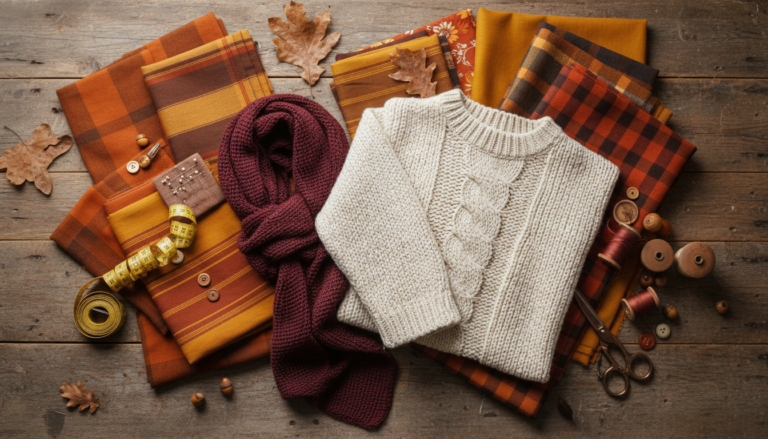
Classic fall colors include burnt orange, burgundy, mustard, chocolate brown, and deep red. Modern interpretations add sage green, dusty pink, and navy blue. Neutrals like cream, tan, and gray provide versatility across seasons.
Scrap fabric utilization directly impacts profitability. Many fall sewing projects work perfectly with fat quarters or fabric remnants. Developing a scrap management system prevents waste while creating inventory opportunities.
Small projects like baby shoes, headbands, and pouches consume minimal yardage. Organize scraps by color and size for easy retrieval. Consider scrap-specific project lines that highlight sustainability and unique one-of-a-kind pieces.
Baby items use quarter-yard or less
Headbands require 6-8 inch fabric pieces
Coasters and mug rugs use 6-inch squares
Small pouches need 8×10 inch pieces
Patchwork projects combine multiple scraps
Market scrap projects as eco-friendly options
Pricing Your Fall Sewing Projects to Sell
Proper pricing ensures profitability while remaining competitive. Many crafters underprice handmade goods, devaluing their work and time. Understanding pricing psychology and market positioning protects your business sustainability.
Pricing Formula for Handmade Items
Calculate material costs including fabric, notions, thread, and packaging. Multiply materials by three to five for wholesale pricing. Retail prices should be double wholesale, or six to ten times materials cost.
Factor in your desired hourly wage, typically fifteen to thirty dollars for handmade work. Include overhead costs like booth fees, shipping supplies, and marketing. Don’t forget to account for time spent on business tasks beyond actual sewing.
Price endings influence purchasing decisions. Charm pricing using amounts ending in nine or ninety-five suggests value. Whole number pricing conveys premium quality and simplifies mental math for customers.
Offer price variety across your product line. Include entry-level items under fifteen dollars to encourage first purchases. Mid-range products between twenty and forty dollars form your sales foundation. Premium pieces above fifty dollars establish quality credentials.
Entry items: $8-15 for impulse purchases
Mid-range: $18-35 for main inventory
Premium: $40-85 for signature pieces
Bundle pricing encourages larger purchases
Gift set pricing offers perceived value
Seasonal sales clear inventory strategically
Where to Sell Your Fall Sewing Projects
Choosing the right selling platforms maximizes exposure while managing costs. Each channel offers distinct advantages and challenges. Successful sewing businesses often utilize multiple platforms to diversify revenue streams.
Online Marketplaces
Online platforms provide twenty-four-seven selling potential with global reach. Etsy dominates the handmade marketplace but charges listing and transaction fees. Consider platform costs, competition levels, and target audience alignment when selecting online venues.
Etsy and Handmade Marketplaces
Established marketplaces offer built-in traffic and trust. Listing optimization with keywords, quality photos, and detailed descriptions drives visibility.
Large existing customer base
Listing fees plus transaction fees
Competition from other sellers
Built-in payment processing
Fall seasonal search spikes
Personal Website or Shop
Independent shops provide control and brand building. Platforms like Shopify or Squarespace simplify setup. Requires self-driven marketing.
Complete control over branding
Monthly platform fees
Must drive own traffic
Customer list ownership
Higher profit margins
Local Selling Opportunities
Face-to-face sales build relationships and provide immediate feedback. Local venues eliminate shipping hassles while connecting you directly with your community. Fall craft fairs and markets peak during prime selling season.
Research local craft fairs, farmers markets, and pop-up events. Application deadlines often occur months in advance for fall events. Factor booth fees and setup time into pricing. Successful fair selling requires attractive displays and sufficient inventory.
Craft fairs offer concentrated selling periods
Farmers markets provide regular weekly presence
Pop-up shops in retail locations reach new audiences
Consignment at local boutiques creates passive sales
Holiday markets peak in November and December
Church bazaars and school events serve niche communities
Launch Your Fall Sewing Business
Get everything you need to start selling your fall sewing projects including platform setup guides, marketing templates, and proven sales strategies.
Effective marketing transforms sewing skills into sustainable income. Social media, photography, and strategic promotion drive sales. Consistent marketing efforts build brand recognition and customer loyalty over time.
Photography Best Practices
Quality product photography directly impacts sales success. Customers cannot touch handmade items online, making photos crucial for conveying quality and detail. Invest time in learning basic photography and styling techniques.
Natural lighting produces the most accurate colors and flattering images. Photograph items against clean, uncluttered backgrounds. Include detail shots showing construction quality and scale references. Lifestyle shots help customers envision using products.
Instagram and Pinterest excel for visual handmade businesses. Regular posting maintains audience engagement and attracts new followers. Behind-the-scenes content builds connection while showcasing your creative process.
Use relevant hashtags to increase discoverability. Fall sewing projects benefit from seasonal hashtags combining craft and autumn themes. Engage with your community by commenting on similar accounts and responding to followers promptly.
Content Ideas
Finished product showcases
Work-in-progress shots
Fabric and material selections
Tips and tutorials
Customer testimonials and photos
Craft fair and event announcements
Behind-the-scenes workspace views
Engagement Tactics
Respond to all comments promptly
Ask questions in captions
Run seasonal giveaways
Share customer photos
Post consistently on schedule
Use Instagram Stories daily
Collaborate with other makers
Email Marketing for Repeat Sales
Email lists provide direct communication with interested customers. Collect emails at craft fairs and through website opt-ins. Regular newsletters keep your business top-of-mind for repeat purchases and referrals.
Share new product launches, seasonal sales, and exclusive offers with subscribers. Provide value through sewing tips, fabric care instructions, or styling ideas. Fall is prime time for gift guides and holiday shopping reminders.
Offer incentive for email signup
Send newsletters monthly or bi-weekly
Segment lists for targeted messaging
Include exclusive subscriber discounts
Share new fall product launches
Reminder emails for craft fair dates
Complete Fall Marketing Toolkit
Access our comprehensive marketing resources including social media templates, email sequences, photography guides, and promotional calendars designed specifically for seasonal sewing businesses.
Production efficiency determines how many items you can create and sell. Batch processing, workspace organization, and systematic approaches increase output without sacrificing quality. Smart production planning maximizes your available sewing time.
Batch Production Methods
Batch sewing dramatically increases productivity. Complete one step across multiple items before moving to the next stage. This assembly-line approach reduces setup time and maintains focus on specific techniques.
Cut all fabric pieces for ten headbands at once rather than making one complete headband at a time. Sew all seams in sequence, then finish all pieces together. The rhythm and repetition improve speed and consistency.
Organized space saves time and reduces frustration. Dedicated work zones for cutting, sewing, pressing, and finishing streamline workflow. Keep frequently used tools and supplies within easy reach.
Store fabric by color or project type for quick retrieval. Maintain separate containers for notions sorted by category. Label everything clearly. Clean and organized workspace promotes creativity and productivity.
Essential Organization
Cutting station with large table
Good lighting at sewing machine
Pressing station with iron always ready
Thread storage by color
Notion organizers for supplies
Fabric bins sorted logically
Time-Saving Tips
Keep machine threaded and ready
Pre-wind bobbins in batches
Maintain tool kits for portable work
Clean and service machine regularly
Stock commonly used supplies
Create project checklists
Start Your Fall Sewing Business Today
Fall sewing projects offer exceptional opportunities to monetize your creative skills. The combination of seasonal demand, gift-giving occasions, and home decorating trends creates ideal selling conditions. Success requires selecting profitable projects, pricing appropriately, and marketing effectively.
Begin with projects matching your skill level and available time. Focus on quality over quantity initially. Build inventory gradually while testing market response. Listen to customer feedback and adjust your product mix accordingly.
The seasonal nature of fall projects creates urgency for both you and customers. Start planning and creating early to maximize selling time. September through November represents peak opportunity, but preparation should begin in summer.
Select projects matching your skill and interests
Calculate costs and price for profit
Invest in quality photography
Choose selling platforms strategically
Market consistently across channels
Provide excellent customer service
Plan production for efficiency
Reinvest profits in business growth
Your sewing skills have real market value. Fall seasonal demand provides the perfect entry point for starting or expanding a handmade business. With proper planning, quality execution, and strategic marketing, your fall sewing projects can generate meaningful income while bringing joy to customers.
Remember that building a successful handmade business takes time. Focus on continuous improvement in your techniques, efficiency, and business practices. Each season brings new learning opportunities and growth potential.
Transform Your Sewing Passion Into Profit
Access our complete fall sewing business toolkit including all project patterns, tutorials, pricing calculators, marketing templates, and step-by-step guidance to launch and grow your seasonal handmade business successfully.
The fall season waits for no one. Start creating your inventory now and position yourself for a profitable season. Your handmade fall sewing projects have the potential to delight customers while building a sustainable creative business. Take action today and watch your sewing passion flourish into a rewarding enterprise.