This Website contains affiliate links. That means I may earn a small commission if you purchase through my links, at no extra cost to you.
Christmas is the perfect time to discover the joy of creating handmade gifts and decorations. If you’re new to sewing, you might think beautiful holiday projects are beyond your skill level. The truth is quite different.
Simple sewing projects can produce stunning results that look professionally made. This collection features 32 beginner-friendly ideas you can complete with basic skills. Each project uses straightforward techniques and requires minimal supplies.
Whether you want to craft meaningful gifts for friends and family or add personal touches to your holiday decorations, these projects will guide you step by step. You’ll find everything from ornaments and stockings to table runners and gift bags. Explore comprehensive tutorials that make every stitch easier and help you build confidence with each creation.
Festive Fabric Ornaments That Add Charm to Your Tree
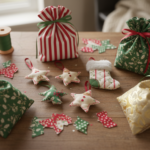
Fabric ornaments bring warmth and personality to your Christmas tree. These charming decorations are among the easiest sewing projects for beginners to master. You can create unique designs using fabric scraps from your stash.
Simple Circle Ornaments
Cut two fabric circles in coordinating patterns. Place them together with right sides facing. Sew around the edge, leaving a small opening. Turn the fabric right side out and stuff lightly with batting. Add a ribbon loop at the top for hanging.
These ornaments work beautifully with any fabric choice. Try metallic prints for sparkle or traditional plaids for classic appeal. The simple shape makes this project ideal for practicing your sewing machine skills.
Miniature Stockings
Create adorable mini stockings using a basic stocking pattern. Cut two pieces from festive fabric. Sew them together along the edges, leaving the top open. Turn right side out and add a cuff using contrasting fabric.
These mini versions of full-sized stockings add whimsy to your tree. Fill them with small treats or leave them empty as pure decoration. They’re quick to make, so you can create a whole set in one afternoon.
Fabric Stars
Cut star shapes from two layers of fabric. Sew around the edges, leaving an opening for turning. Clip the points carefully before turning right side out. Press flat and topstitch around the edge for a polished look.
Stars add beautiful dimension to your tree. Mix solid colors with prints for visual interest. Add buttons or embroidery in the center for extra detail. Learn advanced embellishment techniques that elevate simple shapes into stunning decorations.
Candy Cane Softie Ornaments
Use red and white striped fabric to create candy cane shapes. Cut the curved shape from two fabric pieces. Sew together, turn, and stuff firmly. The striped fabric does all the work of creating that classic candy cane look.
These cheerful ornaments bring nostalgic charm to any tree. They’re especially perfect for a traditional red and white Christmas theme. Kids love helping with the stuffing step, making this a wonderful family project.
Christmas Stocking Patterns for Every Skill Level
A handmade Christmas stocking becomes a treasured keepsake that families use year after year. Creating your own stockings allows you to match your holiday decor perfectly. These projects range from simple to slightly more detailed.
Basic Felt Stocking
Felt is forgiving for beginners because it doesn’t fray. Cut two stocking shapes from red or green felt. Pin them together and sew around the edges using a blanket stitch or straight stitch. Add a white felt cuff and a hanging loop.
This project teaches you to work with felt while creating something functional. Personalize each stocking with felt letters spelling out names. You can complete one stocking in under an hour.
Ready to Master More Stocking Designs?
Discover hundreds of beginner-friendly patterns with step-by-step video tutorials that guide you through every stitch. Build your confidence with professional techniques that make your handmade stockings look store-bought.
Use fabric scraps to create a patchwork front for your stocking. Cut squares or rectangles from various Christmas fabrics. Sew them together to form a patchwork panel. Use this panel as the front piece and solid fabric for the back.
This design is perfect for using up your fabric stash. Each stocking becomes completely unique based on your fabric choices. The patchwork technique adds visual interest and a handcrafted quality.
Lined Stocking with Cuff
Create a more polished stocking by adding a lining. Cut four pieces total – two outer and two lining pieces. Sew outer pieces together, then lining pieces. Insert lining into outer stocking and attach a contrasting cuff at the top.
A lined stocking has a professional appearance and added durability. The lining hides all seams for a clean interior. This project teaches you valuable construction techniques you’ll use in many sewing projects.
Personalized Name Stockings
Start with any basic stocking pattern. Before assembling, add personalization to the cuff or front. Use iron-on letters, hand embroidery, or fabric paint to add names. Then construct the stocking following your chosen method.
Personalized stockings make wonderful gifts for newlyweds or new babies. They become family heirlooms that mark each person’s special place in holiday traditions. The personalization step comes before construction, making it easier to work with flat fabric.
Easy Christmas Pillow Projects to Brighten Your Home
Christmas pillows transform your living space with seasonal charm. These projects let you practice straight seams while creating functional holiday decor. Most pillow projects require only basic sewing skills.
Envelope-Back Pillow Covers
This no-zipper design is perfect for beginners. Cut one front piece and two overlapping back pieces. Hem the overlapping edges. Pin the back pieces over the front piece and sew around all four sides. Turn right side out and insert a pillow form.
The envelope back allows you to remove and wash the cover easily. You can change pillow covers throughout the season. This construction method works for any size pillow.
Flannel Holiday Pillows
Soft flannel fabric creates cozy Christmas pillows. Cut two squares of festive flannel. Place right sides together and sew around three and a half sides. Turn right side out, insert stuffing or a pillow form, and hand-stitch the opening closed.
Flannel’s soft texture adds comfort to your holiday seating areas. Choose traditional plaids or fun printed designs. The slight stretch in flannel makes it forgiving for beginning sewers.
Appliqué Christmas Tree Pillow
Create a simple pillow front with an appliqué tree design. Cut a triangle from green fabric for the tree and a small rectangle for the trunk. Use fusible web to attach these shapes to your pillow front fabric. Stitch around the edges and construct a basic pillow.
Appliqué adds dimension without complex skills. Embellish your tree with button ornaments or embroidered details. This technique lets you create custom designs for any holiday theme. Master appliqué methods and decorative stitching with clear video demonstrations.
Mini Throw Pillow Set
Create a coordinated set of small 12-inch pillows. Use different fabrics that share a color scheme. Make several pillows using the basic construction method. Arrange them together for maximum impact.
Smaller pillows work up quickly and use less fabric. A set creates more visual interest than one large pillow. This project is perfect for using coordinating fat quarters from your fabric stash.
Christmas Table Runner Ideas for Festive Dining
A Christmas table runner adds the perfect finishing touch to your holiday table. These projects teach you to work with longer fabric pieces. The results elevate your entire dining experience.
Simple Hemmed Runner
Choose a festive fabric and cut it to your desired length and width. Fold and press a double-fold hem on all four sides. Sew the hem in place with a straight stitch. This project requires only straight sewing and creates a polished result.
This is the fastest table runner you can make. Select a dramatic print that makes a statement. Perfect your straight stitching and corner techniques with this project.
Reversible Table Runner
Cut two pieces of coordinating fabric to the same size. Place them right sides together and sew around the edges, leaving an opening. Turn right side out, press, and topstitch around the entire edge.
A reversible runner gives you two looks in one project. Flip it throughout the season to refresh your table. This construction method creates clean finished edges on both sides.
Quilted Patchwork Table Runner
Cut squares or rectangles from various Christmas fabrics. Sew them together in a pleasing pattern to create the runner top. Add batting and backing, then quilt the layers together with simple straight lines.
This project introduces basic quilting techniques. The patchwork design uses up fabric scraps beautifully. Your table runner becomes a unique piece of functional art.
Take Your Table Runner Skills Further
Access detailed quilting tutorials designed specifically for beginners. Learn professional finishing techniques, precise piecing methods, and creative design layouts that make your table runners look expertly crafted.
Create a runner with decorative pointed ends instead of straight edges. Use a template to cut the points evenly on both ends. Construct like a basic runner but take care when sewing and turning the pointed corners.
Pointed ends add an elegant detail to a simple project. This design looks more complex than it actually is. The technique teaches you to handle corners and points skillfully.
Reusable Gift Bags That Replace Wrapping Paper
Fabric gift bags offer an eco-friendly alternative to disposable wrapping paper. Recipients can reuse them year after year. These simple projects use basic bag construction techniques.
Drawstring Gift Bags
Cut a rectangle of festive fabric. Fold it in half with right sides together and sew the side seams. Create a channel at the top for the drawstring. Turn right side out and thread ribbon or cord through the channel.
Drawstring bags work for gifts of any shape. Make them in various sizes to fit different gifts. The drawstring closure means no need for additional ribbon or bows.
Lined Gift Bags with Handles
Create a more structured bag by adding lining and handles. Cut outer fabric and lining pieces. Construct the bag shape, add handles cut from matching or contrasting fabric, then attach the lining to hide all raw edges.
These bags look professionally made and can hold heavier gifts. The lining adds durability and a polished interior. Recipients will treasure these bags and use them for years.
Wine Bottle Bags
Cut fabric to fit the height and circumference of a wine bottle. Sew a tube shape and box the bottom corners to create a flat base. Add a drawstring or tie at the top. This specialized size fits bottles perfectly.
Wine bottle bags make hostess gifts extra special. Use metallic or elegant fabrics for sophistication. These bags protect bottles while looking festive. Explore specialty bag patterns for every gift-giving occasion.
Oversized Santa Sack
Create a large bag for Santa to fill with presents. Use sturdy fabric and make a simple pillowcase-style bag. Add a drawstring channel at the top and use thick cord or rope for the closure. Personalize with the recipient’s name.
Santa sacks become treasured holiday traditions. Kids love the anticipation of finding their named sack on Christmas morning. These durable bags last for decades of holiday use.
Christmas Tree Skirt Projects from Simple to Stunning
A tree skirt completes your Christmas tree presentation while hiding the stand. These circular projects teach you to work with curves. The finished piece becomes a focal point of your holiday decor.
No-Sew Fleece Tree Skirt
This beginner project requires no sewing machine. Cut two large circles from fleece fabric. Cut fringe around the outer edge of both layers. Tie the fringe pieces together to join the layers. Cut a circle in the center and a slit for wrapping around the tree.
Fleece doesn’t fray, making it perfect for this no-sew method. This project works up in less than an hour. Change colors or use patterned fleece for different looks.
Simple Circle Skirt
Cut a large circle from festive fabric. Cut a smaller circle in the center and a slit from the center to the edge. Hem the center circle, outer edge, and slit edges. Add ties or Velcro at the slit for closure.
This classic design showcases beautiful fabric. Practice sewing curves as you hem the edges. Choose quilting cotton or festive home dec fabric for best results.
Patchwork Wedge Tree Skirt
Cut wedge-shaped pieces from various Christmas fabrics. Sew the wedges together to form a circle. Add backing fabric and binding around all edges. Cut the center circle and back slit after piecing the top.
The wedge method makes it easier to piece a circular shape. Each wedge can feature different fabric for a scrappy look. This project combines patchwork skills with circular construction.
Quilted Tree Skirt
Create a tree skirt with batting between the top and backing layers. Quilt the layers together with straight lines, gentle curves, or an overall pattern. Bind the edges for a professional finish.
A quilted tree skirt has beautiful dimension and weight. The quilting secures the layers and adds decorative texture. This project teaches quilting basics on a manageable scale.
Festive Pot Holders and Kitchen Accessories
Christmas pot holders combine practicality with holiday spirit. These projects teach you to work with multiple layers and heat-resistant materials. They make perfect gifts for family and friends.
Basic Square Pot Holder
Cut two squares of festive fabric and two squares of heat-resistant batting. Layer them as follows: fabric (right side down), batting, batting, fabric (right side up). Sew around the edges, leaving an opening. Turn right side out and topstitch around all edges. Add a hanging loop.
The double batting provides necessary heat protection. Topstitching keeps all layers secure and adds decoration. Use 100% cotton fabric for safety around heat.
Quilted Hot Pads
Create a patchwork top using small squares of Christmas fabrics. Layer with batting and backing. Quilt the layers together with a grid pattern. Bind the edges with coordinating binding for a finished look.
These pot holders use up the smallest fabric scraps. The quilting creates a thick, protective layer. Binding gives a professional finished edge.
Oven Mitt
Use a simple mitt pattern with Christmas fabric. Cut four layers for each mitt – two outer fabric and two heat-resistant batting pieces. Sew outer and batting together, then join the two sides. Add bias binding around the opening and a hanging loop.
Oven mitts require slightly more skill than flat pot holders. The curved shape teaches you to work with contours. Pair with matching pot holders for a coordinated gift set. Find detailed kitchen accessory patterns with sizing guides and safety tips.
Trivet with Fabric and Cork
Create a decorative trivet by covering cork backing with festive fabric. Cut fabric slightly larger than the cork square. Wrap the fabric around the cork and glue or hand-stitch it in place on the back. Add felt to the bottom to protect table surfaces.
Trivets make thoughtful hostess gifts. The cork provides excellent heat protection. Choose wipeable fabric or laminated cotton for easy cleaning after use.
Christmas Quilts and Throws for Cozy Celebrations
A handmade Christmas quilt becomes a family treasure. While full quilts require time investment, beginner-friendly options exist. These projects range from simple throws to traditional patchwork designs.
Simple Strip Quilt
Cut strips of varying widths from different Christmas fabrics. Sew the strips together along their long edges to create the quilt top. Add batting and backing, then tie the layers together at regular intervals instead of quilting.
Strip quilts go together quickly using straight seams. Tying instead of quilting makes the project more manageable for beginners. The random strip widths create visual interest without complex piecing.
Flannel Rag Quilt
Cut squares from soft flannel in Christmas patterns. Layer each square with batting and backing. Sew the squares together with seams on the outside. Clip the seam allowances to create a fringed, raggedy edge that blooms after washing.
Rag quilts have a wonderfully soft, casual appearance. The exposed seams create the signature look. Flannel adds extra warmth and softness perfect for winter.
Simple Nine-Patch Mini Quilt
Create a small wall hanging or table topper using nine-patch blocks. Cut squares from two contrasting fabrics. Arrange them in a checkerboard pattern and sew together. Create several blocks and join them with sashing strips.
Nine-patch blocks teach fundamental quilting skills. A smaller size makes the project less overwhelming. This quilt works beautifully as wall decor or a table topper.
No-Quilt Throw Blanket
If quilting seems intimidating, create a simple throw instead. Cut two large rectangles of coordinating fabrics. Place right sides together and sew around the edges, leaving an opening. Turn right side out, press, and topstitch around the edges.
This project gives you a finished throw without quilting complexity. Choose fleece, flannel, or quilting cotton. The reversible design offers two looks in one project.
Holiday Bags and Totes for Shopping and Giving
Fabric bags serve multiple purposes during the holiday season. Use them for shopping, gift-giving, or carrying items to parties. These practical projects combine function with festive style.
Simple Tote Bag
Cut two rectangles for the bag body and two strips for handles. Sew the rectangles together along three sides. Attach handles at the top edge. Turn right side out and press for a clean finish.
Tote bags are excellent first projects for learning bag construction. Make several in coordinating fabrics. These bags fold flat for easy storage when not in use.
Lined Market Bag
Create a more polished bag by adding lining. Construct the outer bag and lining separately. Insert the lining and attach it at the top edge, encasing the handle attachments. This method hides all raw edges.
Lining adds structure and durability to bags. The clean interior looks professional. Choose a contrasting lining color that peeks out at the top for added interest.
Drawstring Project Bag
Sew a tube of fabric and box the bottom corners to create a flat base. Create a channel near the top for the drawstring. Thread cord or ribbon through the channel. This bag works perfectly for storing ongoing craft projects.
Project bags keep crafts organized and portable. Make different sizes for various project types. The drawstring keeps contents secure during transport. Learn professional bag-making techniques including interfacing, proper handle attachment, and boxed corners.
Gift Card Holder Pouch
Create small zippered pouches perfect for gift card presentation. Cut two rectangles of fabric. Install a zipper along one edge. Fold and sew the sides to create a pouch. Turn right side out and press flat.
These pouches elevate gift card giving beyond paper envelopes. Recipients can reuse them for coins, cards, or small items. Adding a zipper teaches you a valuable sewing skill.
Christmas Sewing Projects Kids Will Love
Involving kids in holiday crafting creates lasting memories. These simple projects use basic shapes and forgiving materials. Children can participate in age-appropriate steps while learning introductory sewing skills.
Felt Gingerbread Ornaments
Cut gingerbread person shapes from brown felt. Let kids decorate them with fabric paint, buttons, or embroidery floss details. Sew two pieces together around the edges, adding stuffing before closing. Include a ribbon loop for hanging.
Felt is safe and easy for kids to handle. The decorating step allows creativity. These ornaments become treasured keepsakes marking children’s growing skills.
Simple Stuffed Stars
Cut star shapes from festive fabric. Kids can help pin the pieces together. Sew around the edges, leaving an opening. Children can help with stuffing before you sew the opening closed. Add a ribbon loop if desired.
Star shapes are simple for young sewers to manage. Letting kids stuff the shapes gives them ownership of the project. Imperfect stitching adds handmade charm rather than detracting from beauty.
Hand-Sewn Mini Stockings
Use felt and large plastic needles for safe hand sewing. Cut simple stocking shapes. Let kids practice running stitch or whipstitch to join the pieces. These mini stockings work as ornaments or gift card holders.
Hand sewing teaches the fundamentals without machine complications. Kids develop fine motor skills and patience. The finished stockings demonstrate their accomplishment proudly.
Fabric Scrap Garland
Cut Christmas fabric into strips or simple shapes like trees or stars. Kids can help arrange them on a ribbon or bias tape. Sew the shapes onto the ribbon to create a festive garland for their room.
Garlands use up small fabric scraps efficiently. Children enjoy seeing their fabric choices displayed. This project teaches planning and sequencing skills alongside sewing.
Quick Christmas Gifts You Can Sew in Minutes
When time is short but you want handmade gifts, these quick projects save the day. Most take 30 minutes or less to complete. Recipients appreciate the thought and effort behind handcrafted items.
Fabric Coasters Set
Cut squares from Christmas fabric and batting. Layer fabric (right side down), batting, fabric (right side up). Sew around the edges and topstitch a grid pattern across the surface. Make a set of four or six matching coasters.
Coasters make universally appreciated gifts. They protect furniture while adding seasonal decor. A matched set presents beautifully in a simple ribbon tie.
Create Gift-Worthy Projects with Confidence
Access hundreds of quick gift tutorials perfect for last-minute crafting. Each project includes supply lists, timing estimates, and professional finishing techniques that make your handmade gifts look store-bought.
Cut strips of fabric and interfacing. Iron interfacing to the wrong side of one fabric strip. Place two strips right sides together and sew around the edges, leaving an opening. Turn, press, and topstitch. Add a ribbon tail at one end if desired.
Bookmarks require minimal fabric and time. They’re perfect for teachers, coworkers, or book lovers. Make several at once using an assembly-line method.
Mug Rugs
Create small quilted mats sized for a mug and small plate. Use the same construction as pot holders but in a rectangular shape. Quilt with festive patterns or simple straight lines.
Mug rugs are larger than coasters but smaller than placemats. They create a cozy spot for coffee breaks. The quilted construction adds charm and protects surfaces.
Infinity Scarves
Cut a long rectangle from soft fabric like flannel or jersey knit. Fold it in half lengthwise with right sides together. Sew the long edge and one short end. Turn right side out, fold in the open end, and sew it closed to the starting end, creating a loop.
Scarves make welcome winter gifts. Soft fabrics feel luxurious against skin. The infinity style requires no complicated finishing or hemming.
Key Fobs
Cut small rectangles from sturdy fabric. Fold in half with right sides together and sew around the edges, leaving an opening. Turn right side out and attach key ring hardware. Topstitch around the edges for durability.
Key fobs are practical gifts everyone can use. They help identify keys in bags or purses. Use interfacing or heavy fabric for durability with daily use.
Advanced Beginner Christmas Projects to Challenge Your Skills
Once you’ve mastered basic projects, these slightly more complex designs build your confidence. Each project introduces new techniques while remaining approachable. The impressive results showcase your growing abilities.
Quilted Wall Hanging
Create a small quilted wall hanging featuring a Christmas scene or pattern. Piece the top using your choice of blocks. Add borders, layer with batting and backing, and quilt by hand or machine. Attach a hanging sleeve and dowel rod.
Wall hangings teach complete quilt construction on a manageable scale. The finishing techniques prepare you for larger quilts. Display your work proudly throughout the season.
Structured Fabric Basket
Create a basket using heavy interfacing or stabilizer for structure. Cut fabric and interfacing pieces. Assemble the basket following specific construction steps that create the box shape. Fold down and press the top edge for a clean finish.
Fabric baskets offer beautiful storage for ornaments, supplies, or gifts. The structure comes from proper interfacing selection and technique. These baskets organize your home while adding festive decor. Master structured bag and basket construction with detailed video tutorials.
Patchwork Christmas Stocking with Cuff
Elevate basic stockings by creating a patchwork front panel. Piece small squares or strips together for the front. Add lining, a contrasting cuff with decorative trim, and a hanging loop. This project combines multiple skills.
This stocking becomes an heirloom piece. The patchwork adds visual interest and uses fabric scraps. The construction process teaches valuable garment and home dec techniques.
Advent Calendar Wall Hanging
Create a fabric advent calendar with numbered pockets. Construct a background panel. Make 24 small pockets from coordinating fabrics. Number them and attach to the background in an organized layout. Add a hanging sleeve at the top.
Advent calendars create lasting family traditions. Children love the daily countdown to Christmas. This project requires planning, organization, and consistent pocket construction.
Essential Tips for Successful Christmas Sewing Projects
Success with sewing projects comes from good preparation and technique. These tips help beginners avoid common pitfalls. Apply these practices to achieve professional-looking results.
Choose Beginner-Friendly Fabrics
Start with quilting cotton for most projects. This fabric has a medium weight, doesn’t stretch, and handles easily. Avoid slippery satins or stretchy knits until you build more experience. Pre-wash fabrics to prevent later shrinkage.
Fabric choice significantly impacts your project success. Quality fabric costs more but sews more easily. Save difficult fabrics for when your skills improve.
Press as You Go
Keep your iron near your sewing machine. Press each seam after sewing and before crossing it with another seam. This simple habit creates professional results. Pressing differs from ironing – use an up-and-down motion rather than sliding.
Proper pressing makes an enormous difference in finished appearance. It helps seams lie flat and corners look crisp. This step separates beginner work from advanced results.
Use the Right Tools
Invest in good scissors dedicated to fabric only. Use a seam ripper for fixing mistakes. Keep extra needles and bobbins on hand. A clear ruler and cutting mat improve accuracy for measuring and cutting.
Quality tools make projects easier and more enjoyable. Sharp scissors cut cleanly without fraying. Proper measuring tools ensure accurate pieces that fit together correctly.
Practice Seam Allowance Consistency
Most projects use a quarter-inch seam allowance. Use the markings on your sewing machine or place tape as a guide. Consistent seam allowances ensure pieces fit together properly. Practice on scrap fabric first.
Inconsistent seam allowances cause pieces to be wrong sizes. Your blocks won’t align correctly. This fundamental skill underlies all successful sewing.
Start with Simple Shapes
Choose projects with squares, rectangles, and simple curves when beginning. Avoid complex piecing, set-in seams, or intricate appliqué. Build skills gradually with each project.
Simple shapes build confidence without overwhelming frustration. Master basics before attempting advanced techniques. Each successful project motivates you to try something slightly more challenging.
Selecting the Perfect Fabric for Your Christmas Projects
Fabric choice affects both the sewing process and final appearance. Understanding different fabric types helps you select appropriately for each project. Christmas fabrics offer wonderful variety in patterns and textures.
Quilting Cotton Prints
These medium-weight cottons work for most projects. They come in endless Christmas patterns from traditional to modern. The stable weave doesn’t stretch, making it easy to cut and sew accurately. Most Christmas prints fall into this category.
Stock up on quilting cottons during sales for future projects. Fat quarters offer variety without large commitments. Build a coordinating collection for projects throughout the season.
Flannel for Warmth
Soft flannel adds cozy warmth to pillows, quilts, and scarves. It has a slightly napped surface and gentle stretch. Pre-wash flannel as it shrinks more than quilting cotton. Use a walking foot to prevent shifting while sewing.
Flannel plaids create classic Christmas style. The softness makes projects extra comfortable. Account for extra shrinkage when calculating yardage needs.
Fleece for No-Sew Options
Fleece doesn’t fray, making it perfect for no-sew and beginner projects. It comes in solids and prints. The thickness provides warmth without batting. Use a ballpoint needle when machine sewing fleece.
Fleece works well for blankets, scarves, and tree skirts. The forgiving nature suits beginners perfectly. Avoid using it for projects requiring crisp edges or structured shapes.
Home Decor Weight Fabrics
Heavier decorator fabrics work well for items that need more body like bags, baskets, and tree skirts. These fabrics resist wrinkles and hold shape. They typically cost more than quilting cotton but offer durability for functional items.
Use decorator fabrics for pieces that receive heavy use. The extra weight creates professional drape in curtains and tree skirts. Pair with lighter fabrics for lining when needed.
Building a Coordinated Fabric Collection
Select fabrics that share colors even if patterns differ. Include a mix of large prints, small prints, and solids. Choose a unifying element like color temperature (warm reds and golds versus cool blues and silvers).
Coordinated fabrics make all your projects look professionally planned. Buy extra of fabrics you love for future projects. Keep scraps organized by color for patchwork and smaller items. Discover fabric selection strategies and color theory basics that help you create stunning combinations.
Professional Finishing Techniques for Polished Results
Finishing details separate homemade from handmade quality. These techniques require little extra time but dramatically improve appearance. Master these methods to achieve results you’ll proudly display or gift.
Perfect Corners
When sewing corners, stop with the needle down at the corner point. Lift the presser foot, pivot the fabric, lower the foot, and continue sewing. For sharp points when turning, clip across the corner diagonally close to stitching before turning.
Perfect corners look clean and professional. The clipping allows fabric to distribute smoothly in the point. Practice on scrap fabric until the technique becomes automatic.
Invisible Hand Stitching
Use ladder stitch to close openings invisibly. Take a small stitch in one fold, then directly across in the opposite fold. Continue alternating sides. Pull thread snug every few stitches to close the seam invisibly.
Invisible stitching eliminates the need for topstitching around entire projects. The closure blends seamlessly with surrounding fabric. This technique works for pillows, ornaments, and any turned projects.
Clean Topstitching
For visible topstitching, use thread matching or intentionally contrasting with fabric. Stitch slowly and evenly, keeping consistent distance from edges. Use the edge of your presser foot as a guide. Press before topstitching for best results.
Even topstitching elevates project appearance significantly. Practice maintaining consistent speed for uniform stitches. Use a walking foot for thick or layered projects to prevent shifting.
Binding Edges
Bias binding creates clean finished edges on quilts, placemats, and other projects. Attach binding to the front, fold over to the back, and hand-stitch in place. Miter corners for a professional look.
Binding provides a durable finished edge that withstands washing and use. The contrasting binding adds a design element. Pre-made binding saves time, or make your own from coordinating fabric.
Adding Embellishments
Buttons, ribbons, and embroidery add personality to projects. Attach buttons securely with doubled thread. Use fabric glue for ribbon placement before stitching. Practice simple embroidery stitches on scrap fabric first.
Embellishments transform simple projects into special pieces. Don’t overdo it – a few well-placed elements have more impact than excessive decoration. Secure all embellishments properly, especially on items for children.
Begin Your Christmas Sewing Journey Today
Creating handmade Christmas decorations and gifts brings joy to both maker and recipient. These 32 sewing projects for beginners christmas celebrations offer something for every skill level and time commitment. You now have a comprehensive collection of ideas to fill your holiday with handcrafted charm.
Start with the simplest projects that match your current abilities. Build confidence with each completed item. Remember that handmade pieces carry special meaning regardless of perfect execution.
The techniques you learn through these Christmas sewing projects will serve you in countless future creations. Each stitch develops your skills further. Your growing abilities open doors to more complex and rewarding projects.
Gather your supplies, choose your first project, and begin creating. The satisfaction of completing something beautiful with your own hands is unmatched. Your Christmas decorations and gifts will reflect the care and creativity you invested in making them.
Transform Your Sewing Skills This Holiday Season
Join thousands of beginners who’ve discovered the joy of confident sewing. Access comprehensive tutorials, patterns, and techniques that guide you from your very first stitch to impressive finished projects. Start creating beautiful handmade Christmas items you’ll treasure for years.