Before-and-after photos can make hair growth seem simple. In real life, progress is often slow, uneven, and easy to miss. The growth cycle, the cause of hair loss, treatment choice, and daily care all shape the result.
This guide explains what to track, when changes may start, and how to compare photos without expecting a perfect transformation.
Want to explore your next step?
Review hair-growth options after learning what realistic progress can involve. Individual outcomes vary, and a professional can help identify the cause of hair loss.
What Hair Growth Before and After Photos Really Show
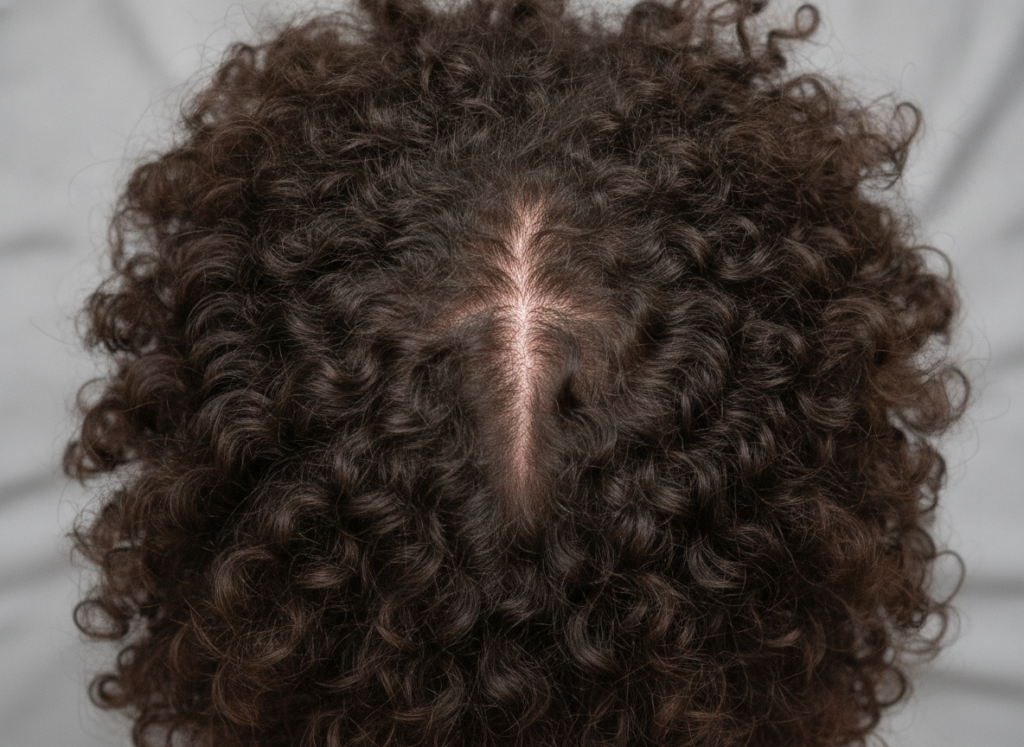
A photo can show changes in density, part width, hairline shape, and the amount of scalp that is visible. It cannot show every change in hair follicles. Fine new hair may be difficult to see at first.
Some images also use different lighting, hair length, angles, or styling. These details can make a small change look dramatic. Compare photos taken under the same conditions before judging progress.
How Long Does Hair Growth Take?
Hair often grows in small steps rather than one visible jump. During the first weeks, a person may notice little change. Some people may start to notice reduced shedding before they see new hair.
At several months, early regrowth may look fine or light. Continued use of an appropriate treatment may be needed before density is easier to compare. A longer view, such as six months or more, can give a clearer picture.
There is no single schedule for every person. The rate of hair growth, age, health, hormone changes, and the cause of hair loss all matter.
Key point: A short-term change does not always predict the final result. Track the pattern over time.
Build a realistic progress plan
Use a trusted option as a starting point for research, then review the ingredients, directions, and safety information carefully.
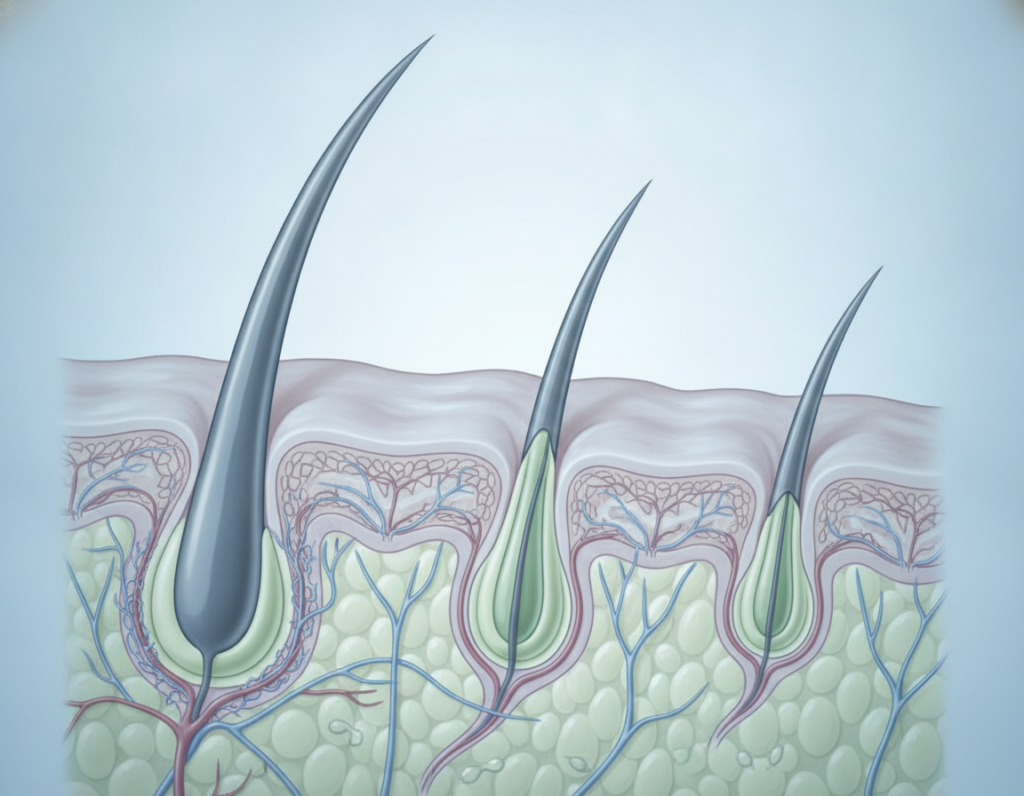
Each follicle moves through a growth phase, a transition phase, and a resting phase. The visible hair on your head is not all in the same part of the cycle.
This explains why results can look uneven. A follicle may need time to return to a stronger growth phase. Pattern hair loss can also cause follicles to produce thinner strands over years.
Common Causes of Hair Loss
The cause of hair loss affects the best treatment and the expected timeline. Androgenetic alopecia, also called pattern hair loss, is common in both men and women. Male pattern baldness often affects the temples, crown, or hairline.
Other causes include alopecia areata, major stress, illness, rapid weight change, low iron, thyroid conditions, hormone shifts, scalp problems, and some medicines. Tight styles and repeated chemical treatments may also harm hair health.
If loss begins suddenly, appears in round patches, causes scalp pain, or comes with skin changes, seek medical advice. Finding the cause hair loss can be more important than choosing products quickly.
How Pattern Hair Loss May Change Over Time
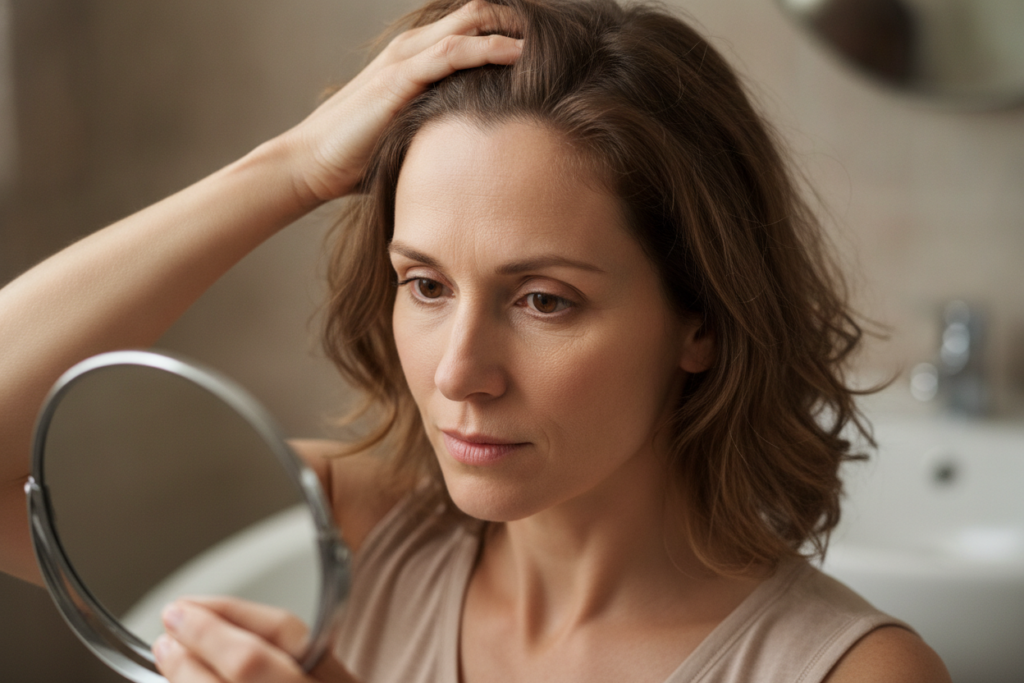
Pattern hair loss often develops gradually. A widening part, a receding hairline, or less coverage at the crown may appear before obvious shedding. In some cases, the change is easier to notice in photographs than in a mirror.
Early attention may help protect hair follicles, but no treatment works for every person. Androgenetic alopecia can continue without ongoing care. Ask a doctor about the cause, options, and possible risks.
How to Take Consistent Before-and-After Photos
Good documentation makes small changes easier to see. Take photos on the same day each month. Use the same room, camera, distance, and hairstyle.
Wash and dry your hair in a similar way each time.
Use front, side, top, and crown views.
Keep the camera at the same height and angle.
Use steady, even light instead of a strong flash.
Record the date, shedding, products, and treatment changes.
What Treatment Results May Look Like
Results depend on the treatment and the reason for hair loss. Minoxidil may support regrowth for some people, but it can also cause temporary shedding when use begins. Taking finasteride may help some men with pattern hair loss, but it requires a prescription and a discussion of potential side effects.
New hair may first appear thin, short, or lighter than nearby strands. A treatment may help maintain existing hair rather than create a full return to an earlier hairline. Stopping some treatments can reduce their benefits over time.
Do not combine treatments casually. Check labels, follow directions, and ask a professional about pregnancy, hormone conditions, medicines, or scalp disease.
Compare options before you decide
Learn more about available hair loss treatment paths. Use the information to prepare questions for a doctor or pharmacist.
When taking finasteride, follow the prescribed plan and attend recommended checkups. It may take months to judge a treatment. A photo record can help you and your doctor review changes with less guesswork.
Factors That Affect Hair Growth
Hair health is shaped by more than one product. Nutrition, sleep, stress, illness, genetics, hormone changes, and styling habits can affect the growth cycle.
Health
Low iron, thyroid conditions, and other health problems may affect growth and shedding.
Ask about persistent shedding
Review medicines with a doctor
Consider blood tests when advised
Daily care
Gentle routines can reduce breakage and help protect new hair.
Limit harsh heat
Avoid tight styles
Use a gentle scalp routine
Consistency
Changing products often makes it hard to know what is helping.
Follow directions
Record changes
Review progress over time
Hair Care While Waiting for New Hair
New hair can be fragile. Use a wide-tooth comb, avoid aggressive brushing, and handle wet hair gently. Reduce repeated bleaching, tight braids, and high heat when possible.
Choose products for your scalp and hair type. A shampoo cannot reverse every cause of hair loss, but a comfortable, clean scalp supports a better care routine. Stop a product that causes burning, swelling, or a severe rash.
When to See a Doctor or Hair-Loss Professional
Professional advice is important when hair loss is sudden, severe, painful, or linked to other symptoms. A doctor may examine the scalp, review health history, and order blood work when needed.
Seek help for round bald patches, eyebrow loss, scaling, sores, severe itching, or rapid thinning. Early evaluation may identify a condition that needs a specific treatment.
Do not rely on before-and-after photos alone to diagnose alopecia or another medical condition.
Prepare for a better treatment conversation
Explore questions and options before speaking with a qualified professional. A personal assessment is still needed for medical advice.
Stop and seek advice if serious irritation occurs.
Hair Growth Before and After FAQ
When may new hair start to appear?
Some people may start to notice fine new hair after several months, but timing varies. The cause, treatment, growth cycle, and health all matter.
Is shedding always a sign that treatment failed?
Not always. Some treatments can cause early shedding, but heavy or continuing loss should be discussed with a doctor.
How long should I compare photos?
Monthly photos over several months are more useful than daily checks. Keep the angle, light, hair length, and styling as similar as possible.
Can hair-care products regrow lost hair?
Products may improve softness, breakage, or scalp comfort, but they cannot address every cause of hair loss. A professional can help assess the problem.
Final Takeaway
Hair growth before and after results are best judged with patience, consistent photos, and realistic expectations. New hair may start slowly, look fine at first, and change over many months.
Focus on the cause of hair loss, protect your scalp, and use treatments only as directed. If you are ready to research possible next steps, review an option carefully and speak with a qualified professional before making a medical decision.
Take the next informed step
Explore a hair-growth option, compare the details, and keep your expectations realistic. Individual outcomes vary.