Could a small kitchen seed support a healthier scalp routine? Fenugreek has a long history in food, traditional care, and home beauty practices. Learn what it may do, how to use it, and when to seek professional help.
Build a gentler hair care routine
Explore an optional hair-care resource before choosing a fenugreek application. Look for clear ingredients, practical directions, and realistic claims.
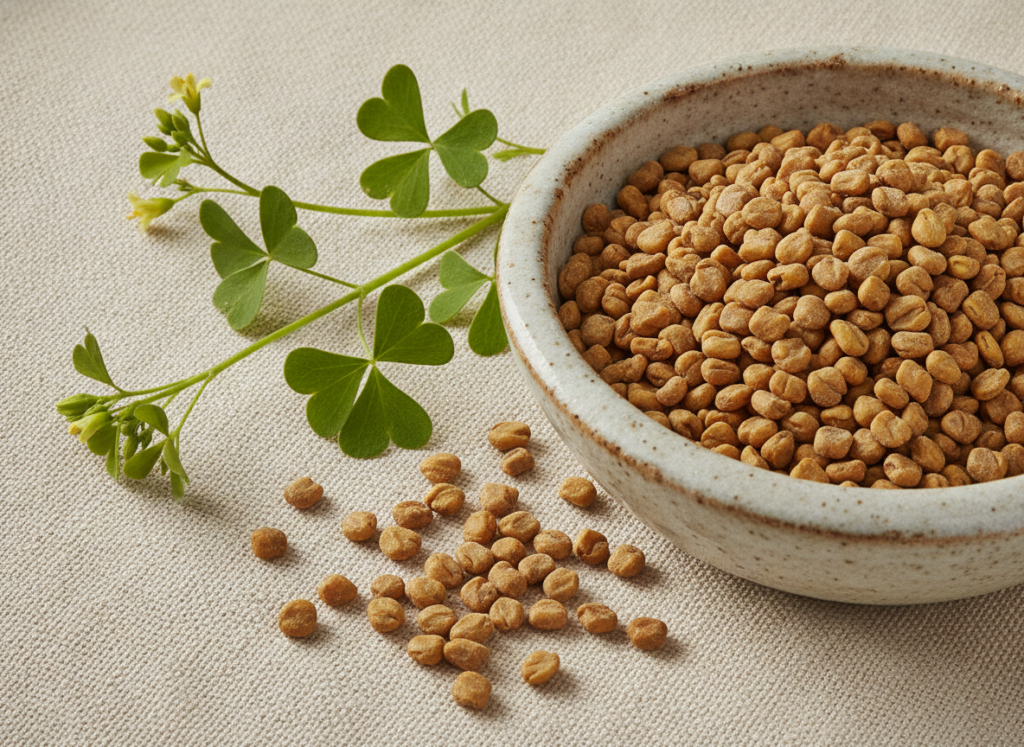
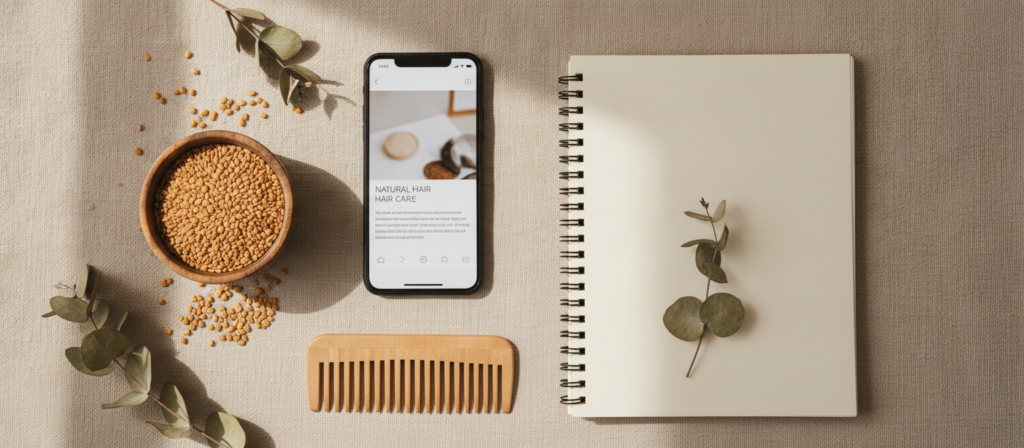
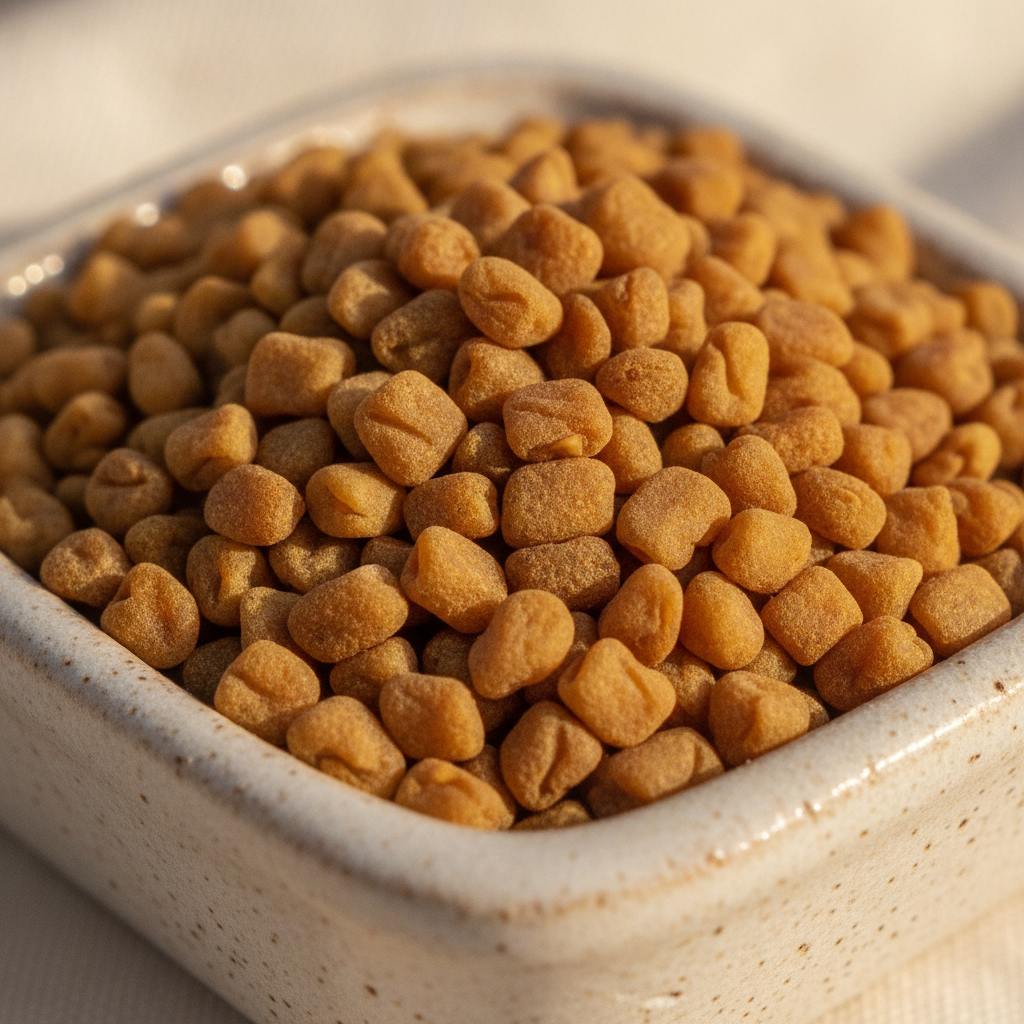
Fenugreek is an herb from the Trigonella foenum-graecum plant. The small, golden-brown fenugreek seeds are used in cooking and traditional wellness practices. They contain fiber, plant protein, minerals, and natural plant compounds.
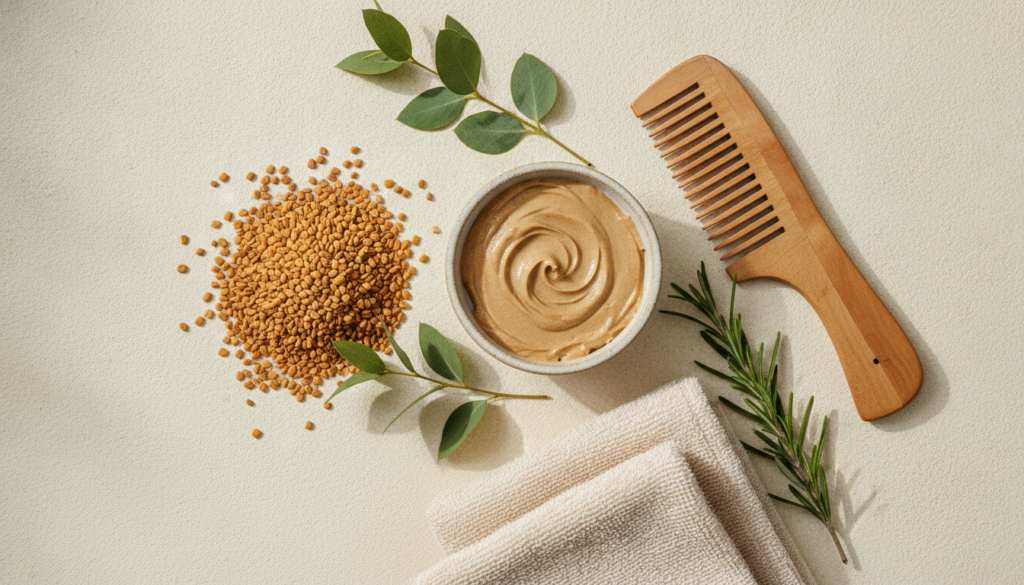
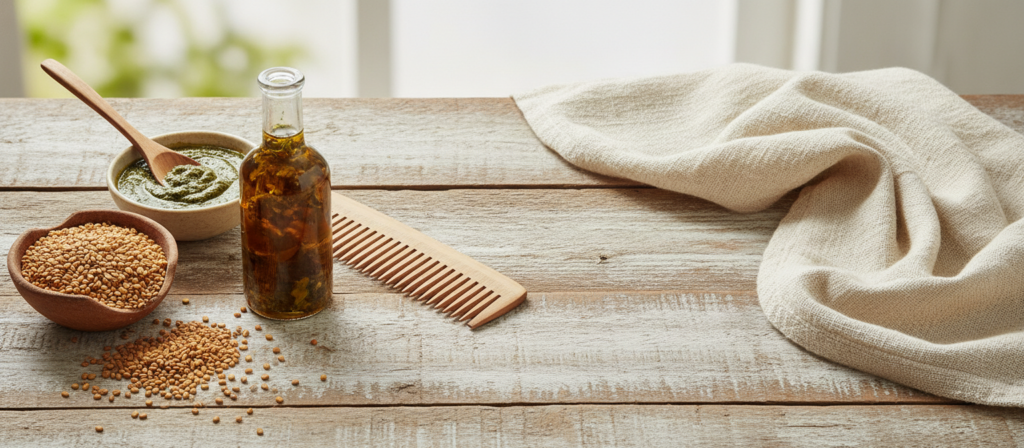
In hair care, people prepare the seeds as a paste, rinse, infused oil, or diluted extract. These applications may make the hair feel softer. They may also add slip, which can reduce rough handling during washing and detangling.
Why people use fenugreek seeds hair treatments
To add moisture and softness to dry hair.
To support a soothing scalp care routine.
To reduce friction during combing.
To explore a traditional plant-based application.
Potential Benefits for Hair and Scalp
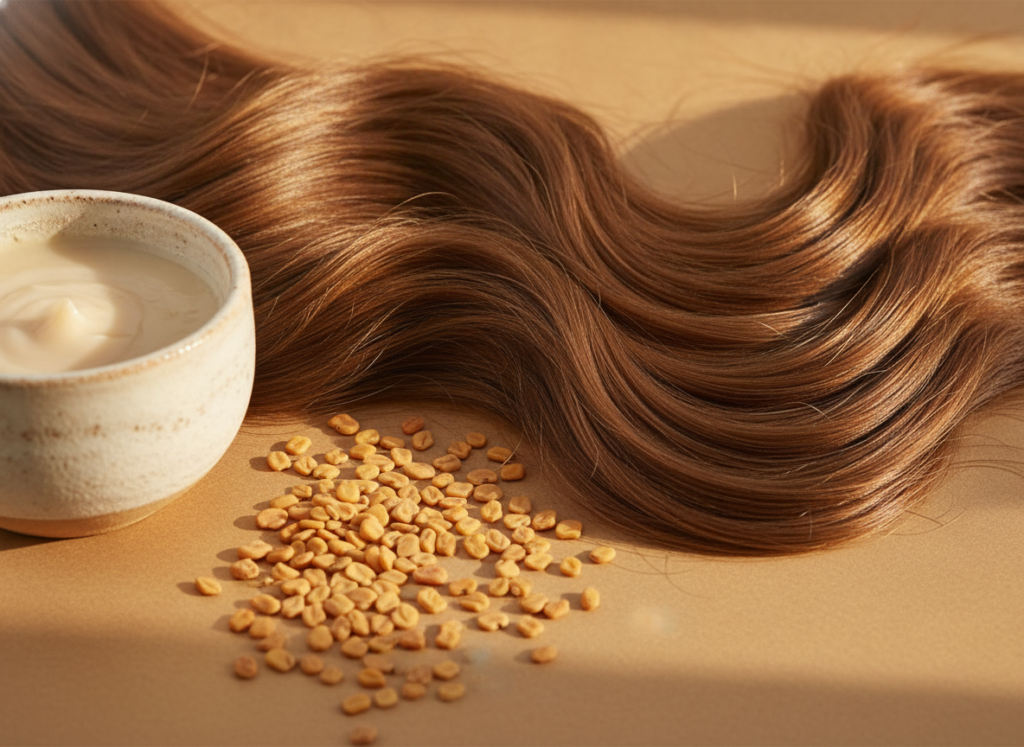
Interest in fenugreek for hair growth comes from its traditional use and nutrient content. A fenugreek seed paste can coat the hair shaft. This may improve the feeling of thickness, shine, and manageability for some people.
Fenugreek may also help a dry scalp feel more comfortable when used in a gentle, well-rinsed treatment. However, comfort is not the same as new hair growth. A smoother strand can look fuller without changing the activity of the hair follicles.
Possible advantages
May improve softness and shine.
Can fit a simple low-cost routine.
Offers plant protein and other nutrients.
Important limits
Evidence for true hair growth remains limited.
Results may differ by hair type and cause of loss.
It cannot replace diagnosis or treatment.
What Research Says About Hair Growth
Small studies and laboratory findings may explain why fenugreek is discussed for hair care. Yet traditional use does not prove that fenugreek promotes hair growth in every person. Research may examine extracts, formulas, or animals rather than the homemade mask used at home.
Hair growth depends on genetics, hormones, age, nutrition, stress, illness, medication, and scalp health. DHT-related pattern loss, autoimmune conditions, infection, and sudden shedding need different forms of care. A fenugreek seed extract cannot be assumed to address all these causes.
Set a fair goal: use fenugreek to support hair feel and scalp care. Do not expect it to reverse hair loss or create rapid growth.
Common Ways to Use Fenugreek
There are several ways to use fenugreek seeds. Choose one method first. Trying many applications at once makes it hard to identify irritation or understand what helps your hair.
Soaked seed paste
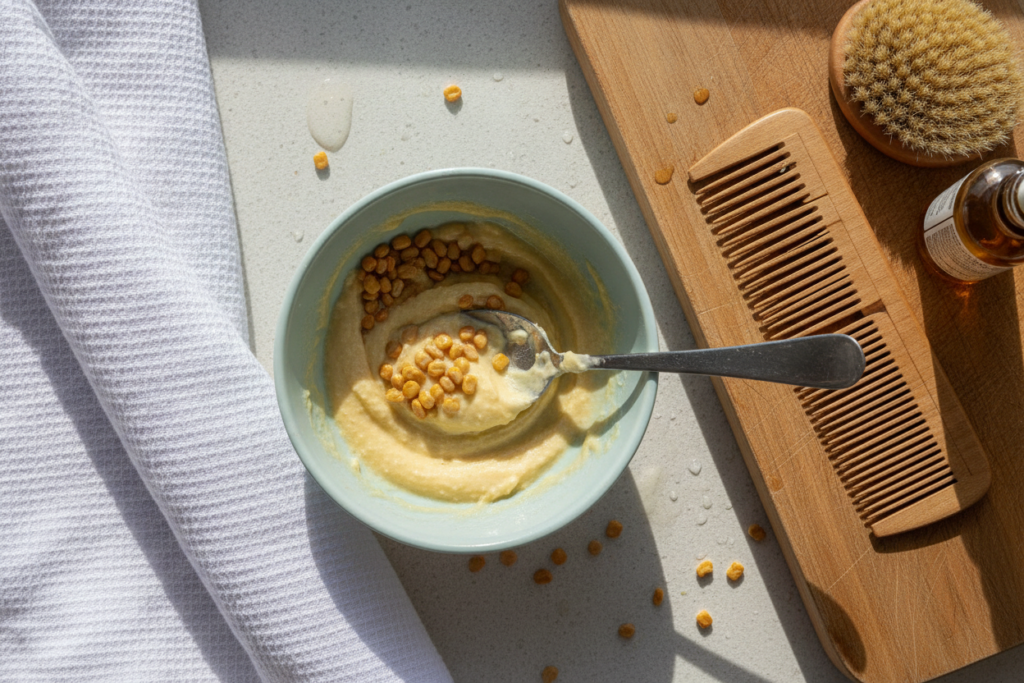
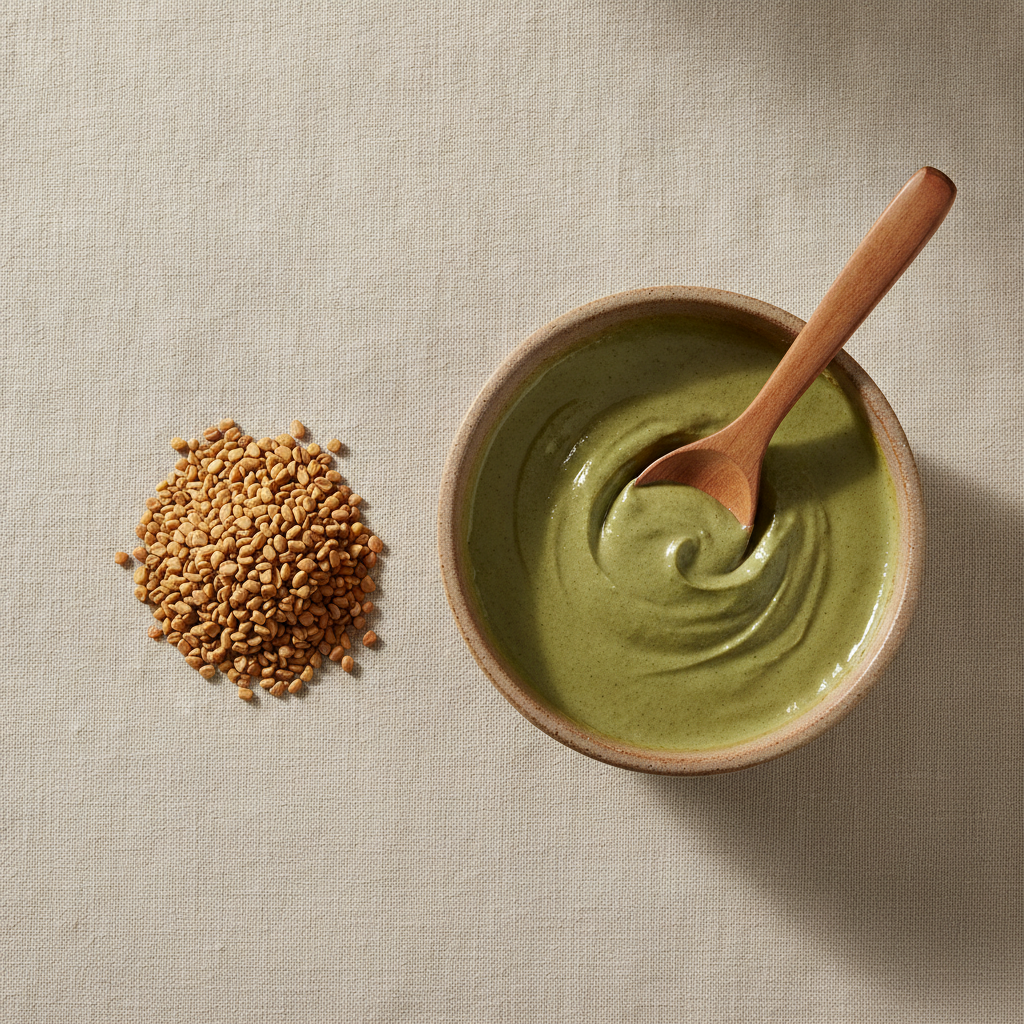
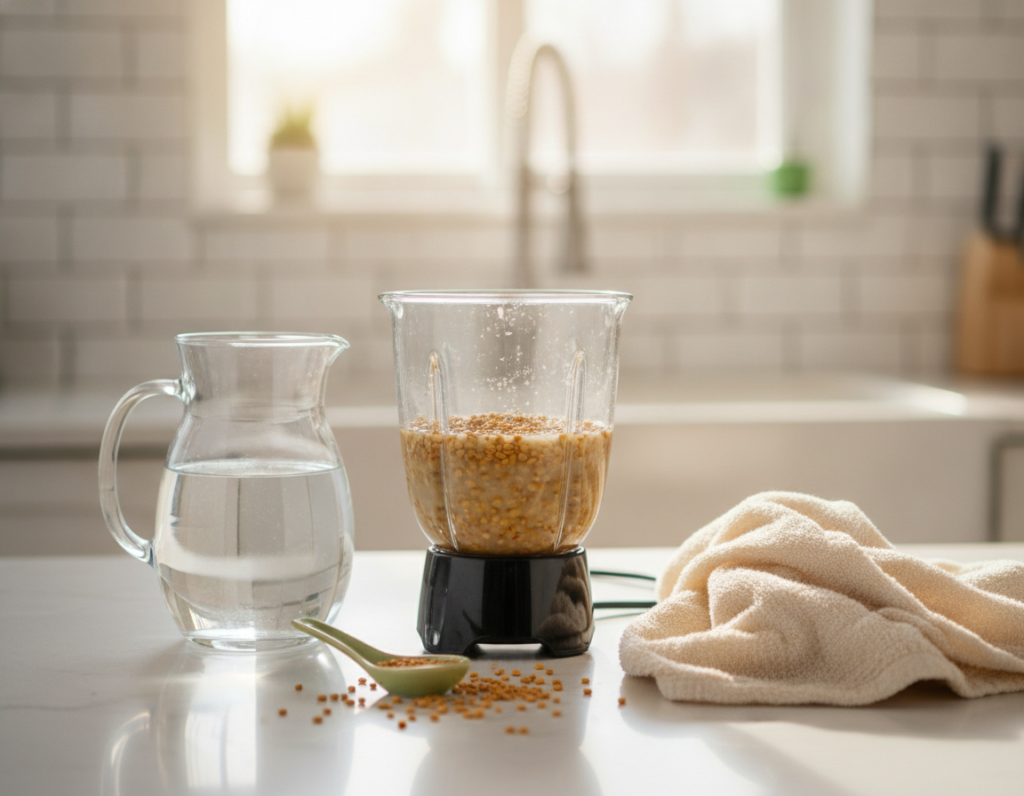
Soak fenugreek seeds overnight, then blend them with clean water. Apply the paste to the scalp and hair for a short period before rinsing.
Fenugreek rinse
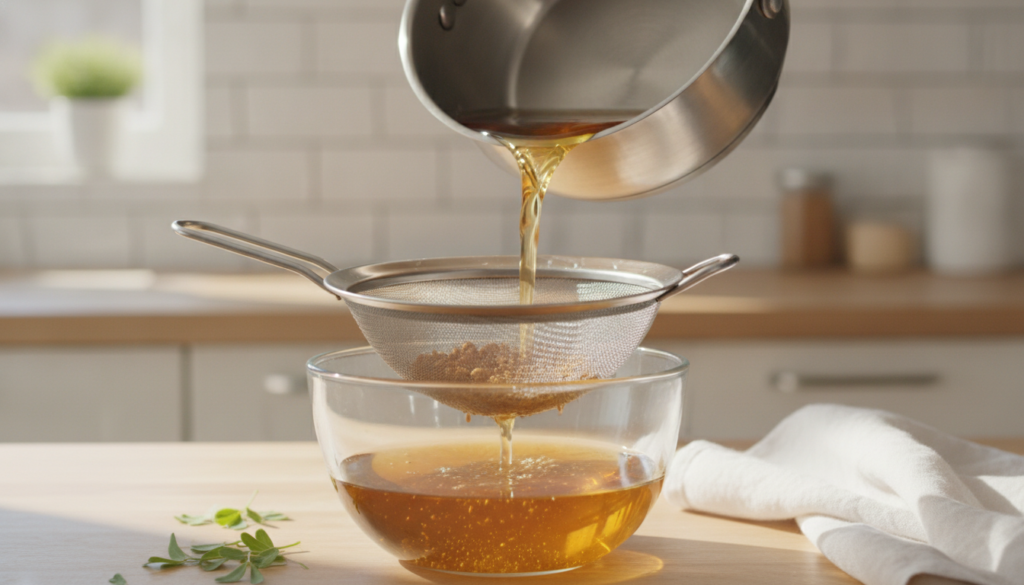
Steep or simmer the seeds in water. Cool and strain the liquid. Use it as a final rinse, then wash it out if the scalp feels coated.
Infused oil
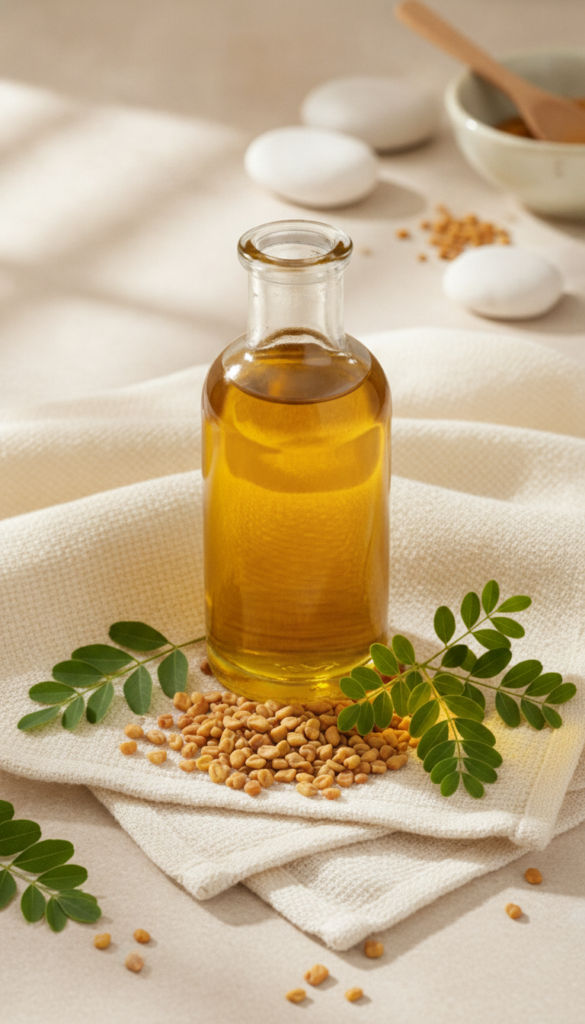
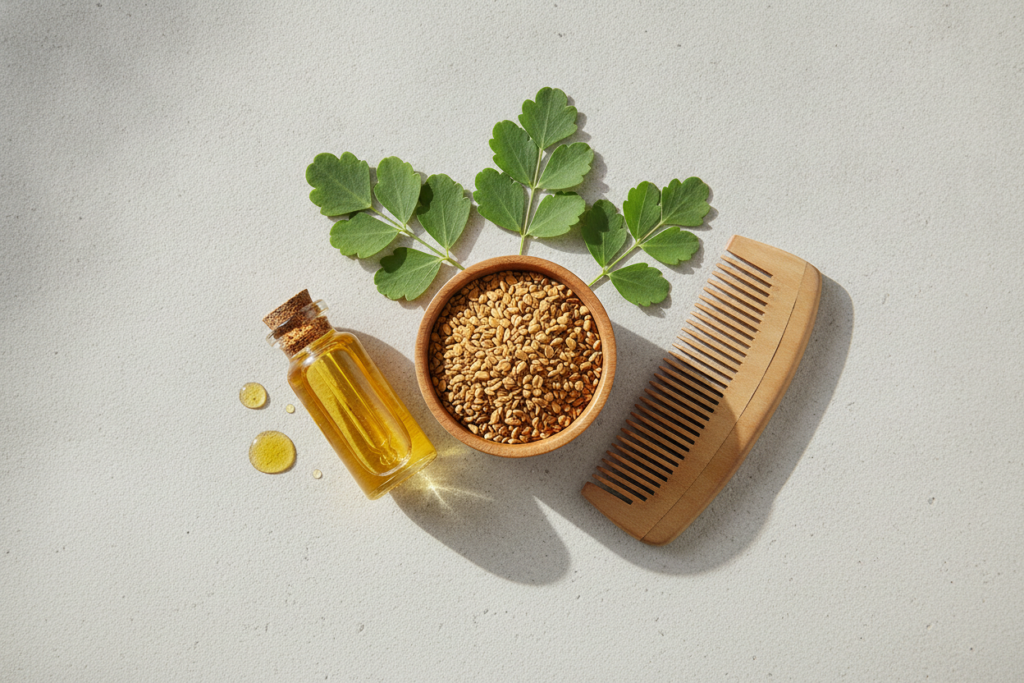
Use a prepared cosmetic oil or a carefully strained infusion. Massage a small amount onto the scalp and wash it out if buildup develops.
How to Prepare a Fenugreek Seed Mask
This basic method is simple, but cleanliness matters. Use fresh ingredients and a clean bowl. Make only enough for one use. Homemade mixtures can spoil quickly because they usually lack preservatives.
Measure one to two tablespoons of fenugreek seeds.
Cover the seeds with clean water and soak them overnight.
Drain the water and blend the seeds into a smooth paste.
Add a little water if the mixture is too thick to spread.
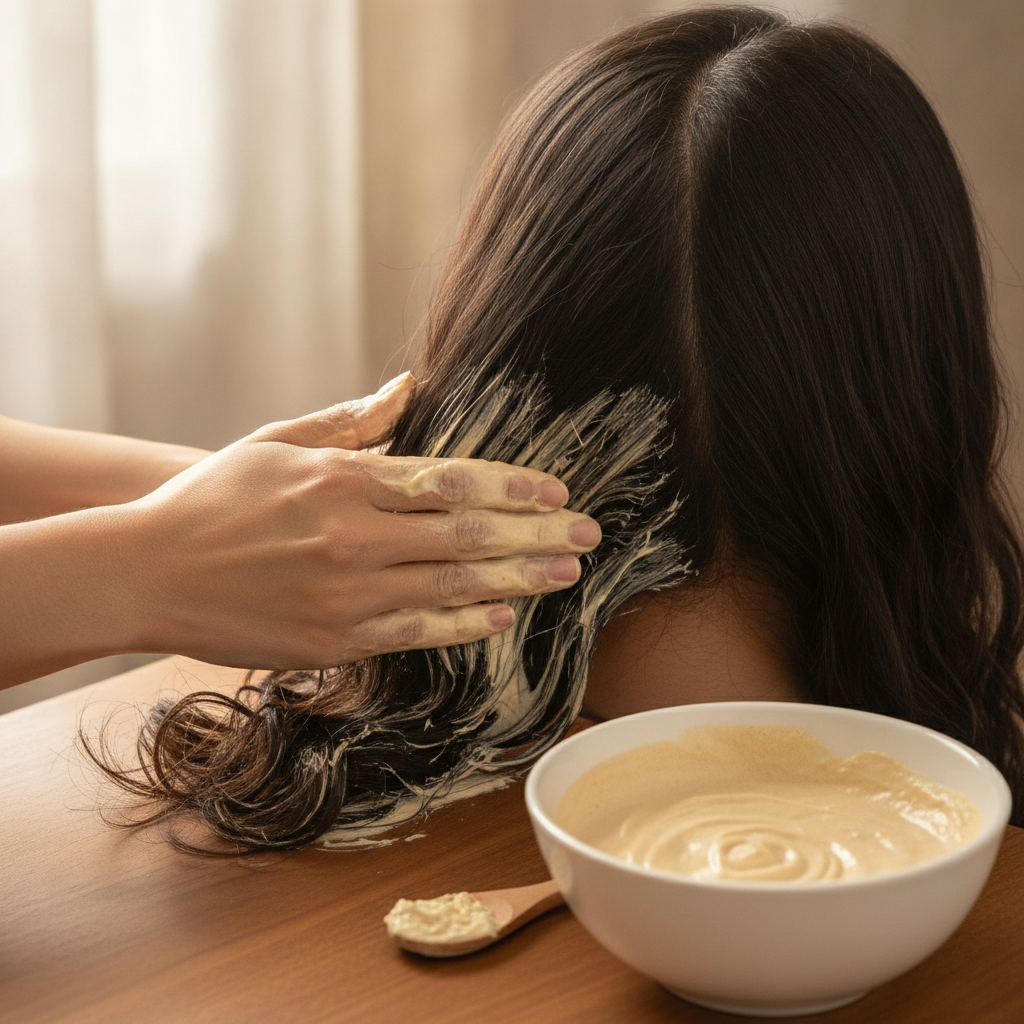
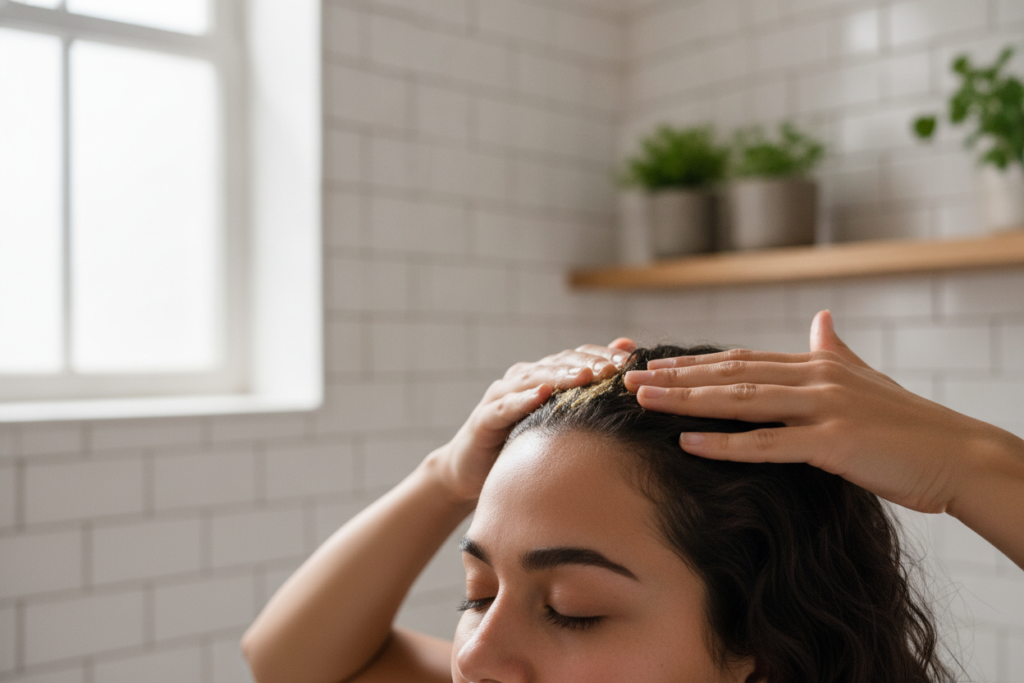
Apply a thin layer to the scalp and hair lengths.
Leave it on for about 15 to 20 minutes, then rinse well.
Shampoo gently if residue remains.
Do not scrub hard. Wet hair can stretch and break more easily. Use a wide-tooth comb only after the paste is fully rinsed and the hair has been conditioned.
Compare a ready-made option
If preparation feels inconvenient, review an optional hair product or routine guide. Choose a formula with full directions and a clear ingredient list.
Use fenugreek no more than once a week at first. A small amount is enough. Apply it to clean or lightly damp hair, depending on how easily your strands absorb products.
Keep the paste away from the eyes. Cover the shoulders because the mixture can drip. Rinse until the water runs clear. Follow with conditioner if the hair feels stiff or tangled.
Take a photo of the part line before starting. Check again after several weeks under similar lighting. This gives a better view than daily mirror checks. Also note changes in hair fall, scalp comfort, breakage, and thickness.
Fenugreek Oil, Extract, and Supplements
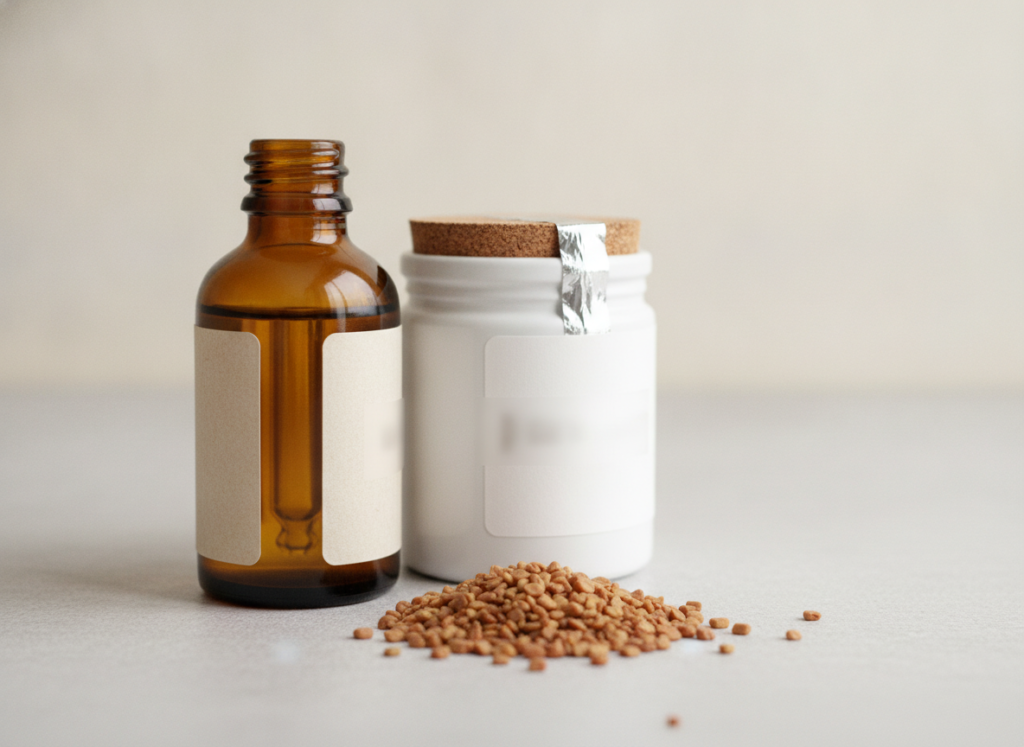
Fenugreek oil can make hair feel smoother, but an oil does not automatically reach or change the hair follicles. Use a small amount to reduce heaviness and buildup. Wash the scalp when needed.
A fenugreek seed extract may be more concentrated than a homemade rinse. Follow the product label instead of copying a food recipe. Supplements are different again. They may affect the body and can interact with medicines.
Do not take fenugreek supplements for hair growth without discussing them with a qualified healthcare professional, especially if you use diabetes or blood-thinning medicine.
Safety, Allergies, and When to Ask for Help
Patch-test a diluted topical mixture before full use. Apply a small amount to the inner arm or behind the ear. Wait at least 24 hours and watch for itching, redness, swelling, or burning.
Stop using fenugreek if irritation appears. People with allergies to peanuts, chickpeas, or other legumes may need extra caution because cross-reactions are possible. Avoid applying it to broken skin or an active scalp condition.
Pregnant or breastfeeding people should ask a healthcare professional before using oral fenugreek. Anyone taking medication should do the same. Topical use can still cause irritation or allergy.
Seek medical advice for sudden hair loss, bald patches, painful scaling, pus, severe itching, or rapid thinning. A professional can investigate thyroid levels, iron status, hormones, inflammation, infection, or other causes. Early advice may protect the hair follicles.
Choose information before making a change
Review an optional resource, then discuss persistent hair loss, medication questions, pregnancy concerns, or scalp symptoms with a qualified professional.
The WebMD page is built for cold B2C readers who want trustworthy health information. Its tone is cautious and authoritative. The likely action is continued reading, use of a health resource, or seeking professional advice rather than an immediate purchase. This model works because health claims are handled with restraint.
Innovist appears closer to the warm end of the journey. Its educational content can introduce fenugreek seeds, then connect the topic with hair-care products. Its CTA format is more commercial, using product links or shopping prompts. The desired action is product discovery or purchase.
PharmEasy targets B2C readers who may want a practical health or pharmacy next step. Its content can move users toward browsing products, using an app, or seeking a consultation. The tone remains helpful, but the commercial path is clearer.
Trust-led CTA
Best for cold readers.
Placed after explanation.
Uses neutral, careful language.
Encourages further learning.
Product-led CTA
Best for warm readers.
Placed beside a relevant benefit.
Uses clear product language.
Encourages product discovery.
Routine-led CTA
Best after practical instructions.
Offers a simple next step.
Reduces preparation objections.
Supports a possible purchase.
Why these CTAs fit the query
The search begins with education. Readers need proof, instructions, and safety details before they are ready to consider an offer.
Best placement
Use one CTA after the hook, one after the method, and one after safety guidance. This follows the reader journey without crowding the page.
Best CTA tone
Native presentation performs better than pressure. Explain why the link may help, then let the reader decide.
Fenugreek for Hair Growth FAQs and Pinterest Content
Can fenugreek promote hair growth?
Fenugreek may support scalp comfort and hair feel, but strong proof that it promotes new growth is limited. The cause of hair loss matters.
How often can I use fenugreek seeds?
Begin once weekly. Reduce use or stop if the scalp becomes dry, itchy, red, or uncomfortable.
Can fenugreek help hair fall?
It may reduce rough handling when it makes hair easier to condition, but it is not a proven treatment for medical hair fall.
How long should I try a routine?
Give a gentle routine several weeks to assess hair feel. Do not delay professional care if loss is sudden or continuing.
Pinterest title
Fenugreek for Hair Growth: Easy Masks, Oil Uses, and Safety Tips
Pinterest description
Learn how to use fenugreek seeds for scalp care, softer hair, and a simple weekly routine. Discover preparation steps, safety tips, realistic growth expectations, and when to ask a healthcare professional.
Fenugreek can be a practical addition to a gentle hair care routine. Its main benefits may involve softness, manageability, and scalp comfort rather than proven new hair growth. Use clean ingredients, patch-test first, and keep expectations realistic.
Persistent hair loss, scalp symptoms, pregnancy-related questions, allergies, and medication concerns deserve professional guidance. The best CTA for this topic is an optional, clearly explained next step after the reader has received useful and balanced information.