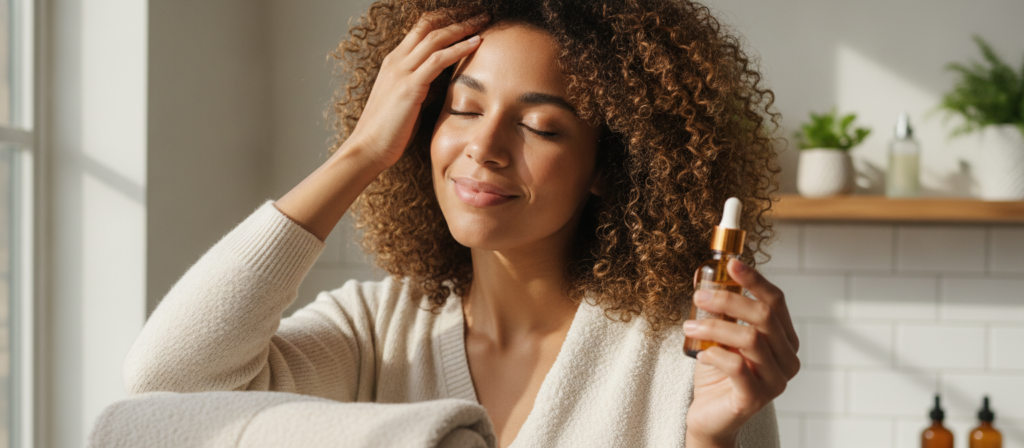
Could a few calm minutes at the sink make your scalp feel better and your hair look healthier? Hair massage for growth is easy to try, but it needs realistic expectations. Learn what massage may support, how to do it, and when hair loss needs medical care.
What Hair Massage for Growth May Actually Do
Scalp massage uses gentle pressure and small movements on the skin of the head. It does not pull new hair from a follicle. Still, the practice may help you care for the scalp and create a relaxing daily habit.
Small studies have explored massage, scalp flexibility, and hair thickness. The research is limited, and results do not prove that massage can treat every type of hair loss. Genetics, hormone levels, illness, nutrition, medications, and styling habits can all affect growth.
Possible comfort benefits
Slow massaging may ease tension and help some people feel calmer.
- May support relaxation
- Can fit a bedtime routine
- May make the scalp feel refreshed
Scalp care benefits
Gentle contact can help spread a small amount of oil across the scalp.
- Supports mindful cleansing
- Helps notice dry or sore areas
- Encourages gentle handling
Healthy-looking hair
Less tugging and better care may help hair appear smoother and fuller.
- May reduce rough handling
- Can support a consistent routine
- Does not promise regrowth
Can Massage Stimulate Hair Growth or Blood Flow?
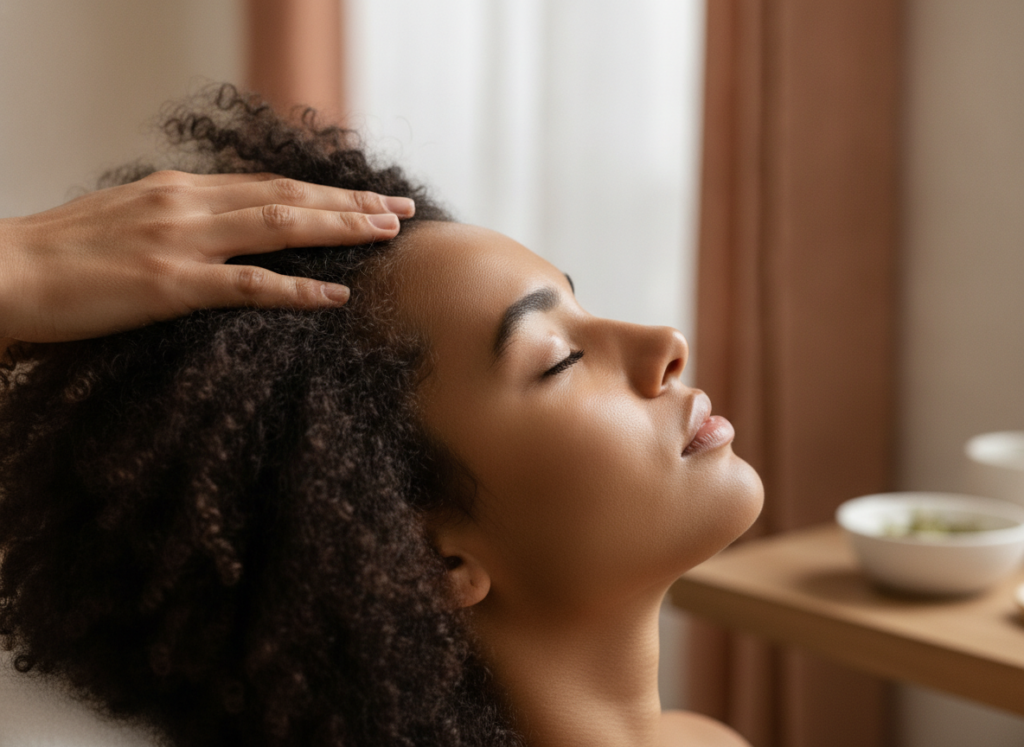
People often ask whether massage can stimulate hair growth by increasing blood flow. Pressure and movement may briefly change circulation near the skin. That effect is not the same as repairing a damaged follicle or changing a hormone-related condition.
Hair follicles have a growth cycle. Each follicle moves through growing, resting, and shedding phases. Massage may help you maintain a comfortable scalp, but it cannot control every phase. Research on massage and follicles is still developing.
Keep the claim modest: scalp massage may support relaxation, circulation, and scalp care. It should be viewed as a supportive habit, not a stand-alone treatment for hair loss.
Benefits of Scalp Massage for Hair and Stress
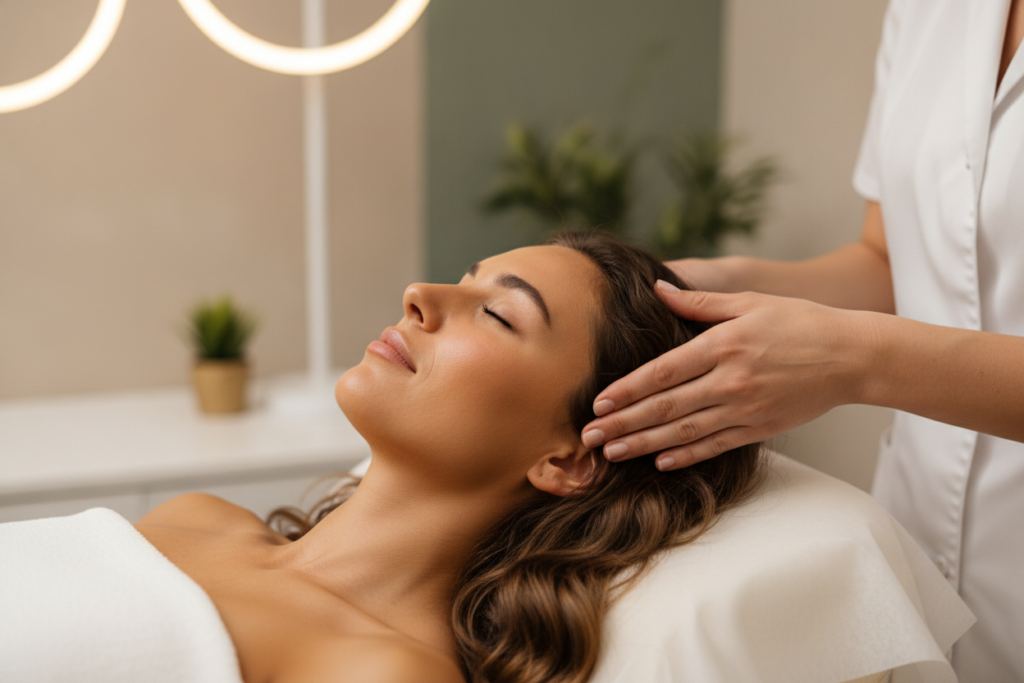
The benefits scalp massage offers are often practical rather than dramatic. A slow routine can turn hair care into a pause during a busy day. Lower stress may also make it easier to avoid harsh brushing, tight styles, or rushed washing.
Some people enjoy the sensory effects of warm hands and light pressure. Others may notice less head tension. These effects vary. Stop if massage causes pain, burning, dizziness, increased irritation, or more breakage.
Potential advantages
- May feel calming and relaxing
- Can support awareness of scalp changes
- May help distribute a light oil
- Fits a short home routine
Important limits
- Cannot guarantee hair regrowth
- May irritate sensitive skin
- Heavy oil can cause buildup
- Does not replace diagnosis
Ready to build a gentle routine?
Explore an optional self-care resource that may help you organize scalp care. Check the ingredients and claims before buying.
How to Massage Scalp and Hair Without Pulling
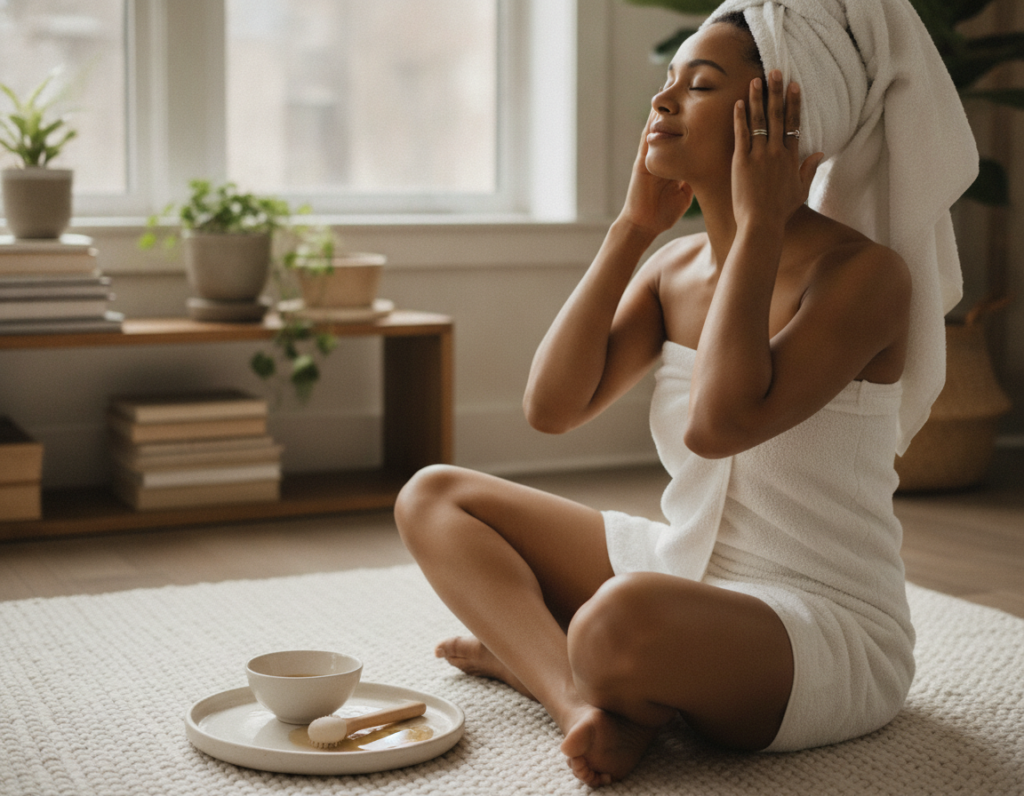
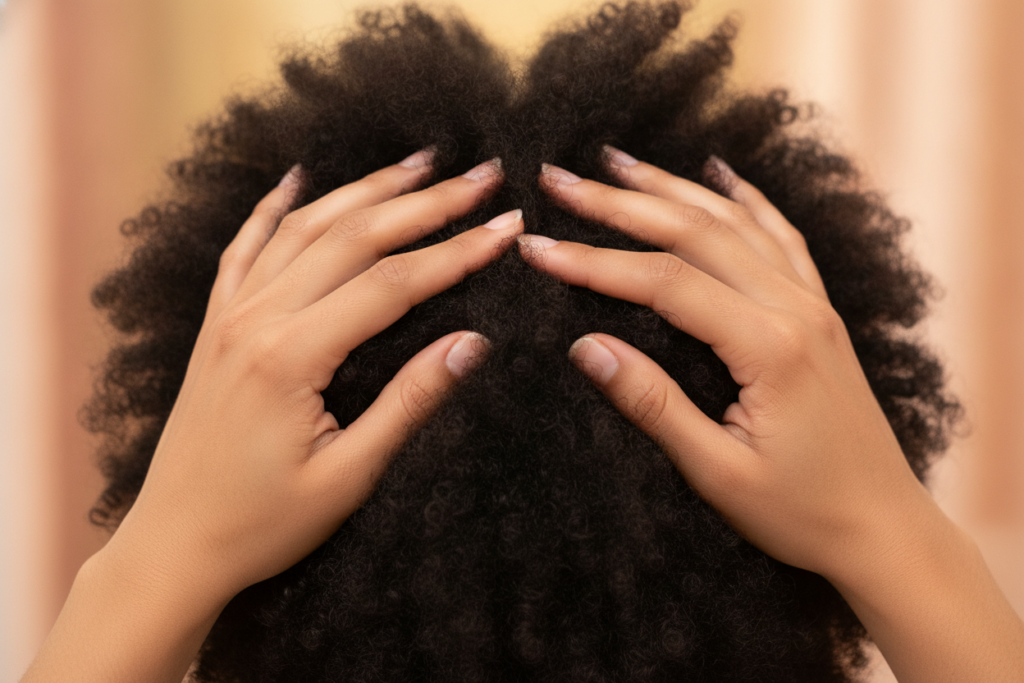
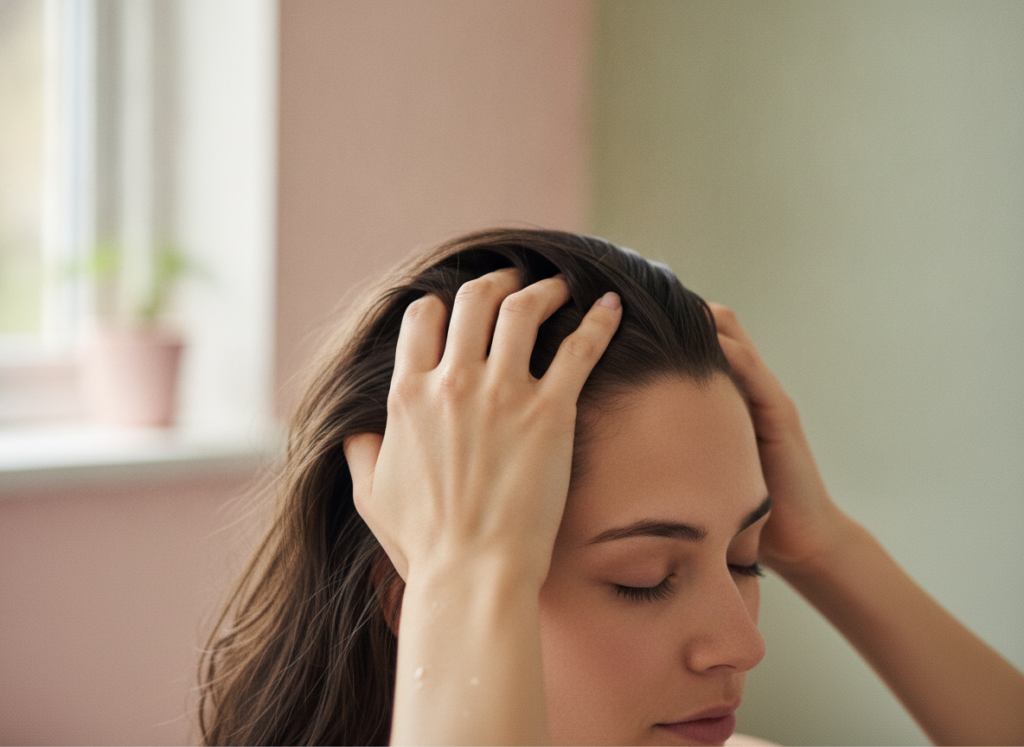
Clean hands are the best tool for most people. Use the pads of your fingers, not your nails. Keep the pressure light enough that the skin moves gently without pain.
- Brush or comb only if needed, using slow strokes.
- Place fingertips at the front hairline and move in small circles.
- Work toward the crown, sides, and back of the head.
- Keep your fingers on the scalp instead of dragging the hair.
- Finish with a few light passes and rinse if product was used.
Massage scalp hair in sections if your hair is thick or curly. Do not twist strands around your fingers. The goal is comfortable skin movement, not force.
A Five-Minute Scalp Massage Routine
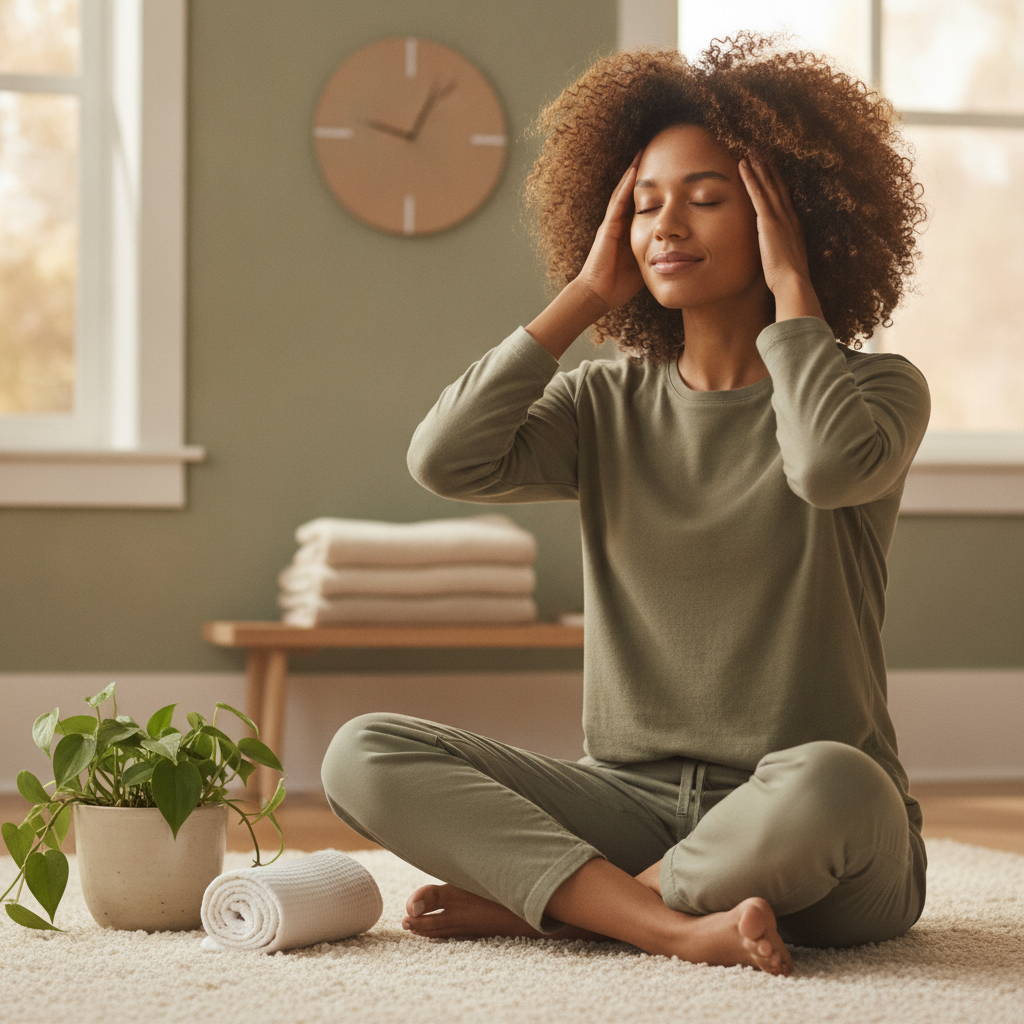
Start with two minutes if your scalp is sensitive. A short routine is easier to repeat than a forceful session that leaves tenderness. Set a timer so the massage stays gentle.
- Minute one: Breathe slowly and warm your hands.
- Minute two: Circle over the temples and hairline.
- Minute three: Move across the crown in small sections.
- Minute four: Massage behind the ears and at the nape.
- Minute five: End with still fingertips and relaxed breathing.
Try this routine three or four times each week. Daily massage may suit some people, but more time does not always mean better results. Track comfort, shedding, and irritation rather than expecting fast hair growth.
Make your routine easier to follow
See another optional resource for planning a consistent hair and scalp care habit. Use it as support, not as a promise of treatment results.
Oils, Tools, and Products for Scalp Massage
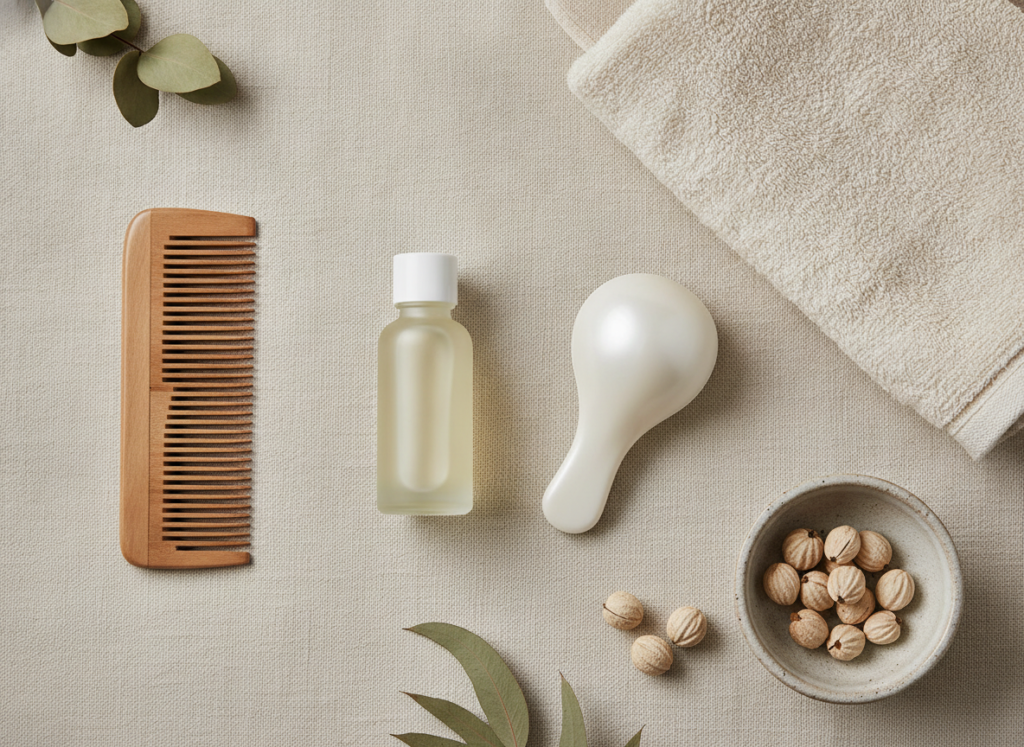
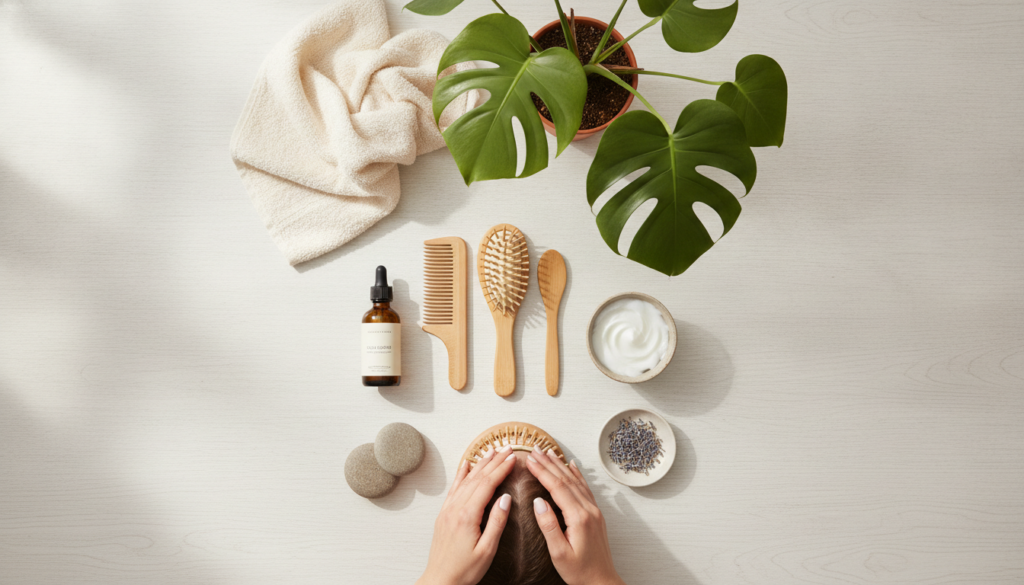
You can massage scalp hair without oil. If you choose one, use a small amount and patch test it first. Fragrance-free products are often a better choice for reactive skin. Avoid putting essential oils directly on the scalp unless properly diluted and tolerated.
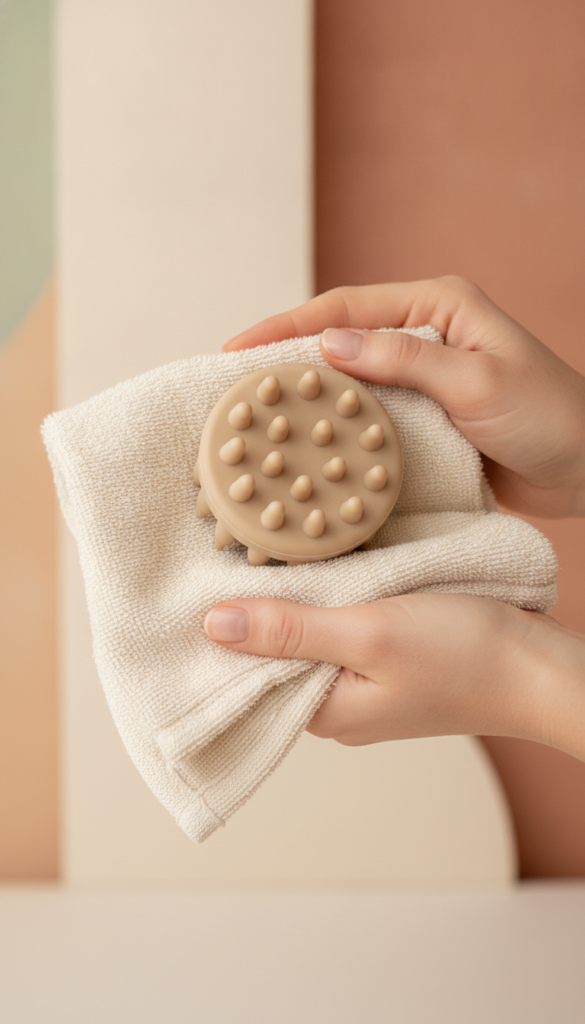
A silicone tool may feel convenient, but it is not required. Use light pressure and clean the tool after each use. Hard bristles, sharp tips, and aggressive scraping can increase irritation or breakage.
- Clean fingertips
- Light, scalp-safe product
- Small amount of oil
- Soft silicone tool
Helpful choices
- Strong fragrance
- Undiluted essential oils
- Heavy layers of product
- Dirty massage tools
Use caution with
How Often Should You Massage for Hair Growth?
There is no proven schedule that guarantees hair growth. A reasonable starting point is five minutes, three times a week. Adjust the frequency based on comfort and scalp condition.
Take photos under similar lighting if you want to observe changes in hair thickness. Hair grows slowly, and normal shedding changes from day to day. A new routine may improve how hair feels without changing the underlying cause of loss.
Give a routine time to show whether it suits you. Stop if you see redness, swelling, sores, flaking that worsens, or sudden shedding. These effects deserve attention rather than more massaging.

Massage, Minoxidil, and Different Types of Hair Loss
Hair loss has many possible causes. Pattern loss may relate to genetics and hormones. Temporary shedding can follow illness, major stress, weight change, or other life events. Patchy loss, scalp infection, inflammation, and medication effects need different care.
Minoxidil is an evidence-based option for some types of hair loss, but it is not right for everyone. It may cause side effects and should be used as directed. Prescription treatments may also be considered after a qualified professional reviews your history.
Do not massage over an infected, broken, painful, or inflamed scalp. Massage can also spread product into the eyes or worsen irritation. It should complement, not replace, appropriate treatments.
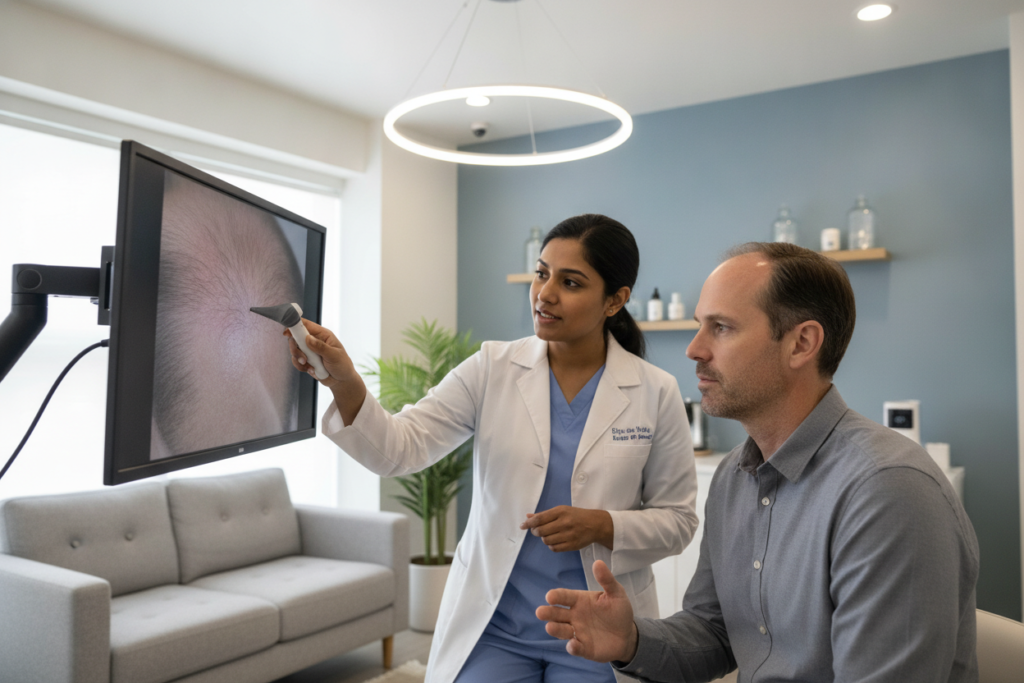
Seek medical advice for sudden hair loss, bald patches, scalp pain, pus, severe itching, eyebrow loss, or shedding that continues. A dermatologist can examine the scalp and discuss testing, minoxidil, prescription choices, or other treatment options.
Safety Checklist Before You Massage the Scalp
A safe massage should feel soothing, never painful. Remove rings that may catch hair, wash your hands, and keep nails short. If you have a scalp condition, ask a healthcare professional before adding oils or tools.
- Patch test a new product on a small skin area.
- Use light pressure and avoid scratching.
- Do not pull, twist, or tightly gather the hair.
- Clean tools and do not share them.
- Stop after burning, pain, swelling, or unusual shedding.
- Keep oil away from the eyes and broken skin.
People with allergies, psoriasis, eczema, recent scalp procedures, or open sores should take extra care. More pressure does not improve the effects. Gentle, steady contact is the better approach.
What the Top SERP Pages Do Well With CTAs
Healthline, GoodRx, and Good Housekeeping serve B2C readers, not business buyers. Most visitors arrive cold from search. They want a clear answer before they consider a product, treatment, newsletter, or further resource.
| Publisher | Primary goal | CTA pattern | Audience action |
| Healthline | Inform and build trust | Native links, related health content, newsletter or commercial recommendations | Read, subscribe, or explore a relevant option |
| GoodRx | Inform and support treatment discovery | Helpful pathways to medications, savings, tools, or email content | Compare, save, learn, or continue care research |
| Good Housekeeping | Inform with beauty commerce support | Product links and editorial buying prompts near practical advice | Review or purchase a beauty product |
The shared lesson is timing. Strong CTAs appear after the reader receives useful steps. Their tone is credible and low pressure. For this topic, a sudden “buy now” button would conflict with medical uncertainty. A short block that offers an optional routine is more aligned with search intent.
When to Ask a Dermatologist About Hair Loss
Massage is reasonable for comfort, but persistent hair loss deserves a proper explanation. Book an appointment when shedding is sudden, severe, patchy, or paired with scalp symptoms. Also ask for help if hair loss affects your confidence or daily life.
A dermatologist may review your family history, health changes, hormone concerns, diet, medications, and styling practices. They can examine the follicles and suggest suitable treatments. Do not delay care while waiting for a massage routine to produce results.
Choose informed next steps
Explore this optional resource only after considering your personal needs. For ongoing or unusual hair loss, professional guidance should come first.

Hair Massage for Growth FAQ
Can scalp massage regrow thinning hair?
There is not enough evidence to say that massage regrows thinning hair. It may support relaxation and scalp care, but the cause of hair loss matters.
How long should I massage the scalp?
Try two to five minutes with light pressure. Stop sooner if your scalp feels sore, hot, or irritated.
Is oil required?
No. Clean fingertips work well. If you use oil, patch test it and apply a small amount to avoid buildup.
Can massage increase shedding?
Rough handling can cause breakage or pull loose hairs. Keep the movement gentle and avoid dragging the hair.
Can I use massage with minoxidil?
Ask a pharmacist or dermatologist. Follow the product directions and avoid spreading medicine into the eyes or irritated skin.
A Realistic Takeaway for Healthier-Looking Hair
Hair massage for growth can be a pleasant addition to a careful routine. It may support relaxation, scalp comfort, mindful product use, and healthier-looking hair. It cannot promise regrowth or replace treatment for a medical cause of loss.
Use clean hands, light pressure, and a few minutes at a time. Watch how your scalp responds. If shedding is sudden, patchy, painful, or persistent, contact a dermatologist. The best results come from matching the care plan to the real cause.
Pin this guide: Save the steps for your next wash day, share it with someone exploring gentle scalp care, and return to the safety checklist before trying a new oil or tool.