Your mental transformation starts right here. A mental glow up goes beyond surface changes. It reaches deep into your mind and reshapes how you think, feel, and experience every day.
This journey requires commitment and intentional action. You will discover practical strategies that create lasting change in your life. These tips work for anyone ready to invest time and energy into their mental health.
The path ahead offers real transformation. You deserve to feel confident, peaceful, and energized. Let’s explore how to help glow mentally and unlock your full potential.
Understanding What a Mental Glow Up Really Means
A mental glow up transforms your inner world completely. This process involves changing your mindset, managing stress better, and building unshakeable confidence. Many people focus only on physical changes, but true transformation happens in your mind first.
Your mental state affects everything in your life. When you work on your thoughts and beliefs, positive changes follow naturally. This journey takes dedication, but the benefits last forever.
Mental wellness creates the foundation for everything else. Your relationships improve, your work performance increases, and you handle challenges with greater ease. The glow you create inside reflects outward in visible ways.
The Connection Between Mental and Physical Health
Your body and mind work together constantly. When you experience stress, your physical health suffers. When you prioritize mental wellness, your body responds positively.
Research shows that mental health directly impacts physical health outcomes. Chronic stress weakens your immune system and increases inflammation throughout your body. Taking care of your mind protects your overall health.
This connection means your mental glow up journey improves your physical health simultaneously. Better sleep, more energy, and reduced anxiety all contribute to feeling amazing every day.
Why Mental Transformation Matters More Than Ever
Modern life creates unprecedented mental challenges. Social media comparison, constant notifications, and information overload drain your mental energy. You need strong coping strategies now more than ever.
Building mental resilience helps you navigate today’s complex world. When you develop a strong mindset, external circumstances affect you less. You maintain inner peace regardless of what happens around you.
The investment you make in your mental health pays dividends forever. These skills become more valuable with time and practice.
Creating a Powerful Morning Routine for Mental Clarity
Your morning routine sets the tone for your entire day. The first hours after waking determine your mental state and energy levels. Establishing consistent morning habits transforms how you experience life.
A strong morning routine doesn’t require hours of time. Even 20 minutes of intentional practice creates significant benefits. The key lies in consistency and choosing activities that truly serve your mental health.
The First 30 Minutes That Change Everything
How you spend the first 30 minutes after waking shapes your entire day. Avoid reaching for your phone immediately. This simple change protects your mental space and reduces anxiety.
Start with hydration. Drinking water first thing activates your metabolism and clears brain fog. Your body needs this after hours of sleep.
Movement comes next. Even five minutes of stretching or light exercise boosts your mood and energy. Physical activity releases endorphins that improve your mental state naturally.
Building Consistency That Sticks
Consistency beats intensity every time. A simple routine you follow daily creates more transformation than an elaborate plan you abandon after one week. Start small and build gradually.
Choose three core activities for your morning routine. These might include meditation, journaling, and reading. Keep your routine realistic and achievable.
Track your progress to stay motivated. Notice how you feel on days when you complete your routine versus days when you skip it. This awareness reinforces the habit naturally.
Ready to Transform Your Morning Routine?
Discover a proven system that helps thousands of people build powerful morning habits that stick. This comprehensive program guides you through creating a personalized routine that fits your life and goals.
Certain morning activities lower stress levels instantly. Deep breathing exercises calm your nervous system within minutes. Try box breathing: inhale for four counts, hold for four, exhale for four, hold for four.
Gratitude practice shifts your mental focus to positive aspects of life. Write down three things you appreciate each morning. This simple act rewires your brain over time.
Avoiding news and social media in the morning protects your mental peace. These platforms often trigger stress and anxiety. Give yourself at least one hour of protected time before engaging with external information.
Essential Mindset Shifts for Lasting Change
Your thoughts create your reality. The way you think about yourself and your circumstances determines your experience of life. Changing your mindset represents the most powerful tool for mental transformation.
Mindset work requires awareness and practice. You must notice negative thought patterns before you can change them. This process takes time, but each small shift compounds into massive change.
From Fixed to Growth Mindset
A fixed mindset believes abilities and intelligence cannot change. This limiting belief holds you back from reaching your potential. A growth mindset sees challenges as opportunities to develop new skills.
Notice when you use phrases like “I can’t” or “I’m not good at.” Replace these with “I’m learning” or “I’m developing this skill.” This small language shift creates big mental changes.
Embrace failure as feedback rather than defeat. Every setback teaches valuable lessons. When you view mistakes as part of growth, fear loses its power over you.
Overcoming Limiting Beliefs
Limiting beliefs operate in your subconscious mind. These deep-seated thoughts about yourself often formed in childhood. They continue affecting your choices and behavior until you address them directly.
Identify your core limiting beliefs by examining areas where you feel stuck. Common examples include “I’m not worthy of success” or “I don’t deserve happiness.” Write these beliefs down to make them concrete.
Challenge each limiting belief with evidence. Find examples from your life that contradict these negative thoughts. This process weakens their hold on your mind and creates space for empowering beliefs.
Developing Unshakeable Self-Confidence
True confidence comes from within. It doesn’t depend on external validation or approval from others. You build real confidence through consistent action and honoring your commitments to yourself.
Start with small promises you make to yourself. Complete them consistently. Each time you follow through, your self-trust grows stronger. This foundation supports lasting confidence.
Celebrate your wins, no matter how small. Acknowledging progress reinforces positive behavior and builds momentum. Keep a success journal to track your growth over time.
If you’re serious about transforming your mindset and breaking through mental barriers, explore this powerful mindset mastery program that has helped thousands achieve lasting mental transformation.
Proven Stress Management Techniques That Work
Stress affects everyone, but how you manage it determines your mental health quality. Effective stress management protects your peace and energy. These techniques provide immediate relief and long-term benefits.
Understanding your stress triggers helps you respond proactively. Everyone experiences different stressors. Identifying yours allows you to develop personalized coping strategies.
The Power of Deep Breathing Exercises
Your breath directly affects your nervous system. Deep, intentional breathing activates your parasympathetic nervous system, which triggers relaxation. This tool works anywhere, anytime.
Practice diaphragmatic breathing daily. Place one hand on your chest and one on your belly. Breathe so that only your belly hand moves. This ensures you’re breathing deeply and fully.
Use breath work during stressful moments. When you notice tension rising, pause and take five deep breaths. This simple intervention prevents stress from escalating into overwhelm.
Creating Stress-Free Zones in Your Life
Designate specific times and spaces as stress-free zones. Your bedroom should support rest, not work or worry. Keep electronic devices out of these sacred spaces.
Establish clear boundaries with work. When your workday ends, truly disconnect. Constant availability creates chronic stress that damages your mental health over time.
Protect your mental space from negative influences. This might mean limiting time with certain people or avoiding triggering content on social media. Your peace matters more than staying updated on everything.
Master Stress Management for Life
Learn advanced techniques that help you manage stress effectively and maintain inner peace regardless of external circumstances. This comprehensive course provides tools used by top performers worldwide.
Movement releases stress stored in your body. Exercise produces endorphins, natural mood boosters that combat stress and anxiety. You don’t need intense workouts to experience these benefits.
Walking provides excellent stress relief. A 20-minute walk outside reduces cortisol levels significantly. The combination of movement and fresh air works wonders for your mental state.
Yoga combines physical activity with mindfulness. This practice strengthens your mind-body connection while reducing stress. Even 10 minutes of gentle yoga creates noticeable calm.
Building Positive Daily Habits for Mental Wellness
Your daily habits shape your mental health more than occasional big actions. Small, consistent behaviors compound over time into remarkable transformation. Focus on building habits that serve your mental wellness goals.
Habit formation requires understanding how your brain works. New behaviors become automatic through repetition and positive reinforcement. Design your environment to support the habits you want to create.
The Science Behind Habit Formation
Habits form through a three-part loop: cue, routine, reward. Understanding this loop helps you build positive habits and break negative ones. Every habit starts with a trigger or cue that initiates the behavior.
Your brain loves efficiency. Once a behavior becomes habitual, your brain can perform it with minimal conscious effort. This automation frees up mental energy for other tasks.
New habits typically take 21 to 66 days to form, depending on complexity. Consistency matters more than perfection. Missing one day doesn’t ruin your progress if you resume immediately.
Essential Daily Practices for Mental Health
Certain daily practices provide exceptional mental health benefits. Meditation tops this list. Just 10 minutes of daily meditation reduces anxiety, improves focus, and increases emotional regulation.
Journaling helps process emotions and thoughts. Write freely for 5-10 minutes each day. This practice clears mental clutter and provides valuable insights into your inner world.
Regular sleep schedule stabilizes your mood and mental clarity. Aim for seven to eight hours of sleep each night. Go to bed and wake up at consistent times, even on weekends.
Tracking Progress Without Obsession
Monitoring your habits increases success rates significantly. Use a simple habit tracker or app to mark completed actions. This visual record motivates continued effort.
Avoid perfectionism in habit tracking. The goal is progress, not perfection. If you miss a day, simply resume the next day without guilt or judgment.
Review your habit tracker weekly. Notice patterns in your behavior. This awareness helps you adjust strategies and celebrate successes along the way.
Developing Emotional Intelligence for Better Relationships
Emotional intelligence determines your success in relationships and life. This skill involves recognizing, understanding, and managing your emotions effectively. It also includes perceiving and responding to others’ emotions appropriately.
People with high emotional intelligence navigate life’s challenges more smoothly. They maintain better relationships, handle stress more effectively, and achieve their goals consistently. You can develop this skill at any age.
Understanding Your Emotional Patterns
Self-awareness forms the foundation of emotional intelligence. Notice your emotional responses to different situations. What triggers anger, sadness, or anxiety in you? Identifying patterns helps you respond consciously instead of reacting automatically.
Keep an emotion journal for one week. Note what you feel throughout the day and what triggered each emotion. This practice reveals patterns you might not otherwise notice.
Emotions provide valuable information about your needs and values. When you feel angry, something important to you feels threatened. Sadness often signals loss or unmet needs. Learn to decode these messages.
Managing Difficult Emotions Effectively
Managing emotions doesn’t mean suppressing them. Healthy emotional management involves feeling emotions fully while choosing your response consciously. This skill protects your mental health and relationships.
When strong emotions arise, pause before reacting. Take three deep breaths and name the emotion you’re experiencing. This simple practice creates space between stimulus and response.
Express emotions in healthy ways. Talk to trusted friends, write in your journal, or engage in physical activity. Bottled emotions eventually explode or leak out in unhealthy ways.
Building Stronger Connections with Others
Empathy strengthens every relationship in your life. Practice seeing situations from others’ perspectives. This doesn’t require agreeing with them, just understanding their viewpoint.
Active listening shows respect and builds trust. When someone speaks, focus completely on their words instead of planning your response. Ask clarifying questions to ensure you understand correctly.
Setting boundaries protects your mental health while maintaining relationships. Communicate your needs clearly and respectfully. Healthy boundaries benefit everyone involved.
Elevate Your Emotional Intelligence
Unlock the power of emotional mastery with this transformative program. Learn advanced techniques for understanding emotions, building deeper connections, and creating fulfilling relationships in all areas of your life.
Your mind accumulates mental clutter just like your home collects physical clutter. Negative thoughts, limiting beliefs, and toxic influences drain your energy and mental clarity. A mental detox clears this accumulation and restores your natural state of peace.
Regular mental detoxes maintain your psychological health. Just as you clean your living space, you must clear your mental space. This practice creates room for positive thoughts and experiences.
Identifying Mental Toxins in Your Life
Mental toxins come in many forms. Negative self-talk damages your self-esteem and confidence. Toxic relationships drain your energy and lower your vibration. Constant news consumption creates anxiety and fear.
Social media comparison steals your joy and contentment. When you constantly compare your life to others’ highlight reels, dissatisfaction grows. This behavior patterns directly impacts your mental health.
Information overload overwhelms your brain’s processing capacity. Your mind needs space to think, reflect, and integrate experiences. Too much input prevents this essential process.
Digital Detox Strategies
Technology serves us, but excessive use harms mental health. Implement regular digital detox periods to reset your relationship with devices. Start with one hour before bed and one hour after waking without screens.
Remove social media apps from your phone for one week. Notice how this change affects your mood and mental clarity. Most people report feeling significantly lighter and more present.
Establish tech-free zones in your home. The dinner table and bedroom should remain device-free. These boundaries protect important aspects of life from digital intrusion.
Clearing Mental Clutter Through Meditation
Meditation provides the ultimate mental detox. This practice quiets the constant mental chatter and creates inner spaciousness. Regular meditation literally changes your brain structure over time.
Start with just five minutes daily. Sit comfortably, close your eyes, and focus on your breath. When thoughts arise, simply notice them and return attention to your breathing.
Consistency matters more than duration. Five minutes daily produces better results than occasional 30-minute sessions. Build the habit first, then extend the time naturally.
Strategic Goal Setting for Mental Growth
Clear goals give your mental transformation direction and purpose. Without defined objectives, you drift aimlessly through self-improvement attempts. Strategic goal setting creates a roadmap for your mental glow up journey.
Effective goals balance ambition with realism. They stretch your capabilities while remaining achievable. This balance maintains motivation without creating discouragement.
SMART Goals for Mental Wellness
SMART goals provide structure for effective objective setting. Specific goals clearly define what you want to achieve. Measurable goals allow tracking progress. Achievable goals remain within your capabilities. Relevant goals align with your values. Time-bound goals include deadlines.
Apply this framework to mental health goals. Instead of “I want to be less stressed,” create “I will practice 10 minutes of meditation daily for 30 days to reduce stress.” This specificity increases success rates dramatically.
Write your goals down. This simple act increases achievement likelihood by 42%. Review your written goals daily to maintain focus and motivation.
Breaking Down Big Goals into Daily Actions
Large goals often feel overwhelming. Break them into smaller, manageable daily actions. This approach makes progress feel achievable and maintains momentum.
If your goal involves building emotional intelligence, daily actions might include: reading 10 pages of a relevant book, practicing one emotion-regulation technique, or having one mindful conversation. These small steps compound into significant growth.
Track daily actions in a journal or app. Seeing your consistency builds confidence and motivation. Each small victory reinforces your commitment to growth.
Adjusting Goals as You Grow
Flexibility in goal-setting prevents frustration and allows evolution. As you grow and change, your goals should adapt accordingly. Review your objectives monthly and adjust as needed.
Sometimes you’ll achieve goals faster than expected. Celebrate this success and set new, more challenging objectives. Other times, goals prove unrealistic. Adjust them without judgment or self-criticism.
The goal-setting process itself provides value beyond achievement. Setting intentions focuses your energy and attention on what matters most to you.
Self-care isn’t selfish; it’s necessary for mental health. When you neglect your own needs, you deplete your resources and burn out. Prioritizing self-care ensures you have the energy and mental clarity to handle life’s demands.
True self-care goes beyond bubble baths and face masks. It involves setting boundaries, saying no when necessary, and honoring your needs consistently. These practices protect your mental health long-term.
Physical Self-Care That Supports Mental Health
Your physical health directly impacts mental wellness. Regular exercise reduces anxiety and depression while boosting mood naturally. Aim for at least 30 minutes of movement most days of the week.
Nutrition affects brain function and mood regulation. Eat whole foods rich in omega-3 fatty acids, B vitamins, and antioxidants. These nutrients support optimal brain health and mental clarity.
Adequate sleep remains non-negotiable for mental health. Prioritize getting seven to eight hours of quality sleep nightly. Create a relaxing bedtime routine that signals your body it’s time to rest.
Emotional Self-Care Strategies
Processing emotions regularly prevents emotional overwhelm. Create space for feeling your feelings without judgment. This might involve crying, journaling, or talking with a trusted friend.
Therapy or counseling provides professional support for emotional health. Working with a trained therapist helps you develop coping skills and process difficult experiences. This investment in mental health pays enormous dividends.
Practice self-compassion when you make mistakes or face setbacks. Treat yourself with the same kindness you’d offer a good friend. This approach reduces shame and supports resilience.
Social Self-Care for Connection
Human connection fulfills a fundamental need. Regular interaction with loved ones boosts mental health and provides essential emotional support. Schedule time with friends and family consistently.
Join groups or communities aligned with your interests. Shared activities and values create meaningful connections. These relationships enrich your life and provide belonging.
Set boundaries in relationships that drain your energy. Some connections require limits to protect your mental health. Saying no to others sometimes means saying yes to yourself.
Create Your Perfect Self-Care Routine
Build a personalized self-care practice that nourishes your mind, body, and spirit. This program provides templates, strategies, and support for establishing sustainable self-care habits that transform your life.
Negative thoughts happen to everyone, but chronic negativity damages mental health. These thought patterns create anxiety, depression, and low self-esteem. Learning to identify and challenge negative thinking transforms your mental experience.
Your thoughts aren’t facts. They’re interpretations influenced by past experiences, beliefs, and current emotional states. Understanding this distinction gives you power over your mental experience.
Common Cognitive Distortions
Cognitive distortions are thinking errors that skew reality negatively. All-or-nothing thinking sees situations in black and white with no middle ground. Catastrophizing assumes the worst possible outcome will occur.
Overgeneralization takes one negative event and applies it universally. Mental filtering focuses exclusively on negatives while ignoring positives. Personalization blames yourself for things outside your control.
Recognizing these patterns in your thinking is the first step to changing them. When you notice distorted thoughts, you can challenge and reframe them more accurately.
Techniques for Challenging Negative Thoughts
Question negative thoughts instead of accepting them as truth. Ask yourself: What evidence supports this thought? What evidence contradicts it? What would I tell a friend thinking this way?
Reframe negative thoughts into more balanced perspectives. Instead of “I always fail,” try “I’ve succeeded many times before, and this setback is temporary.” This shift changes your emotional response immediately.
Practice thought-stopping when rumination begins. Notice when you’re replaying negative scenarios repeatedly. Mentally say “Stop!” and redirect attention to something productive or pleasant.
Building a Positive Mental Framework
Positive affirmations reprogram your subconscious mind over time. Choose statements that resonate with you and repeat them daily. Make affirmations present-tense and positive: “I am capable and confident.”
Gratitude practice counters negative bias in the brain. Your mind naturally focuses on threats and problems. Deliberately noticing positives balances this tendency and improves overall mood.
Surround yourself with positive influences. The content you consume, people you spend time with, and environments you inhabit all affect your thought patterns. Curate these influences intentionally.
Mastering Your Energy for Mental Clarity
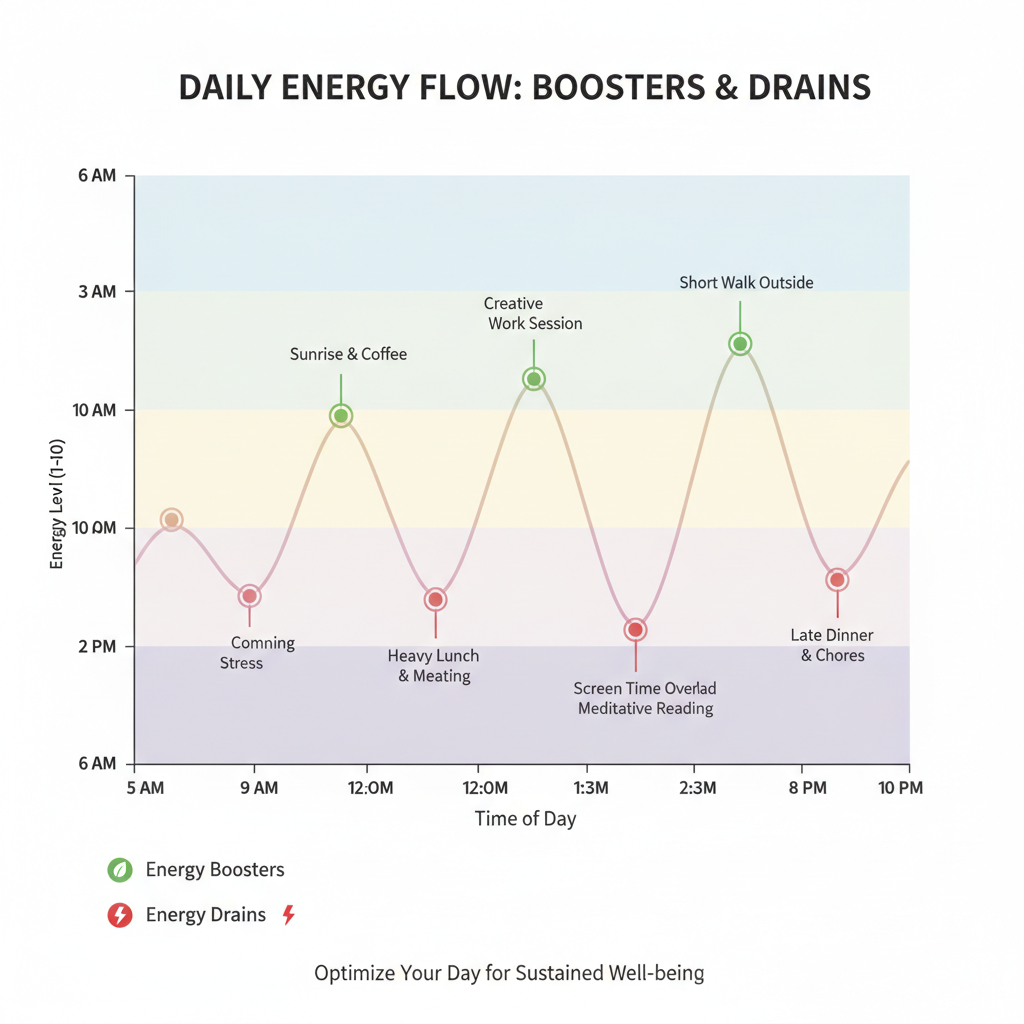
Energy management matters more than time management for mental wellness. You can have all the time in the world, but without energy, you can’t use it effectively. Understanding and protecting your energy transforms your mental capacity.
Different activities affect your energy differently. Some drain you while others recharge your batteries. Identifying which is which allows you to design days that sustain rather than deplete you.
Identifying Your Energy Drains
Pay attention to how you feel after different activities. Which tasks leave you exhausted? Which people drain your energy? Awareness of these patterns helps you make better choices.
Common energy drains include: decision fatigue from too many choices, toxic relationships that create stress, multitasking that splits your focus, and poor boundaries that allow constant interruptions.
Minimize unnecessary energy drains where possible. Simplify decisions, limit time with draining people, focus on one task at a time, and protect your attention with clear boundaries.
Natural Energy Boosters
Certain activities naturally increase your energy. Spending time in nature reduces cortisol and boosts mood. Even 20 minutes outside creates noticeable benefits for mental clarity and energy.
Physical movement generates energy rather than depleting it. A short walk or stretching session when you feel sluggish often provides more energy than resting.
Social connection with positive people energizes you. Quality time with supportive friends leaves you feeling uplifted and motivated. Prioritize these relationships in your life.
Creating Energy-Sustaining Rhythms
Your energy fluctuates naturally throughout the day. Most people have peak mental clarity in the morning. Schedule important tasks during your high-energy windows.
Take regular breaks to maintain energy levels. The Pomodoro Technique suggests 5-minute breaks after every 25 minutes of focused work. These short pauses prevent mental fatigue.
Plan restorative activities into each week. These might include hobbies, relaxation time, or activities that bring you joy. Regular restoration prevents burnout and maintains consistent energy.
Creating an Environment That Supports Mental Wellness
Your environment significantly impacts your mental state. Cluttered, chaotic spaces create mental clutter. Peaceful, organized environments support calm and clarity. Optimizing your surroundings accelerates your mental glow up.
Environmental changes often produce faster results than trying to change yourself directly. When you design spaces that naturally support positive behaviors, transformation becomes easier.
Decluttering for Mental Clarity
Physical clutter creates mental clutter. When your space feels chaotic, your mind mirrors that chaos. Decluttering your environment literally clears your mind and reduces stress.
Start with one small area. Clear one drawer, shelf, or corner. This small win builds momentum for larger decluttering projects. Don’t try to tackle everything at once.
Adopt a “one in, one out” rule. When you bring something new into your space, remove something old. This practice prevents clutter from accumulating again over time.
Optimizing Your Space for Focus
Create dedicated spaces for different activities. Your work area should feel separate from your relaxation space. This physical separation helps your brain shift between different modes.
Minimize distractions in your workspace. Remove unnecessary items from your desk. Turn off notifications on devices. These small changes dramatically improve focus and productivity.
Lighting affects mood and energy significantly. Natural light boosts serotonin and improves mood. Position your workspace near windows when possible. Use warm, soft lighting for relaxation areas.
Adding Elements That Promote Peace
Bring nature indoors with plants. Studies show that indoor plants reduce stress and improve air quality. Even one plant in your space creates measurable benefits.
Use colors intentionally. Blue and green tones promote calm. Yellow creates energy and optimism. Choose colors based on how you want to feel in each space.
Incorporate meaningful objects that bring joy. Photos of loved ones, artwork you love, or items with special significance create positive emotional associations with your environment.
Maintaining Momentum in Your Mental Glow Up Journey
Starting a mental transformation feels exciting. Maintaining momentum through challenges requires strategy. The initial motivation eventually fades, and you must rely on systems and habits to continue progressing.
Expect obstacles and setbacks. They’re normal parts of any growth journey. How you respond to difficulties determines whether you continue growing or return to old patterns.
Building Accountability Systems
Accountability increases follow-through dramatically. Share your goals with a trusted friend or join a support group. Knowing someone will check on your progress motivates continued effort.
Work with a coach or mentor when possible. Professional guidance accelerates growth and helps you navigate challenges more effectively. This investment in yourself pays significant returns.
Track your progress visibly. Use a habit tracker, journal, or app that shows your consistency over time. This visual representation of your efforts reinforces commitment.
Celebrating Progress and Milestones
Acknowledge every win, no matter how small. Celebrating progress releases dopamine, which reinforces positive behavior. This biological reward system supports continued growth.
Set milestone markers throughout your journey. When you reach each milestone, do something special to commemorate the achievement. These celebrations provide motivation for the next phase.
Reflect regularly on how far you’ve come. It’s easy to focus on remaining distance and overlook progress already made. Regular reflection builds confidence and appreciation for your efforts.
Adjusting Your Approach as Needed
Flexibility prevents frustration and burnout. When something isn’t working, adjust your approach rather than abandoning your goals. Experimentation reveals what works best for you personally.
Regular self-assessment keeps you aligned with your goals. Ask yourself monthly: What’s working well? What isn’t? What needs to change? This reflection guides continuous improvement.
Remember that growth isn’t linear. You’ll experience ups and downs, progress and plateaus. These fluctuations are normal and don’t indicate failure. Keep moving forward consistently.
Sustain Your Transformation Long-Term
Get lifetime access to tools, resources, and community support that help you maintain momentum and continue growing. This program ensures your mental glow up becomes permanent, not temporary.
You now have comprehensive Mental Glow Up Tips to transform your mind and life. These strategies work when you apply them consistently. Knowledge without action creates no change.
Start with one or two practices from this article. Build consistency before adding more. Small, sustainable changes create lasting transformation better than trying to change everything at once.
Your mental health deserves investment and attention. The time and energy you dedicate to your mental glow up will return to you multiplied. Every positive change compounds over time into remarkable results.
Remember that transformation takes time. Be patient with yourself as you grow and evolve. Celebrate small victories and learn from setbacks. Your commitment to this journey will change your life in ways you cannot yet imagine.
The mental glow up you seek is absolutely possible. Thousands of people have transformed their mental health using these exact principles. You can join them by taking action today. Your future self will thank you for starting this journey now.
Take the Next Step in Your Transformation
Don’t let this momentum fade. Choose one of these proven programs to accelerate your mental glow up and receive expert guidance every step of the way. Your transformation awaits.